
Over 300,000 workers in the Netherlands experience heat stress at work
Each year, about 4% of the Dutch workforce (358,000 employees) are exposed to more than 80 hours of heat stress—roughly two full workweeks. The most affected professions include chefs, police officers, bakers, and welders, who often work in hot environments, wear protective clothing, or perform physically demanding tasks. These conditions make it harder for the body to release heat. This finding comes from TNO’s new factsheet: ‘Occupational Exposure to Heat in the Netherlands’.
What is heat stress?
Heat stress occurs when the body absorbs more heat than it can dissipate. This happens more quickly under conditions of high heat load, such as high temperatures, strong sunlight, high humidity, and low wind speed. Work-related factors like intense physical effort or insulating protective gear also play a role. Heat stress can lead to fatigue, difficulty focusing, heat exhaustion, fainting, and heat stroke. If it continues over time, it may also cause serious health issues affecting the heart, kidneys, or lungs. According to the International Labour Organization (ILO), workplace heat exposure worldwide leads to 23 million accidents, 19,000 deaths, and 2.09 million lost healthy life years annually. The full impact in the Netherlands is still unknown.
Working near artificial and natural heat sources
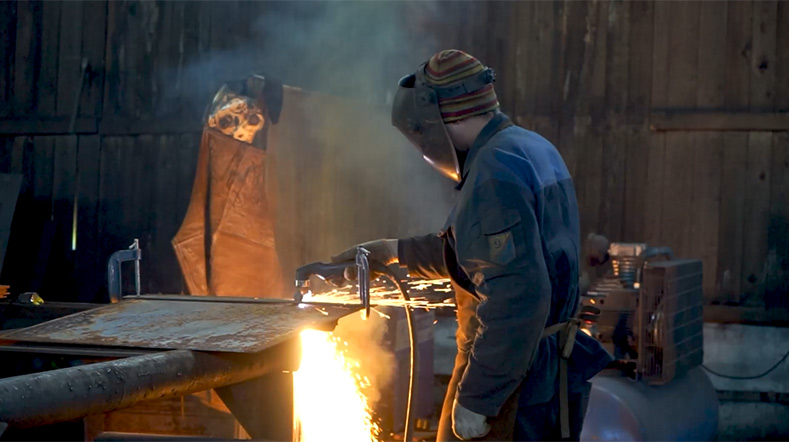
Heat stress occurs more likely during heavy-duty work, especially when wearing thick protective clothing or working close to artificial heat sources such as gas stoves, ovens, welding equipment, or other heat-generating machinery. Workers are particularly vulnerable because tasks often cannot be postponed or moved to cooler conditions. The factsheet shows that chefs, bakers, and welders are among the most exposed professions. Other jobs - such as police officers - experience heat stress mainly due to weather conditions rather than man-made heat sources. Smaller groups, including firefighters, roofers, and metal casters, also face significant exposure.
Weather conditions are becoming more important
Outdoor temperature, humidity, solar radiation, and wind speed strongly influence heat stress. These factors make heat dissipation harder, especially during outdoor work or in non-cooled indoor spaces. Currently, weather conditions contribute to heat stress in nearly half of all occupations, less than man-made heat sources but rising due to climate change. Stronger sunlight, fewer clouds, and more frequent heatwaves will increase this risk.
What can be done?
Heat stress exposure can often be prevented through measures such as:
- Improving ventilation and shading
- Adjusting work schedules to cooler hours
- Allowing lightweight clothing
- Providing adequate hydration
- Offering training and awareness programs on heat-related risks
- Sector-specific heat management plans are also essential.
*Exposure exceeding two workweeks (80 hours) indicates a structural pattern with potential long-term health and productivity impacts.
Occupational exposure to heat in the Netherlands
Find out what you, as a professional or employer, can do and download the factsheet. Want to know how the figures were calculated? Read the detailed report (pdf).
Contact us
-

Anjoeka Pronk
Functie:Epidemiologist-
Standplaats:Utrecht - Princetonlaan
-
Email:Email Anjoeka
-
-

Jody Schinkel
Functie:Business Development Manager-
Standplaats:Leiden - Sylviusweg
-
Email:Email Jody
-
Get inspired
Pilot study on welding fumes proves the potential of sensor measurements for a healthy workplace
Occupational exposome