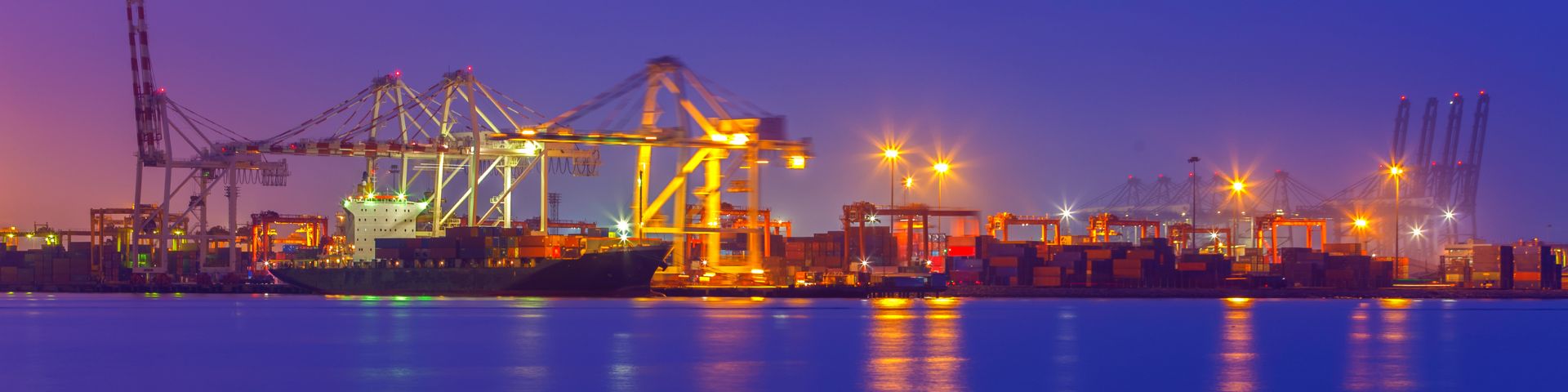
Temporary Special Economic Zone around Rotterdam can prevent climate delays and GDP losses
Implementation of the energy transition is stalling: grid reinforcement and onshore landfall of energy infrastructure are delayed, while industrial decarbonisation projects are waiting for grid capacity, permits and consistent regulatory frameworks. In a new longread on the economists’ platform MeJudice, experts argue for a temporary Special Economic Zone (SEZ) in and around the Rotterdam port and industrial cluster to address these bottlenecks in a targeted way.
According to Johannes Bollen (Senior Economist, TNO Vector), Prof. Dr André Faaij (Director of Science & Technology and Principal Scientist, TNO Energy & Materials Transition) and Sebastiaan Hers (Senior Scientist, TNO), a SEZ, featuring a single mandate, accelerated decision-making and coordinated infrastructure development, could limit climate delays and help prevent GDP losses which, in the absence of progress, could rise to around 5%.
Rotterdam as the logical first case
The Rotterdam port and energy/chemicals cluster is a national and North-West European hub where offshore wind landfall, the hydrogen backbone, and CO₂ transport and storage converge. Owing to the concentration of energy-intensive production, strategic infrastructure and cross-border value chains, acceleration here can deliver the greatest system impact per euro invested:
investment decisions, permitting, nitrogen deposition space and grid integration literally come together in one place. This makes Rotterdam the logical first case for implementation-focused acceleration, the authors argue.
Core of the proposal
The longread elaborates a temporary Special Economic Zone (SEZ) as an implementation framework for the Port of Rotterdam’s industrial cluster, built around a single integrated mandate and a unified execution rhythm. The SEZ brings together:
- A single interdepartmental mandate that steers integrally on CO₂ target achievement, energy infrastructure, nitrogen space, and budget, including decisions on prioritisation and financing.
- A unified acceleration regime for delivery, with consolidated permitting procedures and fixed processing times, prioritisation of grid capacity and connections for projects with demonstrable system impact, and stable rules for investors.
- Budgetary safeguards and control, including a clear expenditure ceiling, milestones, and stop go mechanisms—ensuring that acceleration is possible without creating open ended financial commitments.
Purpose: to make the implementation phase manageable again by organising key preconditions in coherence, enabling Rotterdam to demonstrate visible progress as the first scalable step—and in doing so, to help accelerate national delivery.
Economic urgency
The authors position the SEZ within a broader economic and industrial context: without targeted acceleration and predictable policy frameworks, the Netherlands risks delayed investments, postponed decarbonisation, and avoidable GDP losses. By resolving grid and permitting bottlenecks precisely where system value, infrastructure and investment appetite come together, climate target delivery can be combined with safeguarding industrial competitiveness. (Further underpinning and quantitative estimates are provided in the MeJudice longread.)
Read full rationale (in Dutch)
Read the full rationale and policy options in the MeJudice longread (in Dutch) : “Special Economic Zone Rotterdam prevents climate delays and GDP losses.”
Authors



Contact us
-

Johannes Bollen
Functie:Economist TNO VectorMy name is Johannes Bollen and I work as a senior economist at TNO Vector. In my day‑to‑day work, I inform policymakers, other stakeholders and colleagues about the effectiveness and efficiency of policy interventions related to (energy) transitions.
-
Standplaats:Den Haag - New Babylon
-
Email:Email Johannes
-
Get inspired
Fieldlab Industrial Electrification pilot hall in SubZero Rotterdam
Letter of intent for a Power‑to‑X campus in Tilburg
Innovations in Sustainable Fuels, Chemicals and Energy Carriers
TNO and A*STAR ISCE2 to pioneer with an electrified CO₂‑to‑EO pathway