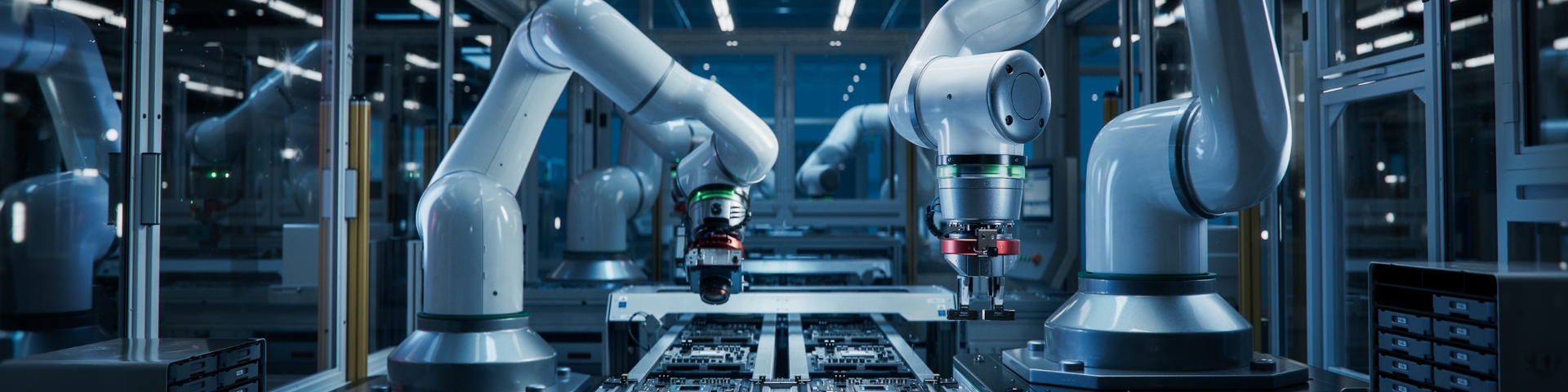
Without robotisation, the Netherlands will no longer have its own manufacturing industry in ten years
The Dutch manufacturing industry faces an urgent challenge. An ageing workforce, persistent staff shortages and high labour costs are putting the sector under severe pressure, whilst productivity growth is stagnating. TNO is calling for the accelerated and coordinated deployment of robotisation and automation to safeguard the Netherlands’ earning capacity.
Briefly
- The Netherlands ranks 12th worldwide, with 264 robots per 10,000 employees
- South Korea, China and Germany operate between 400 and more than 1,000 robots per 10,000 employees
- Productivity in the Dutch manufacturing industry must increase by at least 50% in order to restore its competitive position
- TNO urges the development of a national robotisation agenda
The manufacturing industry accounts for 7% of the Dutch gross domestic product (GDP), making it one of the key pillars of the national economy. The sector is essential for financing major societal transitions and covering the costs of national security. However, if the Netherlands does not invest quickly and structurally in modernisation, the industry risks losing its competitive position.
Growing urgency over time
The consequences of inaction will become visible very soon. Within two years, labour shortages caused by demographic ageing will lead to rising costs and inefficient production. In the medium term - within five years - the Netherlands is expected to miss out on further productivity gains, while outdated production lines increasingly become a structural competitive disadvantage. In the long term, within ten years, irreversible damage might occur: companies unable to compete globally, factory closures, job losses and an increased dependence on foreign suppliers.

‘Robotisation is not a luxury, but a prerequisite for preserving our manufacturing industry. A national agenda provides direction, accelerates adoption and ensures that companies - both large and small - have access to the technologies that will determine their future. This is the only way for the Netherlands to remain a maker, rather than a dependent buyer.’
Benefits of robotisation
A substantial investment in robotisation offers clear advantages. Robots can operate far beyond the standard eight‑hour working day, improve product quality by reducing human error, and help lower production costs. Modern robots are also becoming increasingly intelligent through the integration of artificial intelligence (AI): they offer greater flexibility, adapt more easily to changing conditions and can be programmed more quickly.
Mark Courage, Director of Smart Industry at TNO, explains: ‘Robotisation is not a luxury, but a prerequisite for preserving our manufacturing industry. A national agenda provides direction, accelerates adoption and ensures that companies - both large and small - have access to the technologies that will determine their future. This is the only way for the Netherlands to remain a maker, rather than a dependent buyer.’
TNO calls for a national robotisation agenda
To drive acceleration, TNO advocates a national robotisation agenda with clear long‑term objectives, overseen by a central taskforce. Key recommendations include:
- Awareness and knowledge sharing: nationwide communication, accessible insight into return on investment (ROI) and practical, sector‑specific guidance for companies.
- Standardisation and ecosystem strengthening: promoting open‑source interoperability, investing in strategic niches and pooling demand to create the scale required to attract system integrators.
- Education and labour market: developing continuous learning pathways and embedding mandatory robotics competencies to ensure a future‑proof talent base.
- International positioning: positioning the Netherlands as the European testbed for high‑mix, low‑volume robotisation and deepening European collaboration.
- Acceleration for SMEs: supporting small and medium‑sized enterprises through sectoral cooperation, accessible field labs, vouchers and flexible financing models such as Robotics‑as‑a‑Service.
Report 'Zonder robotisering verdwijnt de Nederlandse Maakindustrie: Urgente actie is noodzakelijk' (Dutch only)
Contact us
-
Mark Courage
Functie:Director Smart Industry-
Standplaats:Delft - Stieltjesweg
-
Email:Email Mark
-
-

Claire Stolwijk
Functie:Principal ConsultantClaire Stolwijk is Principal Consultant in the Strategy & Policy department, focussing on digitalisation of the manufacturing industry, digital sovereignty, data spaces and industrial innovation policy. She combines her scientific work with a practical approach and coordinates various national and European projects on these topics.
-
Standplaats:Den Haag - New Babylon
-
Email:Email Claire
-
Get inspired
Automated 3D inspection and repair without CAD data
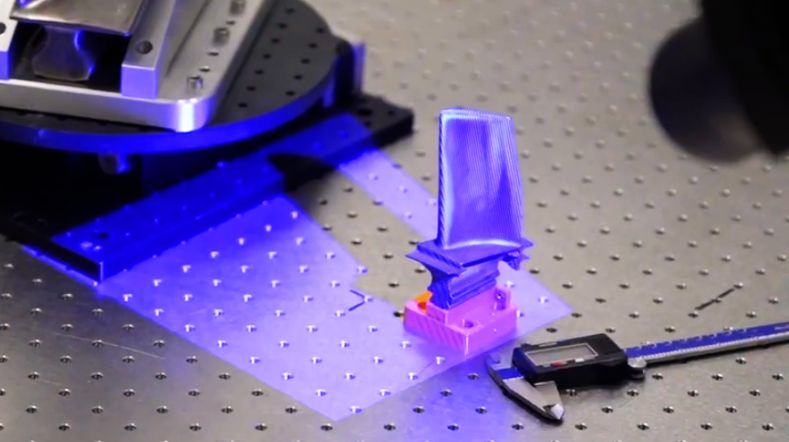
3D Nesting: precision quality control and manufacturing efficiency
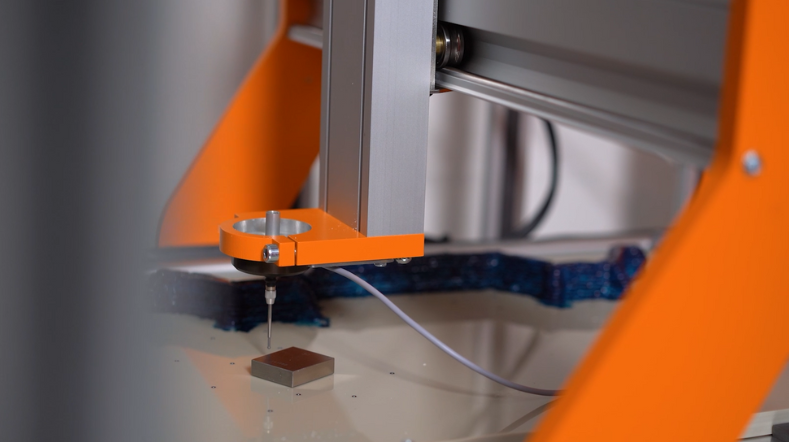
SEAMIIC: Autonomous parts handling and quality control
Partnering for mutual progress

TNO spin-off Scenexus secures 1.6 million euro investment