TNO Vector symposium: Drivers for long-term earning capacity
How can we strengthen the Netherlands’ earning capacity in a time when scarcity forces us to make strategic choices? That is the central question of the TNO Vector Symposium 2026. Six months after the publication of the Wennink Report, we will take the next step: translating insights into concrete courses of action and policy options for the Taskforce on Future Prosperity and Earning Capacity.
- Startdatum:
- Time:
- 12:30 - (CET)
- Location:
-
Universiteitscampus Spui, Spui 5, 2511 BL Den Haag
The symposium is aimed at those shaping, driving and governing the Netherlands of tomorrow: policymakers, public and private leaders, entrepreneurs and other professionals working on the economy of the future.
Programme
12:30 – 13:00 | Walk-in
13:00 – 13:10 | Opening by the moderator Hugo Gelevert (TNO Vector)
13:10 – 13:35 | Keynote: Ingrid Thijssen, member of the Wennink report advisory group and Chair of the Executive Board of TU Delft
13:45 – 15:15 | Breakout sessions led by TNO experts
15:15 – 15:45 | Break
15:45 – 16:35 | Strategic decision making in practice with Rinke Zonneveld, CEO Invest-NL and Bas van der Pol, Alderman of the Municipality of Tilburg
16:35 – 17:00 | Feedback from the breakout sessions and next steps by Anne Fleur Veenstra and Lotte de Groen
17:00 – 18:00 | Networking drinks
About the breakout sessions
This session focuses on the question of how the Netherlands should proceed in practical terms with a robust, coherent approach to promoting innovation adoption, human-centric innovation, R&D and labour productivity growth in the Netherlands, building on the 3% R&D Action Plan, the National Productivity Agenda and the launch of the Productivity Council.
Working in co-creation with the participants, we will develop concrete courses of action and interventions, and consider who, at which level (generic national policy, supply chains, ecosystems, companies, workers), can take steps forward and logically ‘take the lead’.
At the TNO Vector symposium, we will explore how decisions regarding space influence economic development, innovation and the resilience of our society. This is not just about the question of who gets what space, but also about how the right location and the right conditions can together create opportunities. Consider the interplay between space, people, money, nature and collaboration. We invite you to join us in exploring how spatial choices can contribute to a strong and future-proof economy.
The Netherlands finds itself caught between acute grid congestion and the growing use of variable, low-cost renewable energy. The lack of structural solutions to grid congestion results in annual economic losses of between 10 and 40 billion euros. Flexibility is increasingly being used to alleviate grid congestion and enable economic activity. But the way in which we organise flexibility now will determine who can benefit in the long term from cheap, renewable energy from solar and wind – and thus the future earning potential of the Netherlands. In this interactive session, we explore flexibility not as a temporary stopgap, but as a strategic solution.
We will delve into the question: ‘How do we make choices regarding the deployment of public and private investment in flexibility and grid capacity in such a way that the economic and social damage caused by grid congestion is limited, and that these investments contribute to a future-proof energy system and a healthy economy?’
This session will be led by TNO experts specialising in energy transition and energy systems.
In this session, we aim to gain insight into methodologies that identify available public-private capital and help to organise it more effectively, such as funding panels or accelerators. Share your tried-and-tested methodologies for financing an innovative, high-risk but better future.
We will focus on the methodologies for making innovation bankable and scalable more quickly, and what this requires from parties such as knowledge institutions, investors, government and industry. The session offers shared insights into effective approaches, opportunities and bottlenecks, and provides concrete starting points for next steps.
Growing geopolitical and economic tensions highlight the importance of considering the economic structures of the future now, and of responding to them proactively and responsively. Constraints in areas such as space, energy and labour force us to make choices. This session focuses on the question of how to arrive at well-founded and widely supported choices: which analytical frameworks and approaches help to gain a systematic understanding of promising sectors, structure relevant evaluation criteria, and make decision-making transparent and accountable?
Against a backdrop of geopolitical tensions, growing dependence on a handful of non-European technology providers and a robust European regulatory framework, digital sovereignty is high on the agenda in the Netherlands and Europe. The aim of this session is to clarify which parts of the digital stack and digital value chains we must retain control of ourselves in order to continue creating economic value, and where conscious, manageable dependencies are acceptable.
The central question is: how can the Netherlands organise sufficient control over data and critical digital infrastructure to create, retain and scale up economic value?

Would you like to be added to the waiting list? (symposium is in Dutch)
Send an email to [email protected].
Contact us
-
Lenny Zilverberg
Functie:Project Leader / Event ManagerLenny Zilverberg works as an Event Manager for the Unit ISP.
-
Standplaats:Groningen - Zernikelaan
-
Email:Email Lenny
-
Get inspired
TNO appoints Lotte de Groen as Market Director of TNO Vector
Time setter story: Consultant Ilse Hellemans
High-tech industry in 2040

Reduce Europe’s dependence on Chinese wind power and electrolysers
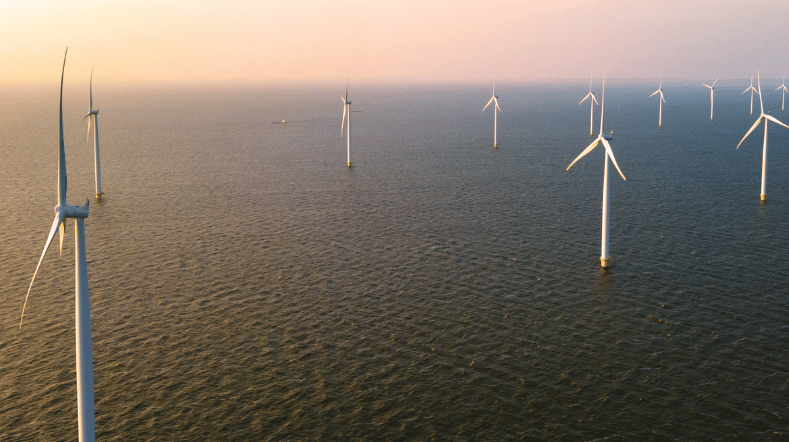
Research TNO and HCSS: Europe under pressure from Chinese advance in wind and electrolysis technology