TNO boosts market opportunities for bio-based building materials made out of fibre
An urgent breakthrough in bio-based building materials is needed if the Netherlands is to hit the target of carbon-neutral construction by 2050. Fortunately, there is huge potential in the country to use fibre crops such as bell pepper to produce sustainable insulation and board materials. At TNO BioBuilt, we are helping market parties to scale up promising bio-based products that can ultimately be used in the real world. TNO and Dijkshoorn explain how.
Bio-based building materials
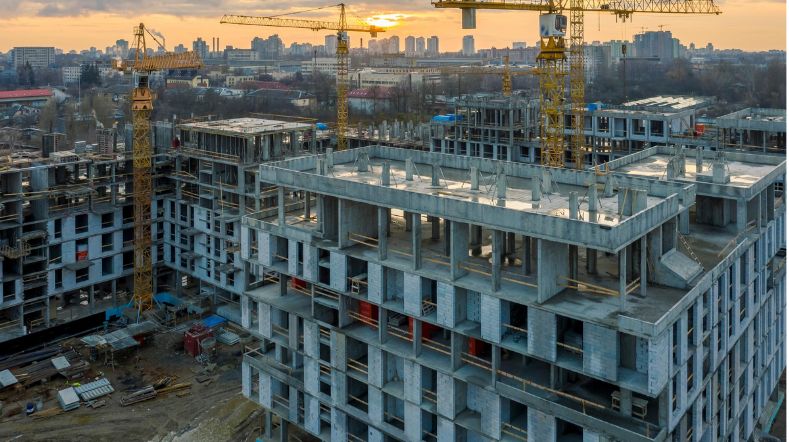
The built environment is responsible for 38% of all CO2 emissions in the Netherlands1, with 11% of this relating to materials. Using bio-based building materials reduces CO2 emissions in the short term, as far less CO2 is emitted during the production process than during that for fossil-based materials. There is also the added effect of keeping the carbon stored in the material for longer.
Both of these aspects are essential to make construction completely carbon-neutral by 2050. Wood is the best-known and most widely used bio-based building material, currently accounting for 2% (by weight) of materials in the Dutch construction industry. With other bio-based materials making up just 0.1%, there is still plenty of potential for other raw materials to help boost that share.
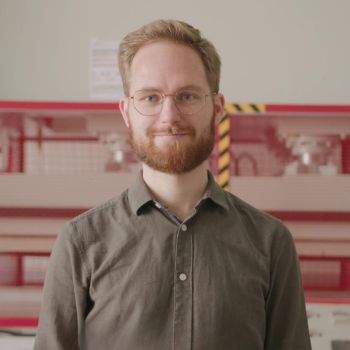
‘Thanks to our prominent agriculture and horticulture sectors, we’re global leaders in the efficient production of biomass. The Netherlands produces around 50,000 tonnes of residual waste from tomato and bell pepper plants every year. At TNO, we’re currently researching ways to use these fibres in construction materials.’
New revenue models
Joost Vette specialises in developing building materials out of fibres at TNO. ‘Fibre crops such as hemp, straw, and flax are crucial for the Netherlands to produce substantial volumes of bio-based materials. As we don’t have large forests here, we have little wood of our own – but thanks to our prominent agriculture and horticulture sectors, we’re global leaders in the efficient production of biomass.’
‘The ‘Nationale Aanpak Biobsed bouwen’ programme encourages farmers to produce biomass for the construction industry. Supplying residual waste as a source for bio-based building materials could be an additional source of income for horticulture businesses. I’m convinced that bio-based developments will lead to new revenue models for biomass in the Netherlands, so we’ll be able to achieve our climate targets while still meeting our economic objectives.’
Producing board materials from bell pepper plants
Besides primary agricultural crops such as straw, hemp, and flax, waste streams can also be harnessed to produce board and insulation materials using fibres.
‘There are plenty of agriculture and horticulture businesses that produce waste streams and would happily explore how they can play their part in the circular economy,’ Vette says. ‘These include horticulturalists and growers from the Westland region, but also government agencies such as Water Boards and municipalities that could supply cuttings from maintaining their green spaces.’
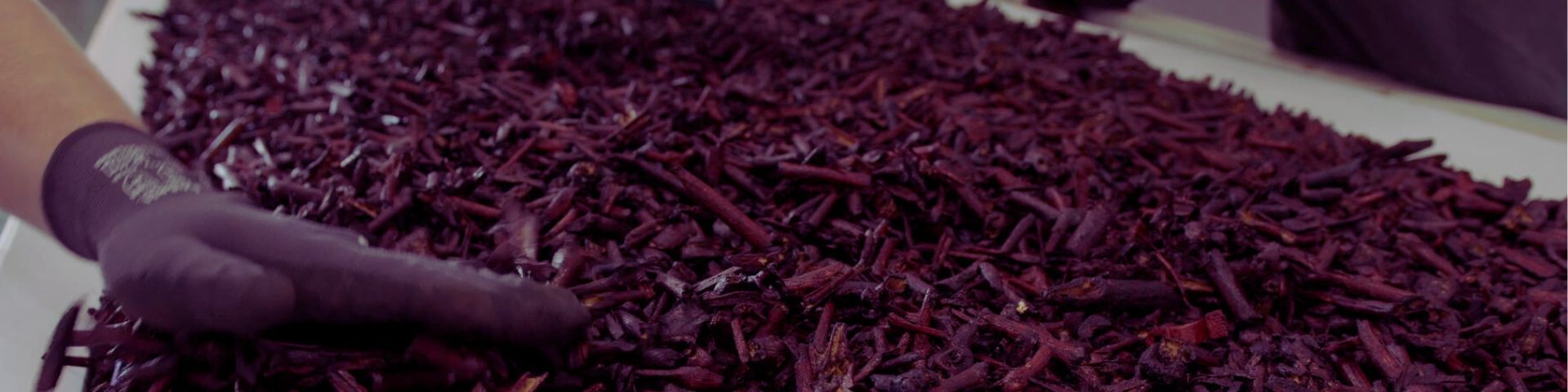
‘One particular raw material that we are currently studying is the bell pepper plant – a promising source of fibre simply because of how common it is, Vette notes. ‘The Netherlands produces around 50,000 tonnes of residual waste from tomato and bell pepper plants every year. At TNO, we’re currently researching ways to use these fibres in construction materials.’
Binderless pressing
Vette has not chosen the easiest material to work with. ‘The easiest way to stick pieces of wood together is to glue them, but there are substances in some raw materials that can act as a binder, doing away with the need for glue. Bell pepper plant fibres contain lignin, which – under the right conditions – can be extracted to stick the fibres together again. We call this binderless pressing.’
With the right pre-processing, this involves pressing the boards together using either high pressure or a high temperature, without adding any binder. ‘We’re looking at which method yields the best results. For example, steaming the fibres first makes them open up more.’
On top of binderless pressing, we are also working with partners to investigate the use of bio-based adhesives, which may be suitable for certain types of board material.
From experiment to scaling up: a producer's opinion
Developing biobased panel materials from residual flows like pepper leaves and prunings requires more than just technical expertise. It's an intensive process to transform agricultural waste into a high-quality product with the same properties as conventional particleboard. The ultimate goal is to produce panels that are directly comparable to existing materials.
Collaboration with market players like Dijkshoorn is crucial. Matthijs Dijkshoorn: 'There's plenty of it, so you don't have to make it.' The Zoetermeer facility offers a unique opportunity: a place where companies facing scaling challenges can collaborate with TNO to test, optimise, and produce pilot runs. 'I always thought TNO was purely a technical agency, but they can perform the additional testing that we can't.'
Building up the market
Ambitious start-ups are working hard on developing promising new building materials made out of fibre crops. However, Vette notes that little progress has been made in building up the market. ‘There’s no shortage of innovative power in the Netherlands when it comes to entrepreneurs who want to help the construction sector go carbon-neutral, but many of them lack access to capital or specific knowledge they need to produce new materials in larger volumes, which is essential for parties in the construction industry to gain experience in using them on the job.’
‘I know this from my own experience: before joining TNO, I had my own bio-based start-up, Fairm, that developed insulation material using mycelium as a binder. It was a promising product, but unfortunately it never moved past the scaling-up phase.’
Working together on scalable solutions
Through TNO BioBuilt we are looking to work with parties both large and small to bring promising developments to fruition.
Vette: ‘With TNO BioBuilt, we want to offer market parties an accessible innovation centre where we can jointly develop both products and production processes until they’re ready to be deployed in the field. We offer a processing site for reclaimed timber, as well as a small-scale production facility for cross-laminated timber (CLT) and bio-based board and insulation materials made out of fibre crops. Ideally, we want to combine these techniques to create promising new bio-based materials.’
‘We’re also capable of generating prototypes for use in pilot projects. Finally, we’re using the production lines to map out processes, calculate their environmental impact, and extensively industrialise and potentially automate them.’
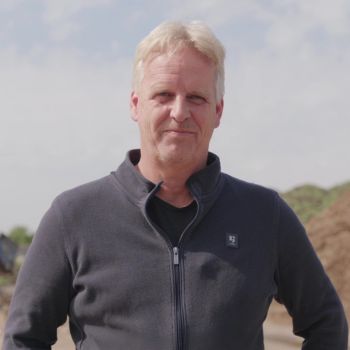
‘TNO can do the additional testing that we cannot.’
Also want to collaborate in TNO BioBuilt?
Together with market parties, Vette wants to continue working on various techniques at the BBMIC until a promising product is ultimately created that can be used in construction. ‘Ideally, we want these bio-based variants to become a fully-fledged alternative to common chipboard and fibreboard like OSB and MDF, because those are used in large volumes. Another promising product is hybrid CLT, for which fibre streams can be used. But we’re not there just yet.’
Vette expects TNO BioBuiltto play a prominent role in scaling up these kinds of innovative applications. ‘At TNO, we have a unique combination of expertise on materials, construction processes, and certifications. Our partners at BioBuilt have easy access to that knowledge, helping them to develop products that work faster.’
1 Position Paper Whole Life Carbon - Dutch Green Building Council
Contact us
-
Ron Oorschot
Functie:Business developerAt TNO, I focus with a team of about 15 colleagues on the use of wood and other biobased materials in construction. We deal with materials research (virgin and circular) in their application. We also play a role in developing biobased building systems and monitoring the performance of buildings in which the biobased building components have been applied.
-
Standplaats:Delft - Molengraaffsingel
-
Email:Email Ron
-
LinkedIn:Ron on LinkedIn
-
Get inspired
Circular economy

Well-prepared for the next pandemic: seven practical tips for proper ventilation
Reclaimed timber deserves a new purpose as a high-quality building material
Industrial and conceptual construction
Reliable Structures