Time setter story: Amir Fattahi about energy models
This is the time when innovation is crucial. To make our world safer, lives healthier and combat climate change. The Netherlands must be climate-neutral by 2050. That calls for sharp choices in a world full of uncertainties. TNO employees make their mark on our time. In this series, we share stories of our time setters. TNO researcher and nominee for the Young Excellent Researcher Award 2025, Amir Fattahi is working on a smart way to calculate thousands of different future scenarios to discover which ones are best for energy, climate and the economy.
Energy models
'I’m working on research that allows us to predict thousands of future scenarios using energy models. This project is called the Scenario Space Project. Every choice we make can have positive or negative consequences for the climate and our economy. Think of flying, using natural gas, installing solar panels, and so on. Our goal is to inform society about the impact of different choices – for example, the effect of investing in nuclear energy versus offshore wind turbines.'
Less driving or more solar panels?
'Thanks to our models, we can simulate thousands of possible scenarios and predict their outcomes. We do this by making our energy models more efficient and applying parallel computation – meaning we run the calculations simultaneously on multiple computers, saving time. This way, we can see what happens if we drive far less, or if we install more solar panels. Policymakers working on climate plans won’t have to guess anymore. They can immediately see what a particular choice delivers and whether it’s worth pursuing. This could save society billions of euros.'
'In the future, we can also use the data from these thousands of scenarios to train AI models. Our approach could form the basis for artificial intelligence and machine learning in the energy modelling landscape. We’re already taking the first steps.'
Scenario Space Project
'I’m very proud of the Scenario Space Project – especially of our entire team. In less than a year, we developed this method and applied it to two models: IESA-Opt and OPERA. We’ve already received a lot of positive feedback from experts inside and outside TNO. I believe the project can have a major impact on climate policy – not just for policymakers, but also for citizens. We want to make all the information public and ensure it’s accessible to everyone, even if you’re not an expert. This way, everyone can gain insight into different climate decisions.'
Convincing others of added value
'Normally, we only look at a few different future scenarios. Looking at more than a thousand and combining them was quite radical. So one of the biggest challenges was convincing others – including managers and senior colleagues in our department – of the project’s added value. At the time, there was no market for it, so we invested our own funds. But we made it happen, and I’m very happy about that.'
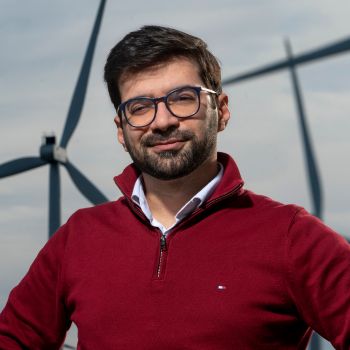
'I build a bridge between science and the practical application of energy models.'
Collaborating
'For the Scenario Space Project, I work closely with my colleagues in Techno Economic Studies within our Energy and Materials Transition unit, and with the subteam Modelling and Scenarios. I also collaborate with colleagues in Circularity & Sustainability Impact, who help us with the scenario methodology.'
Bridge between science and application
'In addition to this project, I’ve researched global energy and climate models such as TIAM-ECN to understand how we can limit warming to 1.5 °C. Our current Scenario Space research can also contribute to this by looking at global future scenarios.'
'Alongside my work at TNO, I also spend one day a week at Utrecht University as a part-time assistant professor. There, I work closely with PhD and master’s students who also research energy models. I’m essentially building a bridge between science on the one hand and the practical application of the models we use at TNO on the other.'
Time to innovate in energy transition. Become a time setter
Get inspired
TNO develops world’s first perovskite solar roof tile
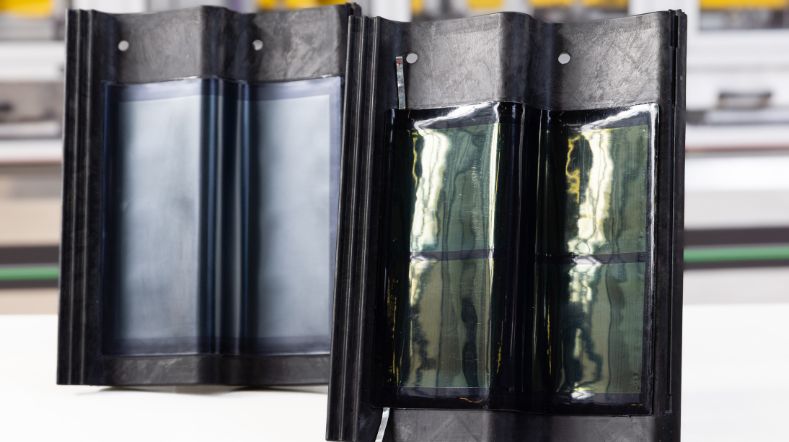
TNO launches Perovion Technologies: first roll‑to‑roll factory for perovskite solar cells

Smart Energy Networks & Grid Solutions

The energy system of the future

New production concept enables large-scale custom application of solar film