Time setter story: Anthia Solaki about human-machine teaming
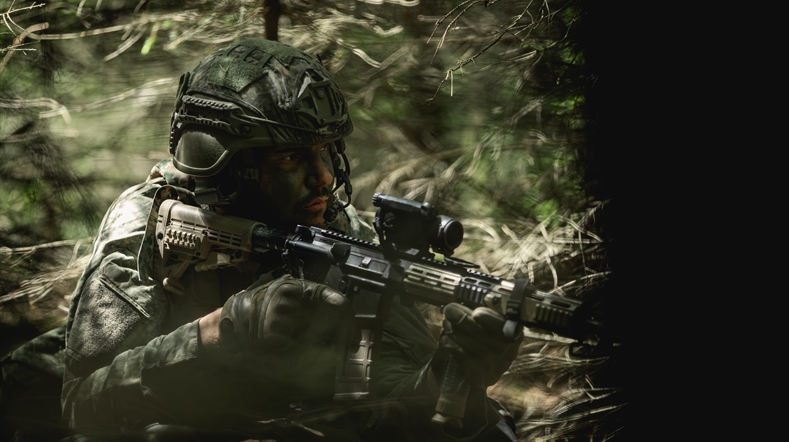
This is the time when innovation is crucial. To make our world safer, lives healthier and combat climate change. Imagine being a soldier on a critical mission, working alongside a trusted teammate. Suddenly, he/she can still perform their individual technical tasks, but no longer grasps why you're taking cover. TNO employees make their mark on our time. In this series, we share stories of our time setters. Anthia Solaki, nominee for the Young Excellent Researcher Award 2025, is teaching AI-systems to understand data ánd human reasoning itself. Her work is making autonomous systems true team players, not just tools.
AI systems and human reasoning
'My work consists of two main pillars, all centred around one theme: bridging AI systems with human reasoning. The first pillar is that I help develop human-aware systems. As humans, we use common sense to make decisions without needing lots of data. We understand things intuitively, whether judging if actions are ethical or, more practical, when to warn teammates about a slippery road. I’m working to give AI systems this same knowledge. And moreover, a 'theory of mind' that allows them to reason about what others know, believe, or intend. It's not just about the world of mathematics and data patterns.'
'The second pillar is empirical evaluation. We test these systems with end users to understand how people interpret AI behaviour. Do they undertrust or overtrust the system? How can they best delegate tasks without losing control over the systems? But also: how can people and systems best learn about each other? All to get more effective human-AI teams.'
Making AI truly robust and reliable
'The impact is all about making AI technology robust, reliable and explainable, especially in high-stakes situations. In warfare, you might have multiple systems working together. If communications get jammed, you want the system to continue operating intelligently. As humans we would make the decision to only transmit critical information, to not give away too much. I'm working on AI that can make such a decision autonomously as well.'
'But this extends beyond physical warfare. It's also about information warfare, like understanding someone's mental state when providing them with information or supporting them in thinking critically and creatively. And besides warfare it could also be useful for many other use-cases. Think about wildfire response or traffic management, situations where AI systems need to work alongside humans under pressure.'
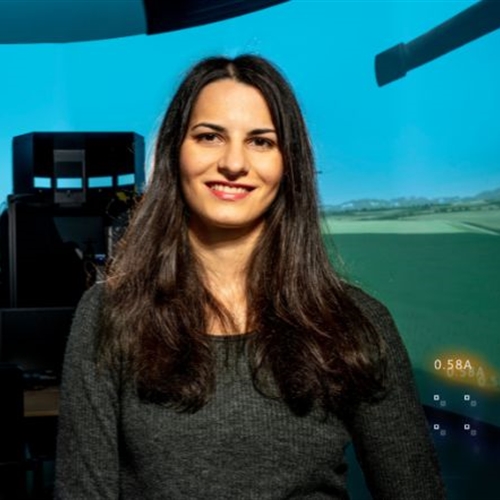
'Theory of mind allows AI to reason about what others know, believe, or intend. It's not just about mathematics and data patterns for individual tasks.'
Strong internal, academic and international collaborations
'I'm incredibly proud of how we tackle these highly interdisciplinary problems. Bringing together defence requirements, modern AI architectures, and human teaming scenarios through strong internal, academic and international collaborations, particularly our NATO working groups. It's rewarding to see how different disciplines and different countries can work together on these frontier challenges.'
Open research challenges
'The high-stakes nature of defence work means we have to be especially rigorous. You can't take shortcuts when the consequences of failure are serious.'
'Working at the frontier of what's possible can also be a challenge. For instance, large language models are very data-driven, which has limitations. With theory of mind tasks, slight adjustments can dramatically change outputs. That's where my background in logic helps, providing a perspective that complements data-driven approaches. Another example is combining the pattern recognition capabilities of neural networks with logical reasoning, what is sometimes called neurosymbolic AI. This can support us in realising thoroughly human-aware systems.'
Collaborating
'I collaborate across three units: Defence, Safety and Security; Mobility and Built Environment; and Information and Communications Technology. Within those, I work with departments like Human Machine Teaming, Human Behaviour & Collaboration, Autonomous Systems & Robotics, Data Science, and more. So I spend a lot of time on the train, traveling to TNO locations!'
'Internationally, I'm active in NATO working groups. The collaborative nature of this research is essential, no single discipline can solve these challenges alone.'
Beyond work: diversity and intellectual muscle memory
'Diversity and inclusion matter deeply to me. Both for a happy work environment but also because I think different perspectives make our research stronger.'
'I'd encourage colleagues to maintain their intellectual curiosity. Yes, we move from deadline to deadline, but don't forget to do things for the fun of it, for the joy of thinking and exploring. That's your intellectual muscle memory.'
Time to innovate for a safe society. Become a time setter
Get inspired
State of Dutch Tech 2026: The Netherlands must dare to scale at a global level
ACROSS: Can adaptive camouflage help make soldiers invisible to enemy detection?
Time setter story: Mirjam de Bruin-Hoegée about chemical weapons
ProQares rejoins TNO and strengthens testing capacity for CBRN protection
TNO in the media 2025