Fewer microplastics and higher yields in plastic recycling
During the processing of plastic packaging waste, tiny plastic particles are unintentionally released. For yoghurt or quark containers, this loss averages around 15% of the material intended for recycling. As a result, less plastic can be reused, while additional microplastics are created in the process. NTCP, TNO and other partners are investigating how this can be improved.
‘In earlier research, we found that with rigid polypropylene, such as yoghurt or quark tubs, as much as 15% of the material is lost in the form of microplastics.’
Prevention and recovery
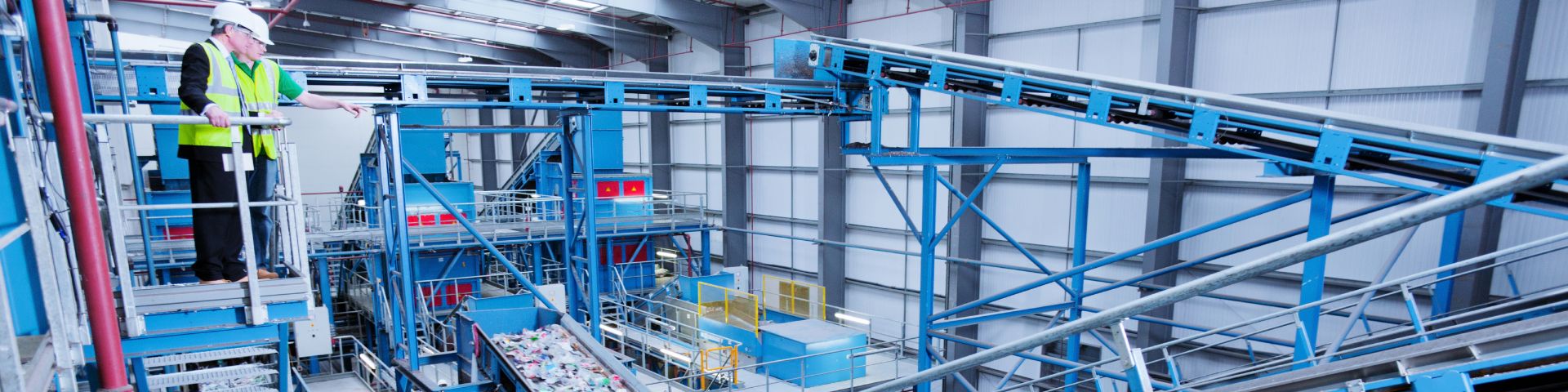
We are becoming increasingly successful at processing plastic waste for reuse, but the process itself is still in its early stages. During the recycling of plastic packaging, particularly during shredding and washing, microplastics are formed which may lead to emissions into the environment. TNO and NTCP, the National Test Centre for Circular Plastics, are exploring how the recycling industry can reduce microplastic formation while simultaneously increasing yield by making better choices in the recycling process.
‘In earlier research, we found that with rigid polypropylene, such as yoghurt or quark tubs, as much as 15% of the material is lost in the form of microplastics,’ says Marcel van Eijk, R&D Manager at NTCP. ‘If you want to become truly circular, you need to understand where in the process material disappears and how you can recover what is released or, even better, prevent microplastics from being created in the first place.
In our new research, Microplastics in Plastic Recycling (MiPlaR) that will run until the end of 2028 we are mapping material losses for all widely used plastics, and investigating how these losses can be structurally reduced or even avoided entirely.’
Download the publication
Want to learn more about how microplastics arise and how to reduce them in the recycling process? Download the full publication by NTCP, TNO and Wetsus to access all first research findings and insights.
The first opportunities are already emerging:
TNO is developing measurement and analysis methods that recycling companies will soon be able to use themselves to understand their recycling efficiency. ‘You need to know what is happening in your process,’ says Sieger Henke, Microplastics Programme Manager at TNO. ‘Not only in a high-tech laboratory, but with accessible tools that allow you to measure, adjust and demonstrate your actions on site.’
The research team initially focuses on the recycling process, in which microplastics are generated, during the drying of washed plastic flakes. ‘Small adjustments in process settings can already make a big difference,’ says Van Eijk. By adjusting the rotation speed of dryers you can also save energy and reduce microplastic formation.
In addition the team examines the process settings and material choices made in the plastics industry as well as in the recycling process. Packaging design also plays an important role, think of polymer type, wall thickness, brittleness or production method. These properties influence how many particles are released during recycling.
Many microplastics end up in the wash water of recycling installations. For this reason, the research team is also developing innovative solutions to remove these particles from the water. ‘In the preliminary phase of our research, flotation already proved capable of removing 98% of microplastics from the water,’ Van Eijk explains.
‘The remaining 2%, especially the very smallest particles, remains a challenge, also because these are the most numerous. Therefore, we are also conducting tests with an innovative purification technology that uses specially designed filters.’
Insights for the entire chain
In the project, research institutes NTCP, TNO and Wetsus are working together with various companies from the recycling and packaging industries, the Province of Friesland and Rijkswaterstaat. ‘This broad collaboration is crucial for the success of the project,’ says Henke.
‘We share the knowledge we gain and the technologies we develop widely with the parties who will use them. As far as we know, this is the first time that the influence of packaging characteristics on microplastic formation has been structurally included in research. That is why we are pleased that Verpact, the umbrella organisation responsible for the collection and recycling of packaging in the Netherlands, has also joined the project.’
‘This broad collaboration is crucial for the success of the project, as far as we know, this is the first time that the influence of packaging characteristics on microplastic formation has been structurally included in research.’
Economic and ecological gains
The MiPlaR project was launched within the Circular Plastics NL (CPNL) programme, which is part of the National Growth Fund and works to accelerate the transition to circular plastics.
Mark Demuynck, Programme Manager at CPNL, sees dual value in the project. ‘Our ambition is to make as much plastic circular as possible and to recycle it. It makes sense to look at how to improve efficiency and yields. We are pleased to bring a positive message: how you can reduce microplastics while also strengthening the economic performance of the recycling process. This represents a step forward, both economically and ecologically.’
A hopeful outlook
Where will we be in ten years? If it is up to TNO and its project partners, the answer is hopeful. ‘Recycling will always generate some microplastics, but we can gain control over their formation and dispersion, and therefore greatly reduce the amount that leaks into the environment,’ Henke says. ‘This is necessary to make large-scale plastic recycling future-proof and to maintain confidence in the system.’
Our expert
Contact us
-
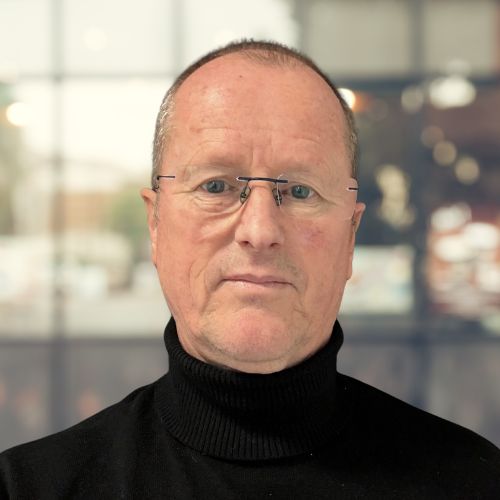
Peter Versloot
Functie:Senior Business Developer Circulaire PlasticsPeter Versloot brings technology and markets together to create sustainable solutions. As a Business Developer at TNO, he focuses on the plastics sector, with expertise in Microplastics and Circular Plastics Modelling.
-
Standplaats:Eindhoven - High Tech Campus 25
-
Email:Email Peter
-
LinkedIn:Peter on LinkedIn
-
Get inspired
New routes for sorting and composite separation
From lab to market: TNO steps up sustainable plastic recycling with dissolution
Webinar: Biobased plastics in a sustainable future
Biobased plasticisers: from compliance to competitive edge

Microplastics in clothing