From non-recyclable to sustainable electronics: how TracXon is scaling the technology
Our devices and gadgets rely on printed circuit boards (PCB’s). Did you know a vast majority of these are non-recyclable? TracXon, a young and ambitious TNO spin-off company, is printing an alternative: flexible, sustainable and lightweight electronics. Co-founder and CEO Ashok Sridhar: ‘TNO invested decades in researching and validating this technology. Scaling up from the lab to mass production, that is TracXon’s challenge and opportunity. What drives me is simple: every step we grow, we create a better future for society.’
Sustainable and superior
TracXon is built on technology developed at TNO. Sridhar calls joining the venture a no-brainer: ‘Our printed electronics have a five times lower carbon footprint and use ten times less material than traditional PCB’s. We consume five times less energy and use no water in the process.’
Beyond sustainability, printed electronics offer functional advantages. ‘We can design flexible, lightweight circuits, think wearable tech or stretchable sensors. This opens up countless possibilities for manufacturers.’
'Our printed electronics have a five times lower CO₂ footprint, use ten times less material, and consume five times less energy, all without using water in the process.'
Global ambitions
What began in 2022 as a startup of three TNO colleagues is now a company with global ambitions. Sridhar and the two co-founders lead a team of over 30 people: ‘Thanks to TNO’s deep tech expertise and collaborative spirit, we moved quickly from lab to market. We are already supplying tens of thousands of products for our global customers. In 2026, we will transition to large-volume production for a couple of our customers, which demonstrates the adoption of our technology by the industry’.’
And the ambition does not stop there. ‘We want to scale to millions of devices per year. At the same time, we are working towards full recyclability and compostable materials, together with European partners. Our mission: enabling electronics that are not only smart, but also responsible.’
Simplifying manufacturing
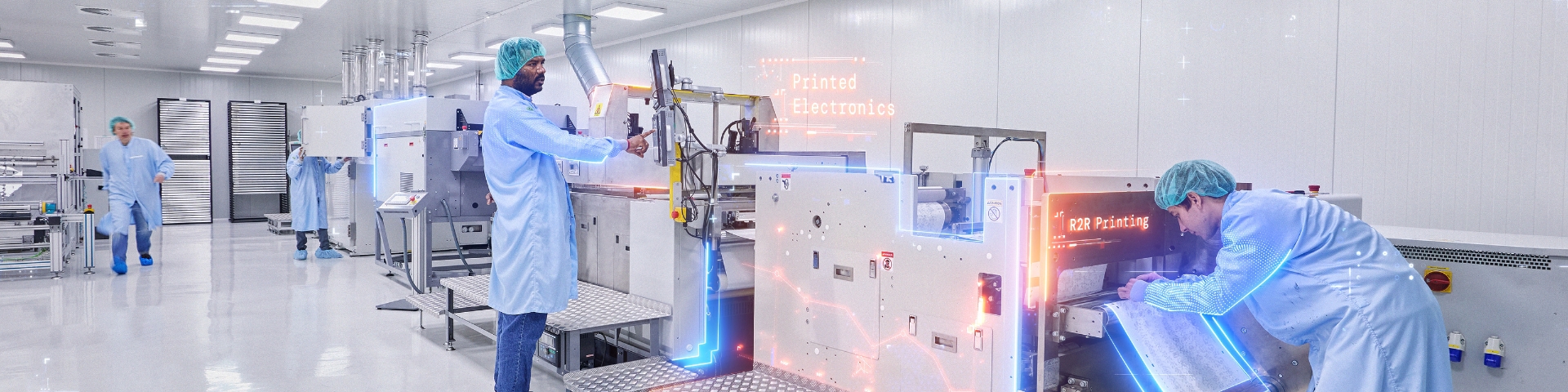
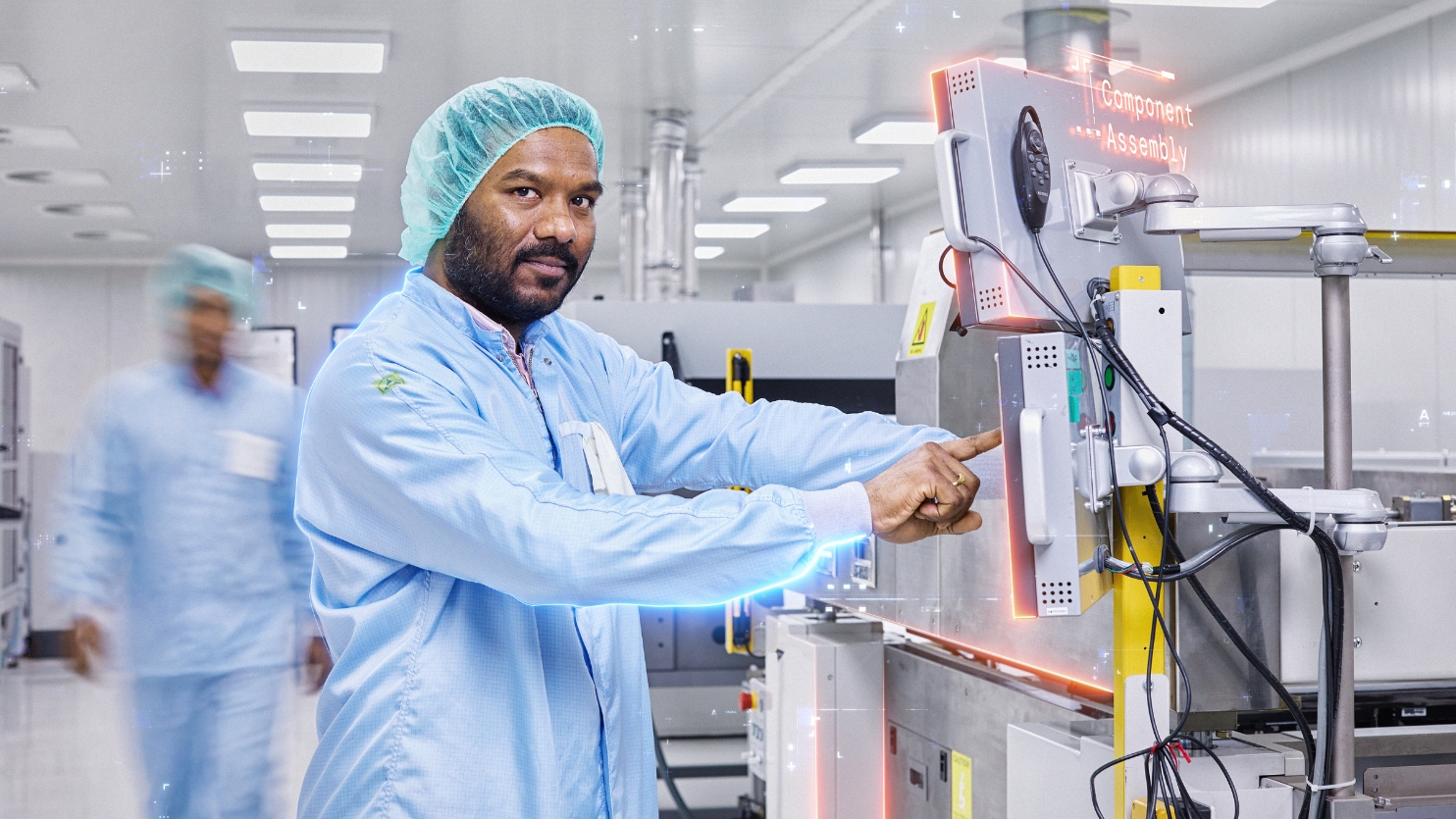
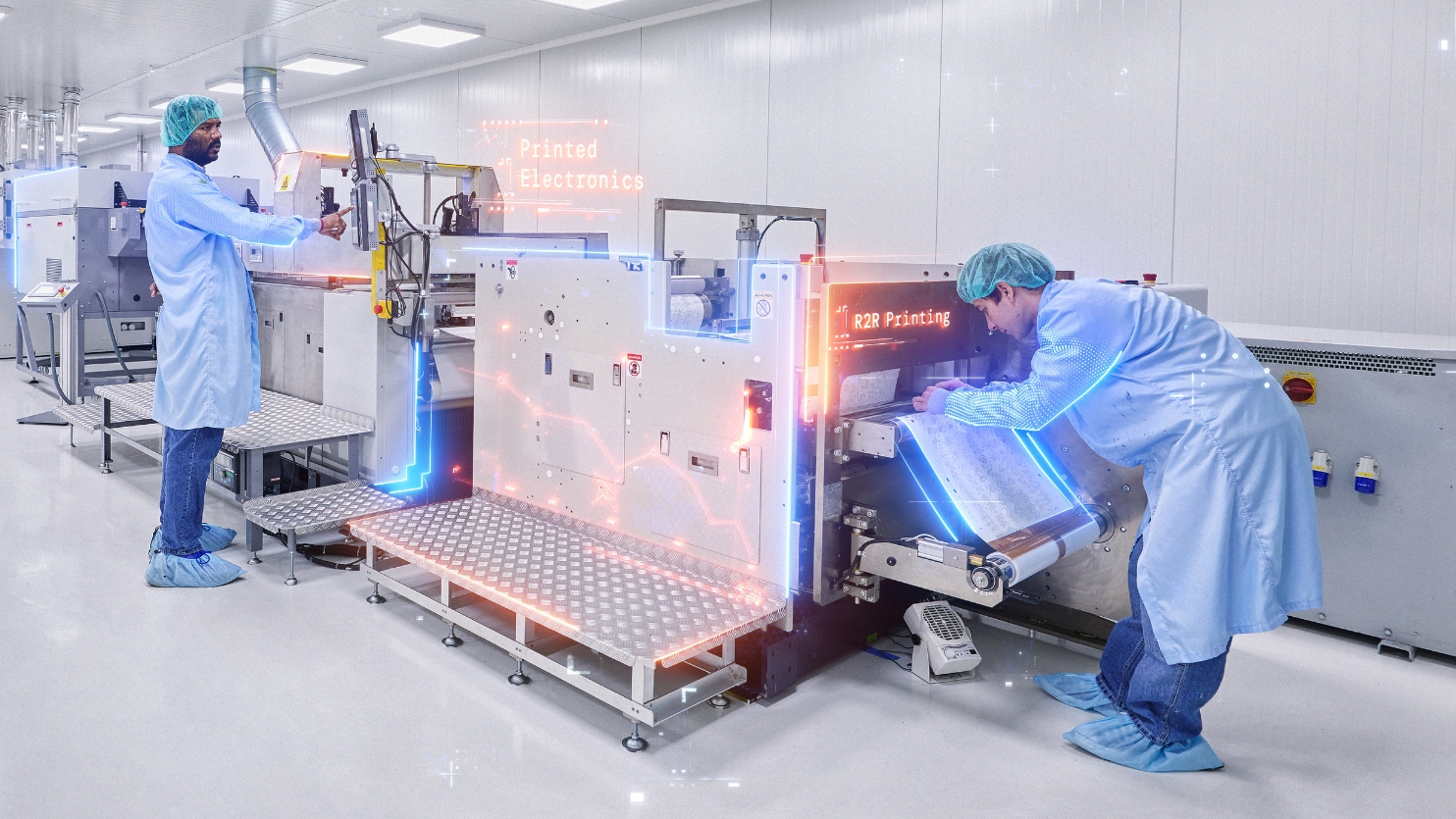
TracXon’s customized production line to print the circuitry is compact and requires only two operators to manufacture millions of devices, which makes European manufacturing viable. ‘Our technology simplifies manufacturing’, says Sridhar. ‘It enables eco-design from the ground up and opens the door to recyclable and even compostable electronics.’
Tackling complexity
Applications range from wearables and medical sensors to internet of things (IoT) devices for logistics. For example, TracXon can produce a seven-layer sensor for health or sleep monitoring, disposable devices needed in huge quantities.
Sridhar: ‘We are unique because we are tackling complexity. Devices are getting more complex, and tomorrow’s will be even more so. Thanks to TNO’s expertise in materials and design, we have a head start, but continuous innovation is key.’
'Our technology simplifies production. With just two operators, we can manufacture millions of devices, making production in Europe commercially viable.'
Selling solutions
Tracxon knows it cannot replace all PCBs alone. That is why it plans to commercialise custom printers: ‘From 2027, we’ll offer turnkey solutions, machines, processes, and design rules, so other manufacturers can adopt our technology. That's how we maximise our impact.’
Why scaling matters
Electronics are everywhere and their presence is growing. Sridhar warns: ‘If we keep relying on traditional PCBs, e-waste will skyrocket. By 2033, global e-waste could equal the weight of a million African elephants. That is madness. We want to do things differently. By enabling full recyclability and reuse.’
More on printed electronics
Curious to explore other perspectives on printed electronics? Take a look at the work of our researchers and the story of spin‑off TracXon.
Contact us
-

Stephan Harkema
Function not known-
Standplaats:Eindhoven - Holst Centre
-
Email:Email Stephan
-
Get inspired
Time setter in the spotlight: the tech by Iris Kerkhof that you can feel on your skin
In the future, our electronics will simply come out of the printer
Industrial photonic chip factory in Eindhoven launched
Touchwaves raises €1.5 million to accelerate development of next-gen wearable technology for NATO air forces