
TNO connects research, innovation and implementation of AI in healthcare
Dutch healthcare is under fundamental strain. An ageing population, a growing staff shortage and rising demand for care are outpacing the system's capacity. The figures are well known and urgent: without change, one in four Dutch people will be working in healthcare by 2040. 'That is simply not sustainable,' says Olivier Blanson Henkemans, Senior Researcher Digital Innovation Youth Health at TNO. 'The challenge lies in how we organise healthcare more intelligently, better support professionals, work more preventively and deploy technology effectively in doing so.'
Artificial intelligence (AI) is frequently cited as the answer to the increasing pressure on healthcare. Smarter systems, more efficient processes, faster diagnoses and more appropriate care. According to Blanson Henkemans and his colleague Jildau Bouwman, Senior Scientist Digital Health Technologies at TNO and Professor of Remote Health Monitoring at Leiden University, innovation does not stop at AI development alone. 'TNO connects research, development and the implementation of AI applications. Only in this way can AI make a genuine impact in practice,' says Bouwman.
As an independent innovation partner, TNO also acts as a connector between healthcare organisations, businesses, policymakers, professionals and patients. This ensures that his ensures that innovations move beyond pilots and are truly embedded in day‑to‑day practice. Within healthcare, TNO focuses on various domains where AI can make a difference, such as detection and diagnostics, supporting healthcare professionals in their daily work, and patient empowerment.
'Empowerment is crucial, because the increasing demand for care and the capacity shortage require people to take more control of their own health decisions, treatment and care, to shift from passive recipients to active partners of care providers,' explains Blanson Henkemans.
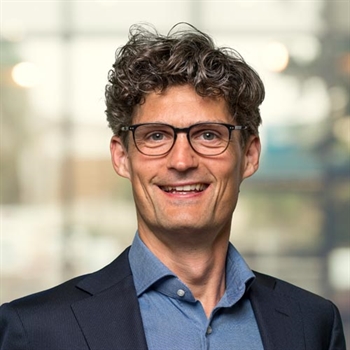
'AI in healthcare requires far more than a good AI model.'
Misconceptions about AI
One of the greatest misconceptions about AI in healthcare, according to TNO, is that its introduction automatically leads to a reduced workload. In practice, new systems can also generate additional tasks, confusion or stress. 'AI in healthcare requires far more than a good AI model,' says Blanson Henkemans. 'You need to understand how professionals work, how clients and patients are supported, how work processes are structured and how the innovation connects with existing systems.'
AI offers major opportunities for healthcare, but many applications get stuck in pilot phases because they do not sufficiently align with real-world practice. TNO aims to connect technology, healthcare practice and relevant partners to implement innovations successfully. In this role, TNO is also involved in the development of the AI factory in Groningen, where European computing power will be made available for training large AI models.
'Europe is lagging behind the US and China in this regard,' observes Bouwman. 'To genuinely participate in development, you also need the infrastructure and computing power.' But technology alone is not enough, according to both researchers. 'We regularly see parties that are technologically very strong but have barely any connection with the healthcare sector,' says Blanson Henkemans. 'That produces a kind of 'technology push': a solution that is technically clever but does not properly address what professionals or patients actually need.'
He cites the example of a project in which TNO developed an AI chatbot together with partners for parents with questions about raising children: 'Such an application can absolutely be valuable. But an AI system cannot independently answer all care-related questions. Sometimes you need to be able to transfer to a professional. And if you do not understand the context of healthcare and the network behind it, you will ultimately hit a wall.'
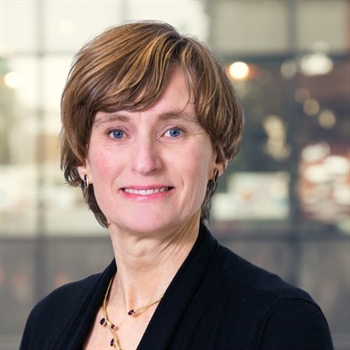
'AI often raises the fear that jobs will disappear, but you also see new roles emerging.'
Remote health monitoring
According to Bouwman, successful AI in healthcare requires far more than good technology. 'You need the entire chain: from developers and researchers to healthcare professionals, patients and administrators. If you do not involve those parties from the outset, you encounter resistance or the application simply does not fit well with practice.'
This begins, in her view, at the stage of AI model development. 'AI formalises human decision-making. In healthcare, you work with guidelines, protocols and all manner of considerations that a professional automatically factors in within the context of a patient. A model does not do this automatically. That is precisely why validation and practical knowledge are crucial. You need to know exactly where risks may arise and when a healthcare professional must always remain involved. In healthcare particularly, that can literally be a matter of life and death. There are real-world examples where things have unfortunately still gone wrong.'
AI offers opportunities to reorganise work differently, according to Bouwman: 'AI often raises the fear that jobs will disappear, but you also see new roles emerging. For example in remote care.' Remote health monitoring is one such example: 'Nurses who can no longer manage the physical demands of the job can still apply their knowledge and experience through remote monitoring. Behind such an AI platform, there is still very much a professional. In this way, you can retain people in healthcare and relieve pressure on colleagues.'
FAIRSPACE: decision support in youth healthcare
Another concrete example is a decision support system for youth healthcare (JGZ), developed by TNO together with records suppliers and JGZ organisations. The system uses data from digital records to process guidelines and provide appropriate recommendations, with large language models (LLMs) also deployed to make unstructured information usable.
'Professionals in youth healthcare work with more than 30 continuously updated guidelines,' explains Blanson Henkemans. 'That is an enormous amount of information. AI can help apply that information more effectively in day-to-day work.' Together with healthcare professionals, TNO tested AI decision support using practical case studies, he continues. 'We found that AI is very well suited to helping flag anomalies in children, such as those relating to heart, hip and skin conditions. Agreement with professionals was lower when it came to follow-up actions, primarily due to missing information and regional or professional differences. The professional therefore remains indispensable for context, nuance and judgement.'
TNO believes that precisely this combination of technology and domain expertise is crucial: 'We bring different perspectives together,' says Blanson Henkemans. 'On the one hand, those of AI experts and model developers; on the other, those of people who understand healthcare practice, guidelines and context. Only together can you develop systems that genuinely work.'
Want to know more about I-JGZ?
As part of the I-JGZ (Intelligent Youth Healthcare) programme, TNO works with key stakeholders, such as industry organisations, government and ICT suppliers, to develop and implement data-driven and user-friendly digital innovations in youth care.
Secure data workspace
A further example is FAIRSPACE, in which maternity care, youth healthcare, local authorities and TNO collaborate around the first thousand days of a child's life. Within this collaboration, a secure data workspace is being developed that combines AI and predictive models with privacy-enhancing technologies (PETs), enabling organisations to carry out analyses together and develop new AI models.
'What is particularly notable about FAIRSPACE is that we can carry out analyses at source, whilst preserving privacy and data sovereignty,' says Blanson Henkemans. 'That may sound technical, but ultimately it is about enabling organisations to collaborate more safely and provide children and families with appropriate support earlier.' According to Bouwman, the project demonstrates that the greatest challenge is no longer technical. 'The technology exists. The problem is far more often one of governance and collaboration.'
In addition to diagnostics and remote care, TNO focuses explicitly on supporting healthcare professionals and reducing labour demands, not by replacing people, but by organising work more intelligently. 'We need to move away from the idea that technology primarily adds extra systems,' says Bouwman. 'It should instead create space.'
AI can help with documentation, planning and repetitive administrative tasks, she argues. 'Healthcare professionals want to provide care, not spend hours on data entry.' But efficiency must never become the sole objective. 'If technology is used purely to increase output, you lose people along the way. Job satisfaction is at least as important.'
This brings us back to implementation, where things so often go wrong. Many initiatives stall at the pilot stage, whilst structural scaling-up lags behind. Bouwman: 'Too little attention is paid to implementation and scaling. As a result, there is an enormous proliferation of pilots and smaller initiatives, whilst very few applications ultimately become widely embedded in healthcare.'
According to Blanson Henkemans, scaling-up requires a combination of technology, collaboration and implementation expertise. 'Many innovations falter because they do not sufficiently align with real-world practice. That is why TNO works from the outset with healthcare organisations, professionals, ICT partners and policymakers. Only in this way can you develop AI that not only works technically, but also genuinely lands in healthcare.'
Or, as Bouwman puts it: 'Ultimately, it is not about what AI can do. It is about what works well, is reliable, meets privacy requirements and achieves the desired effect, for patients and care providers alike.'
Contact us
-
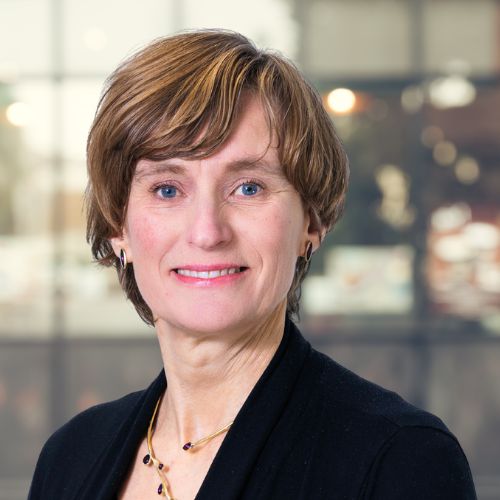
Jildau Bouwman
Functie:Senior scientist at TNO and professor at Leiden UniversityJildau Bouwman leads the strategy of the “digital health technology” program of TNO, that focusses on helping individuals to make a healthy choice using digital solutions.
-
Standplaats:Leiden - Sylviusweg
-
Email:Email Jildau
-
-
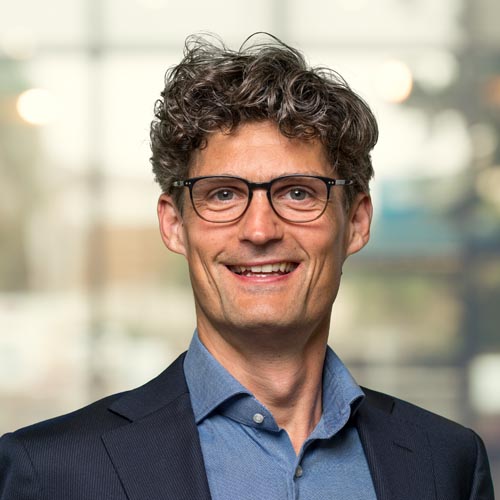
Olivier Blanson Henkemans
Functie:Research scientistI am a senior researcher in the field of human-computer interaction, with a focus on promoting health. My goal is to help youth stay healthy by creating user-friendly digital innovations that can be widely used. I focus on understanding users needs within their specific environments and collaborate with various stakeholders to find the most valuable and effective solutions.
-
Standplaats:Leiden - Sylviusweg
-
Email:Email Olivier
-
Get inspired
Beyond the breath count: patients want meaningful digital metrics in sleep apnoea monitoring
DIMPLAD: Empowering early recognition of Alzheimer’s with user-centered digital solutions
IBDigital Project Starts at ECCO Conference in Berlin

How can AI help reduce pressure on our healthcare system?

Health applications