
ISENTIAL: Inline sensing for safer, more efficient electrolysers
Partners
TNO, TU Delft, Nel, Shell
The ISENTIAL project develops fibre-optic, multiparameter sensor systems for in situ monitoring in PEM and alkaline electrolysers. By enabling early detection of temperature variations, degradation and hydrogen crossover, it aims to improve the safety, efficiency and lifetime of green hydrogen systems. This 24 month collaboration between TNO, TU Delft, Nel and Shell focuses on smart inline diagnostics and advanced optical sensing, strengthening the Dutch technology strategy and Europe’s hydrogen value chain.

‘ISENTIAL shows how inline sensing can fundamentally improve our understanding of electrolyser operation. By bringing measurement inside the system, we enable safer operation and faster progress towards robust, large‑scale green hydrogen production.’
Seeing inside the electrolyser
Electrolysers operate under demanding electrochemical and thermal conditions. Local temperature gradients and unintended hydrogen crossover can reduce efficiency, accelerate degradation and pose safety risks. Until now, these effects have largely remained ‘out of reach’ for direct measurement.
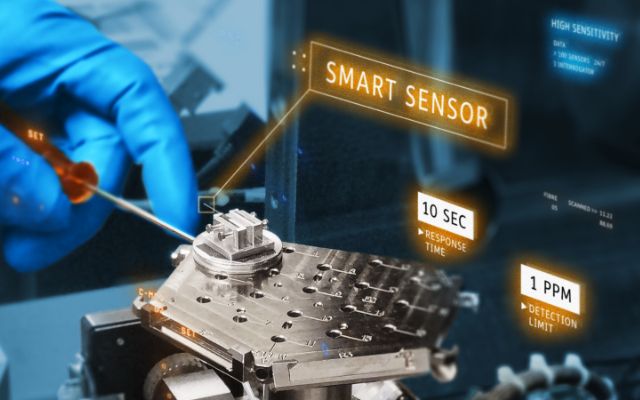
ISENTIAL addresses this challenge by initiating the development of advanced fiber-optic, multiparameter sensor systems designed for direct integration within proton exchange membrane (PEM) and alkaline (ALK) electrolyser cells and stacks. By utilizing Fiber Bragg Grating (FBG) technology combined with sophisticated optical interrogation techniques, we aim to obtain insights into state-of-operation obtaining critical operation data, temperature distribution and mechanical strain. In parallel, the project explores optical hydrogen sensing using metal hydride coatings, paving the way for future in-stack H₂ detection under harsh conditions.
From insight to impact
By making internal process measurable, ISENTIAL supports better operation, design and control of electrolysers. The project aims to gain insights leading to impact:
- Detailed temperature mapping to understand degradation early indicator
- Early detection of H2 crossover to improve safety
- Enabling higher efficiency and longer operational lifetime
ISENTIAL innovates and advances fiber optic sensing technology in close collaboration with electrolyser OEMs and end users, steering the pathway to impact.
Project facts
- Project type: Public-Private Partnership (HTSM Smart Industry)
- Duration: 24 months (2025-2027)
- Focus: Advancing key monitoring capabilities as a first step towards enabling in situ diagnostics in electrolysers
Public–private partnership
ISENTIAL is a Public–Private Partnership within the HTSM Smart Industry roadmap. The consortium brings together system developers, operators and research organisations, each contributing complementary expertise:
Develops the multiparameter fiber optic sensor system, leads sensor integration, testing and data analysis, and coordinates the overall project.
Develops and optimises metal hydride based coating materials for optical hydrogen sensing and performs fundamental research on hydrogen crossover detection.
Provides PEM and alkaline electrolyser cells and stacks and supports sensor integration and validation in industrially relevant configurations.
Defines use cases and sensor requirements from an operator and system perspective and contributes to interpretation of data for large scale hydrogen applications.
TNO’s added value
TNO combines in-depth expertise in fiber optic sensing with extensive knowledge of hydrogen and electrolysis systems. This unique position enables TNO to bridge fundamental research and industrial application.
- Proven experience in developing fiber optic sensor technologies
- Deep understanding of both PEM and alkaline electrolysers
- Prior demonstrations of in cell fiber optic temperature sensing
- Access to advanced electrolyser test facilities, enabling rapid iteration between development and validation
Through ISENTIAL, TNO contributes to safer and more efficient green hydrogen production and strengthens the Dutch position in the hydrogen value chain and smart manufacturing technologies.
Discover more about ISENTIAL
ISENTIAL demonstrates how advanced sensing technologies can accelerate the transition from laboratory research to industrial hydrogen systems. Want to know more about inline monitoring, fiber optic sensors or hydrogen electrolysis? Contact TNO to explore collaboration opportunities.
Contact us
-

Mark Courage
Functie:Director Smart Industry-
Standplaats:Delft - Stieltjesweg
-
Email:Email Mark
-
-

Man Xu
Functie:Senior Scientist-
Standplaats:Delft - Stieltjesweg
-
Email:Email Man
-
Get inspired
Better decisions for housing, mobility and climate through digital twins

How manufacturing companies can make the transition to circular production

Without robotisation, the Netherlands will no longer have its own manufacturing industry in ten years
Partnering for mutual progress

TNO spin-off Scenexus secures 1.6 million euro investment