How we scale up biobased building materials
The market for biobased building is in full swing. Biobased building materials, such as wood, are being used more and more often in place of traditional steel or concrete. But there is uncertainty among market players and investment is lagging. We are working on knowledge development and innovations to exploit the full potential of biobased building.
Biobased building materials
Meeting the climate goals for a sustainable built environment is quite a challenge. The use of biobased construction materials and systems is one of the solutions that may contribute. Several initiatives show that the building economy is in full swing.
Timber buildings
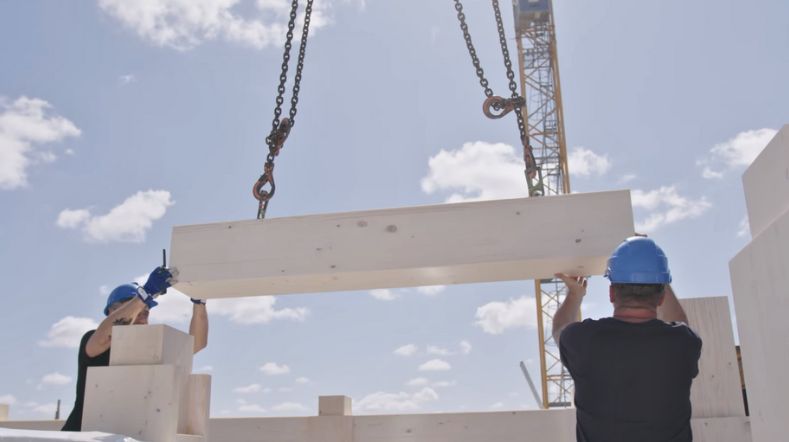
The reason biobased materials are increasingly being used in place of steel or concrete is the arrival of load-bearing elements such as cross laminated timber (CLT), providing an important development in a market that until now has focused mainly on timber frame construction, window frames, doors, and roofs. The first pioneers are now delivering their timber buildings in the Netherlands.
Advantages and disadvantages of wood as a building material
Wood has the great advantage of coming from a renewable source. Under sustainable management, forests are an inexhaustible resource. This advantage over other materials is not sufficiently appreciated in current sustainability systems. The same is true for temporary carbon storage capacity. But disadvantages of wood, such as land use, are also not included in the calculations. Independence is often missing from the public discussion. We are trying to break through this in collaboration with other research institutions.
Removing uncertainties
Despite the potential, there is still a lot of uncertainty among market players, and, as a result, investment is lagging. Together with partners, we are therefore researching the optimisation of building elements for buildings made partly or entirely from wood. Further knowledge development and innovation are also needed to reduce the cost price of biobased construction materials and enhance their circular potential. Moreover, this will remove uncertainties. It allows for scaling up and making the most of biobased construction.
TNO BioBuilt helps construction sector scale up biobased construction
To achieve CO2-neutral construction, the construction sector faces the significant challenge of using biobased and circular materials on a large scale. Innovative building materials produced from residual wood and fiber crops are often still in an experimental phase.
For market acceptance and validation of building requirements, products must be able to be produced and applied on a limited scale. The market possesses extensive knowledge of raw materials, production processes, and building requirements, but this knowledge is not always held by the same party. Furthermore, there is often a lack of resources to invest in costly production facilities, and the risk of disinvestment is high.
The TNO BioBuilt facility offers partners advanced technology and expertise for the development and pilot production of biobased building products and systems. In this way, TNO supports producers such as Dijkshoorn and Urban Climate Architects in the development process: from raw material to building product.
Our collaborations
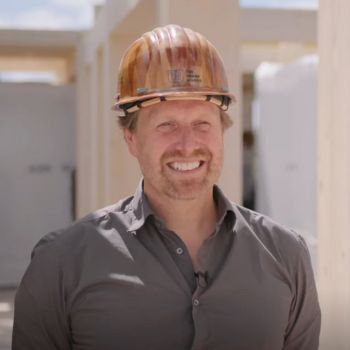
‘TNO is our bridge between knowledge and practice.’
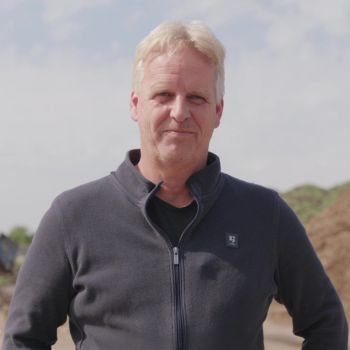
‘TNO can do the additional testing that we cannot.’
Want to scale up biobased construction too?
Research programme ‘Emission-free Building’
Within the Research Programme ‘Emission-free Building’, we are working with market players on various research projects on timber and other biobased building materials. We focus on the following 3 components:
- building innovations (building materials, building systems, and cost price)
- improving calculation methods related to sustainability
- industrialisation and prefabrication for upscaling
The programme contributes to the underlying objectives of the Building Innovation cluster, i.e. to improve and accelerate the building sector in the Netherlands, and make it more sustainable.
Architectural innovations
Why TNO
With contractors, suppliers, architects, and engineers we work on optimisation of CLT-like products, adhesive bonding, and element geometry; development of wood and hybrid building elements (optimised for acoustic, fire, moisture, vibration, load-bearing capacity, compressive strength, durability, and price requirements); and circular design.
Fair comparison
Why TNO
We want to ensure that biobased and other materials can be compared in a fairer, scientifically based way. That's why we are researching improved calculation methods, in which biobased materials are included in a fairer way in environmental performance calculation methods, such as the Environmental Performance Calculation for Buildings (MPG).
Prefabrication and industrialisation
Why TNO
Because biobased materials are light and easy to work with, they lend themselves well to prefabrication. We support companies in industrialising business processes through platform technology, as well as optimising building systems and machining processes.
Contact us
-
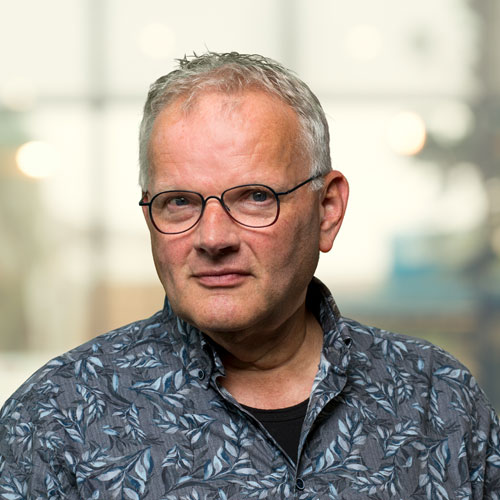
Ron Oorschot
Functie:Business developerAt TNO, I focus with a team of about 15 colleagues on the use of wood and other biobased materials in construction. We deal with materials research (virgin and circular) in their application. We also play a role in developing biobased building systems and monitoring the performance of buildings in which the biobased building components have been applied.
-
Standplaats:Delft - Molengraaffsingel
-
Email:Email Ron
-
LinkedIn:Ron on LinkedIn
-
-

Kai van Gool
Functie:Senior business developer Circular & Biobased ConstructionAs a business developer for Circular & Biobased Construction at TNO, I work on the development and scaling up of sustainable construction solutions.
-
Standplaats:Delft - Molengraaffsingel
-
Email:Email Kai
-
LinkedIn:Kai on LinkedIn
-
Get inspired
Reclaimed timber deserves a new purpose as a high-quality building material
Boost for TNO facilities for sustainable mobility, bio-based construction and AI