Laser communication for faster and more secure satellite connections
Laser communication is a key technology for the digital infrastructure of the future. By transmitting data via narrow beams of light that are more difficult to intercept, fast, efficient and secure connections are created between satellites, ground stations, aircraft and unmanned systems. TNO is developing the critical optical technology required for this and, together with partners, has already taken significant steps towards practical application, including for air-to-space communication, satellite-to-ground links and future quantum communication via space.
Showcase projects
Scalable solutions for real-world use
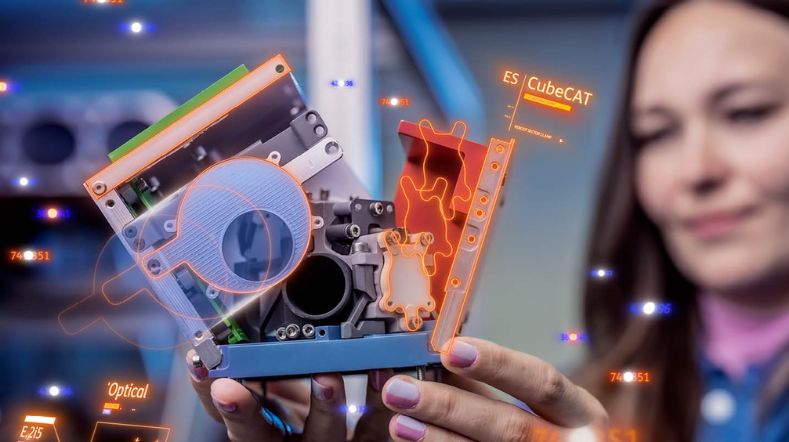
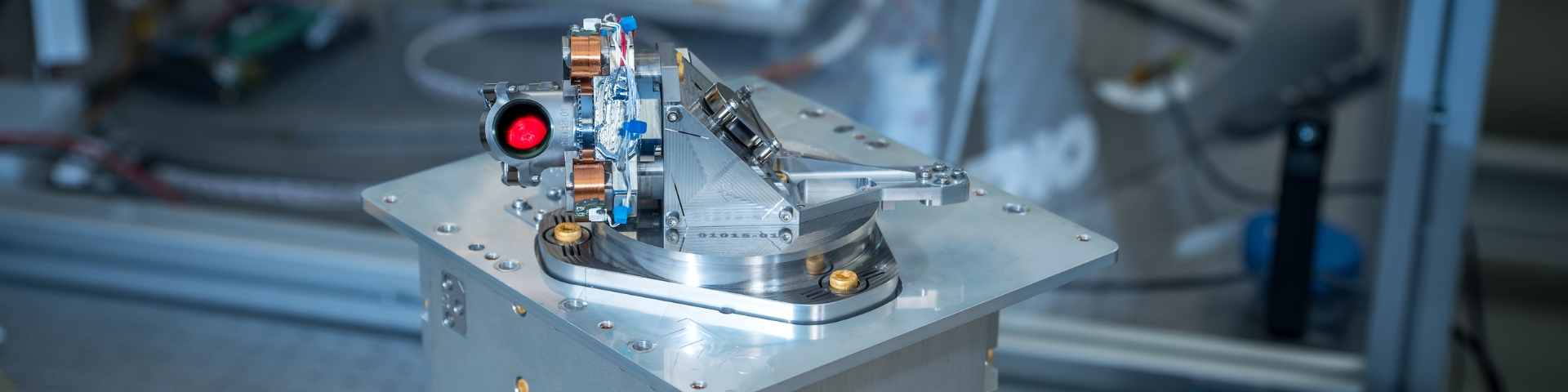
Laser satellite communication uses invisible light signals to exchange large volumes of data between satellites, ground stations, aircraft and UAVs. As radio-frequency communication reaches its limits, optical links offer faster, more secure and more efficient connectivity. TNO develops the key technologies behind these links, including optical terminals, precision pointing and tracking systems, deformable mirrors, photonics and optical ground stations, and works with industry partners to bring them into real-world use.
Building the bridge to market
TNO plays an important role in moving laser communication technology from research to industrial application. We develop and mature critical technologies at an early stage, helping to close gaps that would otherwise slow down market development. Through licensing and collaboration with partners such as FSO Instruments and SES, these innovations can be turned into scalable products, strengthening the position of the Netherlands and Europe in optical satellite communication.

Enabling a global quantum internet via space
Quantum communication promises unprecedented levels of security. Discover how TNO is using space-based technologies to extend quantum networks beyond national borders and towards a global quantum internet.
Making the Netherlands indispensable in laser satellite communication
Satellite communication is set to transform the way the world connects. By combining cutting-edge research with industrial collaboration, TNO is helping Dutch companies seize opportunities in this strategic technology and contribute to Europe's digital resilience.
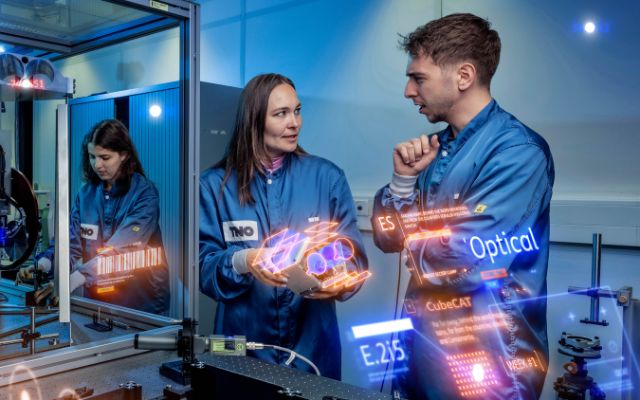
More about satellite communication
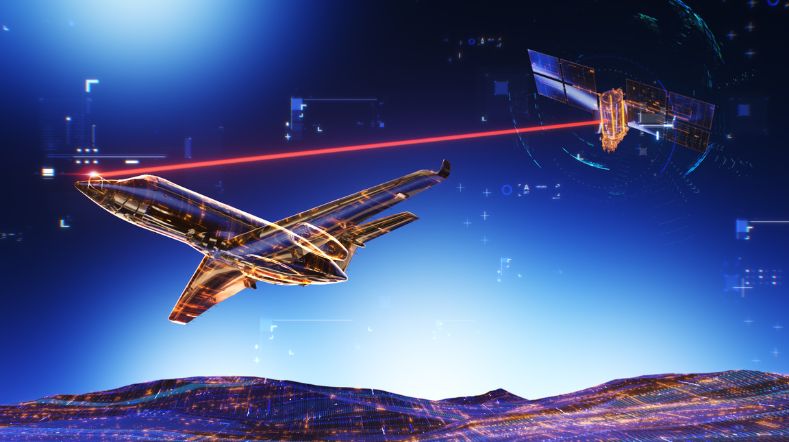
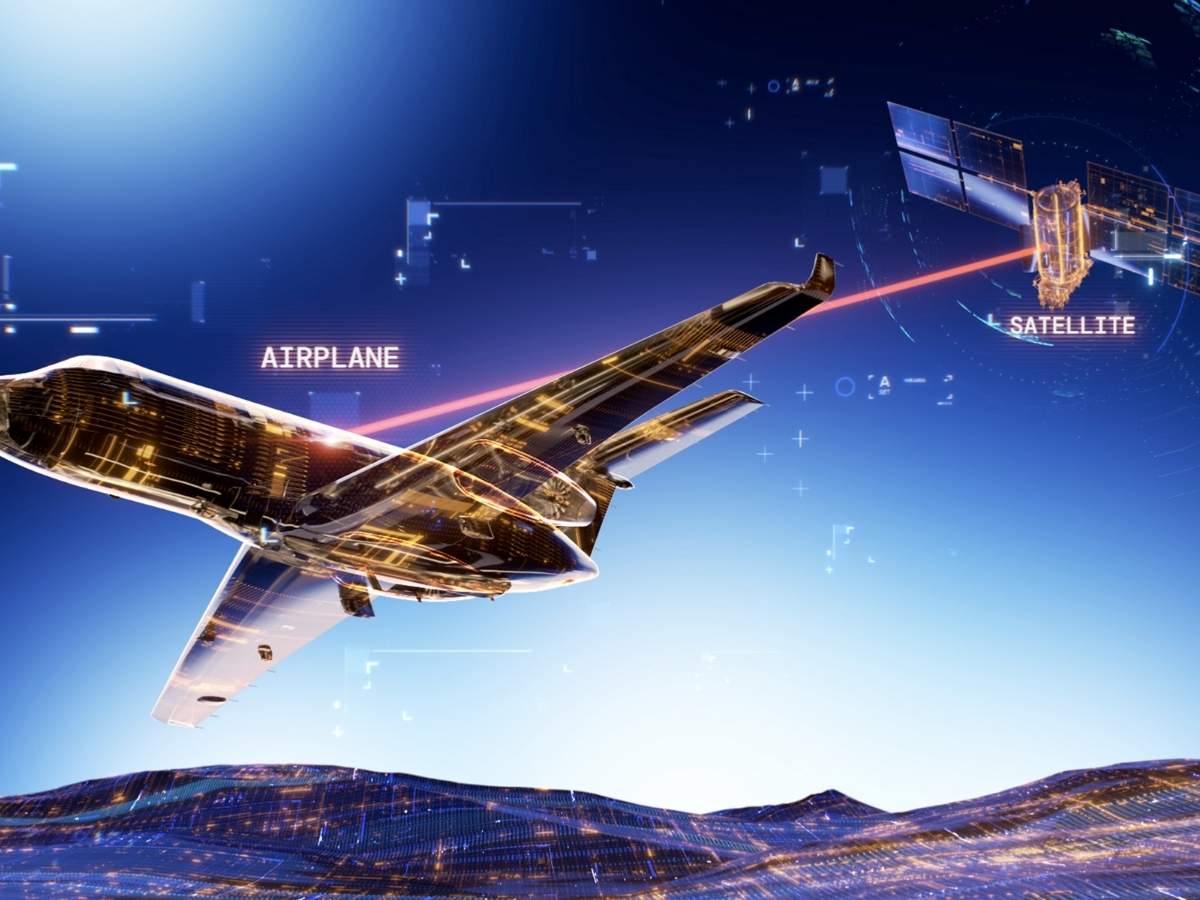
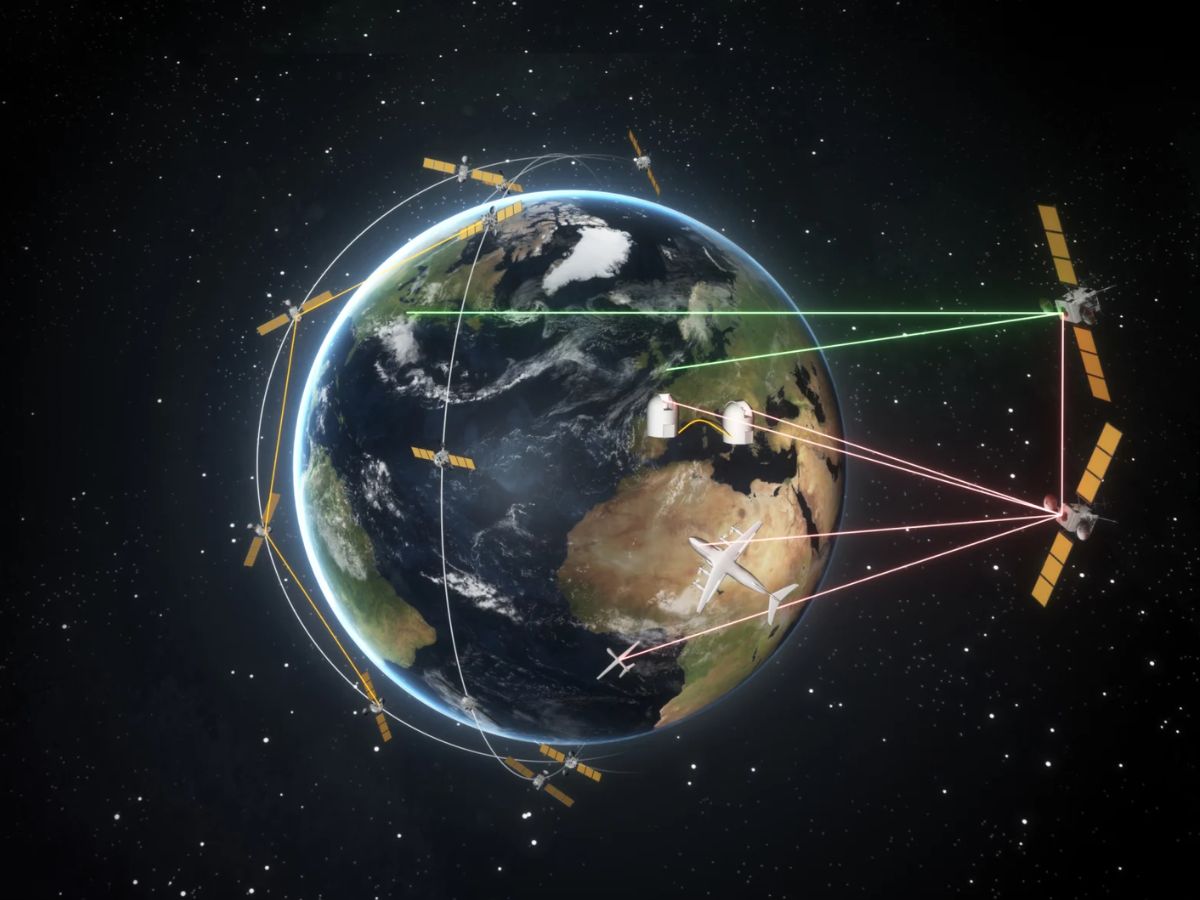
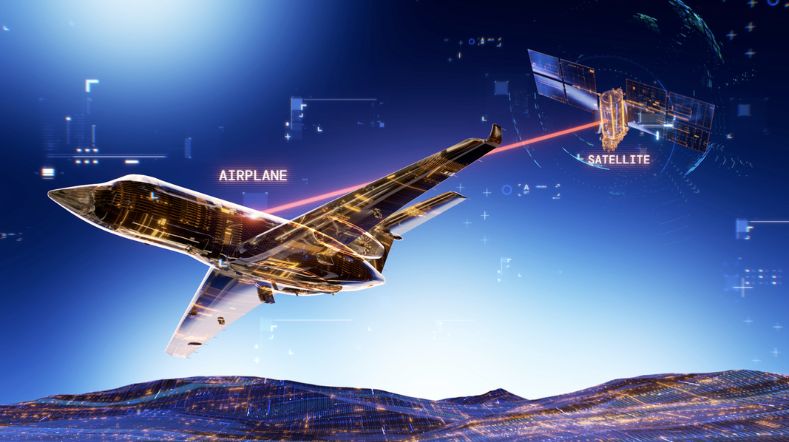
Laser satellite communication is already moving from research to real-world use. TNO has proven the technology with SmallCAT, which established a laser link between a satellite and an optical ground station in The Hague. In the UltraAir project with Airbus, TNO also demonstrated a secure optical link between an aircraft and a geostationary satellite. Project AirCAT builds on these milestones and brings the technology closer to future industrial applications.
The demand for data is growing rapidly, while current radio-frequency systems are increasingly reaching their limits in terms of capacity, resilience and security. Laser satellite communication uses narrow optical beams, enabling faster and more efficient data transfer that is harder to intercept or jam. For Europe, this technology is also strategically important: it can help reduce dependency on non-European communication infrastructure and strengthen secure, sovereign connectivity.
Laser satellite communication uses invisible light signals to transmit data across long distances. These optical links can connect satellites with ground stations, satellites with other satellites, and aircraft or UAVs with satellite networks. Because the beams are highly focused, large volumes of data can be exchanged with great precision and a higher level of security than conventional radio-frequency links.
Laser satellite communication can support a wide range of future applications, from secure defence communication and high-speed in-flight connectivity to earth observation, civil communication networks and mobile platforms such as UAVs (drones). It also plays a role in the development of future quantum networks, where space-based optical links may help connect quantum systems over long distances.
TNO combines deep expertise in optics, optomechatronics, photonics, control technology, satellite communication and quantum technology. We develop the critical building blocks behind laser satellite communication, including optical terminals, precision pointing and tracking systems, mirrors, photonic components and optical ground station technology. TNO also has a proven track record in bringing complex technologies from research to real-world demonstrations, such as the successful optical aircraft-to-satellite link with Airbus and the satellite-to-ground laser link using a compact Dutch satellite instrument.
TNO acts as an independent orchestrator between research, industry, government and end users. We bring together technology developers, space companies, defence stakeholders, aviation partners, telecom players and quantum specialists to accelerate the development and application of secure optical communication. Whether the goal is a demonstrator, industrialisation, system integration or future network architecture, TNO helps partners turn advanced laser communication technology into scalable solutions. Contact us.
The Dutch Long-Term Space Agenda identifies space as strategically important for safety, climate, science, satellite data, economic growth and international cooperation. Laser satellite communication directly supports several of these missions: it strengthens secure connectivity, contributes to technological sovereignty, creates opportunities for Dutch high-tech companies and builds on the Netherlands’ strong position in advanced space instruments.
Contact us
-

Ewa Lukkezen
Functie:Business Developer, Space & Scientific InstrumentationContact me to partner with TNO and uncover new opportunities in Satellite Communication (SatCom) in the optical and radio frequency (RF) domains. I work with industry partners to develop innovative SatCom solutions and build technologies of tomorrow.
My work focuses on optical SatCom, radar/RF technology for SatCom, deep-space communication, Quantum Key Distribution (QKD) and 5G/6G technology for SatCom.
-
Standplaats:Delft - Stieltjesweg
-
Email:Email Ewa
-
LinkedIn:Ewa on LinkedIn
-
Get inspired
ESA selects TNO to explore laser satellite technology for the Low-LEO layer of Europe’s IRIS² network
Airbus and TNO demonstrate secure laser link between aircraft and satellite
Quantum internet and quantum networks series 1.0
First Dutch hybrid quantum channel for secure communication successfully established

TNO's laser communication terminal secures prestigious win at EARTO Innovation Awards