Quantum-secure communication: from promise to practical use
Quantum computers could eventually break much of the public-key cryptography used today. Organisations therefore need to prepare for a transition to quantum-safe security. Post-quantum cryptography, or PQC, is the main route for this large-scale migration. But for selected high-assurance communication links, quantum key distribution, or QKD, could provide an additional layer of protection.
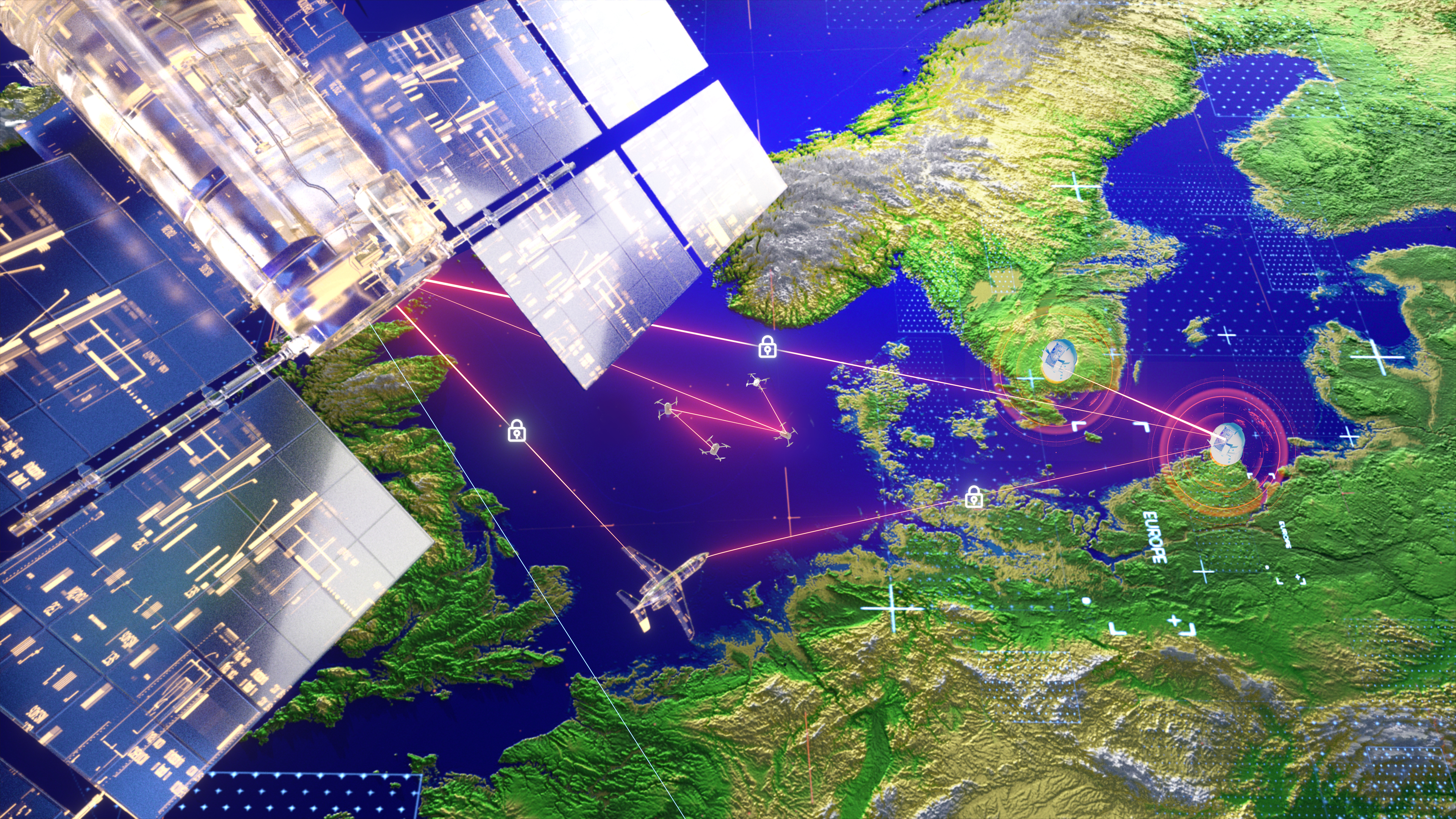
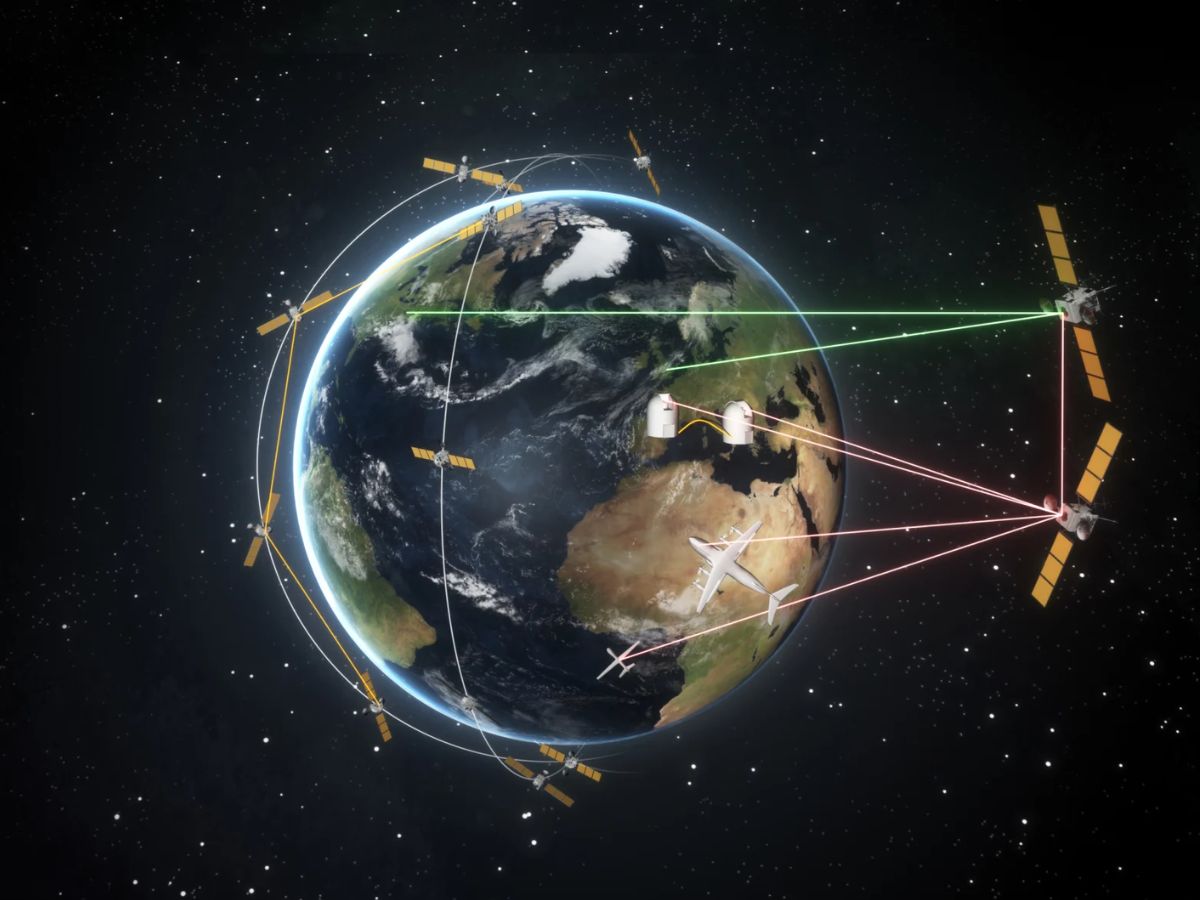
TNO is developing a ground station for the EAGLE-1 satellite mission. The ground station will offer organisations an opportunity to explore satellite-based QKD, examine realistic use cases and contribute to the development of a European quantum communication ecosystem.
Could your organisation become one of its first users?
Beyond the QKD versus PQC debate
Discussions about quantum-safe security are often framed as a choice between PQC and QKD. In practice, they fulfil different roles. PQC replaces vulnerable public-key algorithms with algorithms designed to resist attacks by both classical and quantum computers. It can be introduced through software, firmware and protocol updates, making it the logical starting point for quantum-safe migration.
QKD is a specialised method for establishing shared secret keys between authenticated endpoints. Its security basis differs from that of PQC because it uses quantum-physical principles rather than relying solely on the assumed difficulty of a mathematical problem.
QKD does not replace authentication, encryption, endpoint security or key management. It must be integrated into a wider security architecture. Its potential value lies in complementing other quantum-safe measures where long-term confidentiality, strategic importance or the consequences of compromise justify the additional infrastructure and complexity.
QKD is not the default solution for every organisation or every connection. It may be relevant for carefully selected communication links, including:
- Governmental and diplomatic communications that must remain confidential for decades
- Defence and security applications that require multiple, independent layers of protection
- Critical infrastructure with highly sensitive connections between fixed sites
- Financial institutions protecting strategic or long-lived information
- Telecom, cloud and data-centre providers investigating quantum-safe connectivity services
International or geographically remote connections for which a trusted terrestrial route is unavailable. The strongest approach may be a layered architecture in which PQC provides the general foundation and QKD adds another source of key material for selected links. This combines mechanisms with different security assumptions and different potential failure modes.
From technology to a credible use case
Before QKD can be used operationally, important questions must be answered:
- Which information needs to remain confidential, and for how long?
- Which endpoints or connections require additional assurance?
- What should QKD add to the existing security architecture?
- How will authentication, encryption and key management be organised?
- Which infrastructure and operational processes are required?
- Are the implementation, security assumptions and trust model sufficiently transparent?
- Is the expected security benefit proportionate to the cost and complexity?
TNO brings together expertise in quantum communication, cybersecurity, optical ground stations and system integration. Our role is to examine both the opportunities and the limitations of QKD, helping organisations move from general interest to a realistic assessment of technical, security and operational requirements.
The EAGLE-1 ground station
The EAGLE-1 ground station will provide a practical environment in which organisations and technology partners can explore satellite-based quantum key distribution. The ambition is to build an initial user community, identify credible applications and learn what is required to integrate QKD into real security architectures. This is relevant to:
- Cybersecurity companies developing quantum-safe services and solutions
- Quantum technology companies contributing hardware, software or system capabilities
- Policymakers working on digital sovereignty, critical infrastructure and quantum-safe transition
- Organisations investigating high-assurance communication use cases
Join the conversation on 7 December 2026
On 7 December 2026, TNO will mark the start of the construction of the EAGLE-1 ground station. This is thé opportunity for prospective users, technology partners and public-sector stakeholders to explore the possibilities and opportunities. The event will offer an opportunity to:
- Learn what QKD can and cannot provide
- Explore the relationship between QKD and PQC
- Discuss possible applications and user requirements
- Meet organisations contributing to the emerging ecosystem
- Consider whether your organisation could become an early user or partner
Interested in the future of quantum-secure communication? Join us and help shape the first EAGLE-1 user community.
Contact us
-
Charlotte Postma
Functie:Market Strategist - SpaceContact me to partner with TNO and grow knowledge and technology in Space Situational Awareness and Quantum Laser Satellite Communication. If you are an optical satellite manufacturer, I am very happy to also take you through what TNO can offer in terms of state-of-the-art instrument calibration campaigns.
-
Standplaats:Delft - Stieltjesweg
-
Email:Email Charlotte
-
Get inspired
TNO space event: Building European space autonomy
ESA selects TNO to explore laser satellite technology for the Low-LEO layer of Europe’s IRIS² network
Airbus and TNO demonstrate secure laser link between aircraft and satellite
Quantum internet and quantum networks series 1.0

First Dutch hybrid quantum channel for secure communication successfully established