

Technology that brings the universe into view
The universe holds answers to some of humanity’s biggest questions. To uncover them, scientists need to see further, sharper and with greater precision than ever before. TNO develops cutting-edge technology for ground-based observatories and space telescopes, helping transform light from the universe into new scientific insights.

Specialisation
TNO develops advanced optical and opto-mechatronic technologies that help scientists observe the universe with ever greater precision. Our expertise ranges from optical instruments and communication systems for space missions to deformable mirrors (NASA-IRTF-ASM, UH88-ASM, ESA Laser Communications), laser guide star projection systemsLaser projection systems (VLT, ELT) and nanometre precision support structures for ground-based telescopes (ELT). TNO also has a long history of developing spectrographic instruments for space applications. Together, these technologies enable sharper observations, reliable scientific instruments and new discoveries about the origins and evolution of the universe. Discover how TNO contributes to astronomy both in space and here on Earth.
These expertise areas contribute to cutting edge developments in adaptive optics, nanometer precision mechatronics and space qualified spectrometry systems.
Deformable Mirrors
Deformable mirrors are a core technology of “Adaptive Optics” used in telescopes to correct for atmospheric turbulence which distorts the view of the telescope (wavefront), to allow ground-based telescopes to see as well as space-based telescopes such as the Hubble Space Telescope and James Webb Space Telescope. TNO has developed an innovative, cutting-edge deformable mirror technology which has the potential to expand how mankind sees the universe.
TNO has also developed adaptive secondary mirror technology for major observatories in Hawaiʻi. Following its work on a 62-centimetre ASM for the University of Hawaiʻi 88-inch telescope and the Adaptive Secondary Mirror (ASM) for the NASA-IRTF Telescope, TNO’s patented Hybrid Variable Reluctance technology was selected for the future ASM of the W. M. Keck Observatory. The proposed 1.4-metre mirror will use approximately 3,400 to 4,000 actuators to correct atmospheric distortions, enabling sharper images and more sensitive astronomical observations.
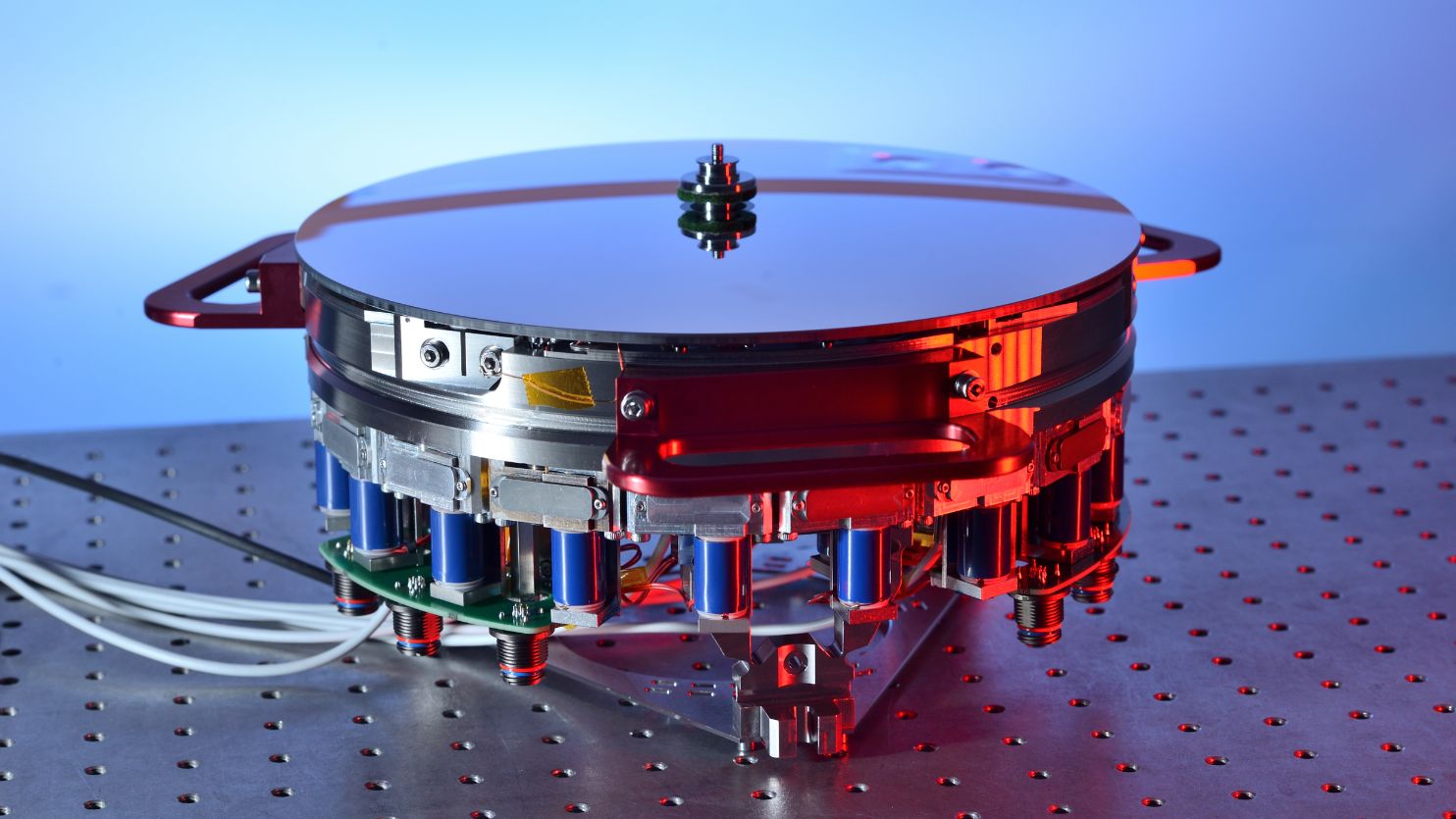 Adaptive Secondary Mirror (ASM)/ Picture by Fred Kamphues
Creating artificial stars for sharper views
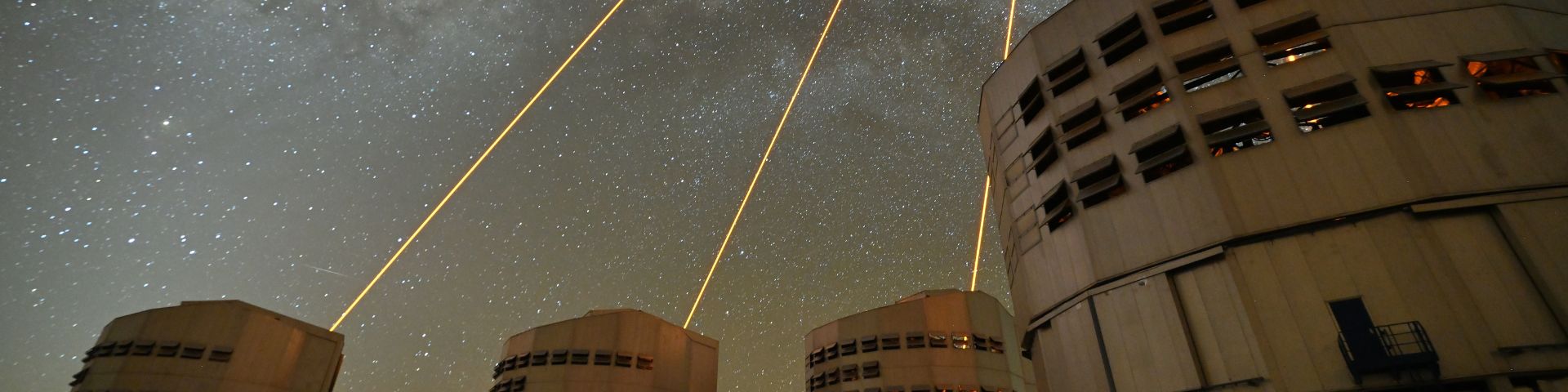
To see deeper into the universe, ground-based telescopes must compensate for the blurring effects of the Earth’s atmosphere. TNO develops laser projection systems that create artificial guide stars, providing the reference needed to sharpen telescope images. For the GRAVITY+ upgrade, three of these systems will support ESO’s Very Large Telescope in observing fainter objects across more of the sky.
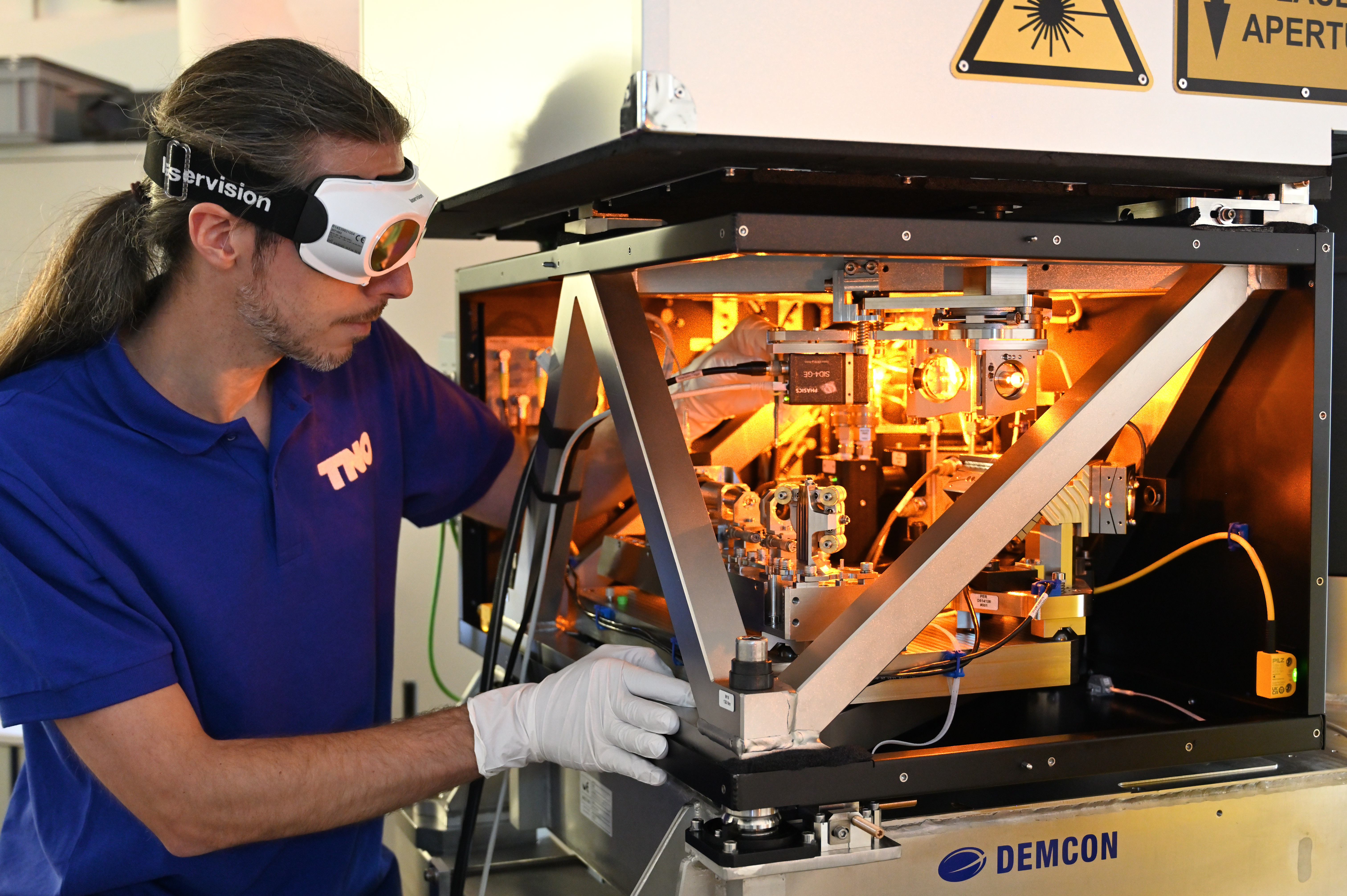
Laser projection system for ESO/ Picture by Fred Kamphues
Space-based astronomy
Observatories in space can study the universe without interference from the Earth’s atmosphere. TNO develops high-precision optical and opto-mechatronic systems for space telescopes and scientific missions, helping instruments capture, analyse and transmit light and other signals from space. Contributions include the optical design of the MIRI spectrometer for the James Webb Space Telescope, which makes observations in the mid-infrared spectrum and enables scientists to study extremely distant galaxies, newly forming stars and faint comets. For LISA, TNO has developed precision laser-pointing technology and highly stable optical systems for a mission designed to detect gravitational waves from space. These technologies enable scientists to investigate distant and otherwise difficult-to-detect phenomena with exceptional precision.
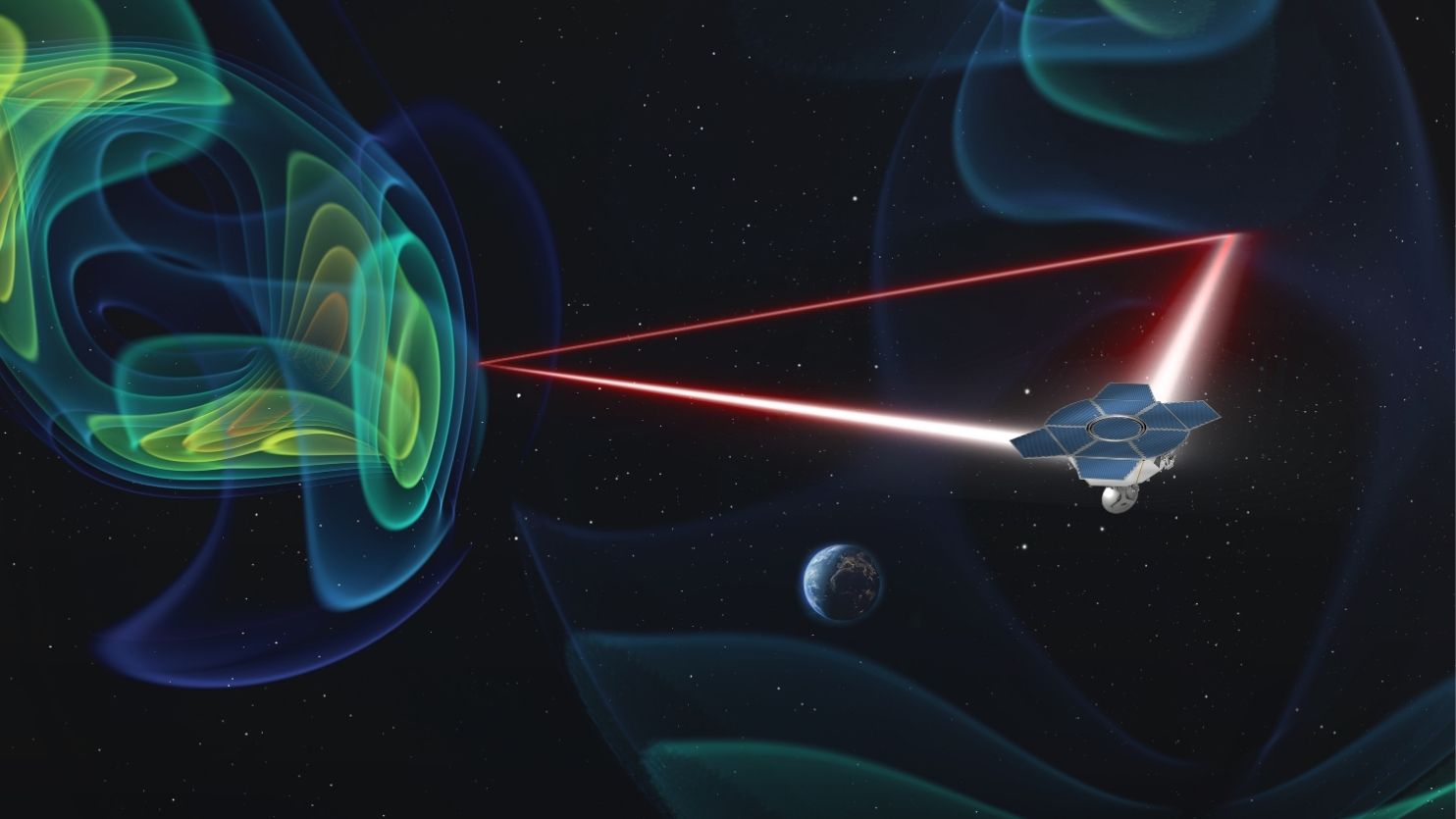
Credits: ESA
More about astronomy
Even at the best locations on Earth, turbulence in the atmosphere distorts the light reaching a telescope. Adaptive optics compensates for these continuously changing distortions, allowing ground-based telescopes to produce much sharper images.
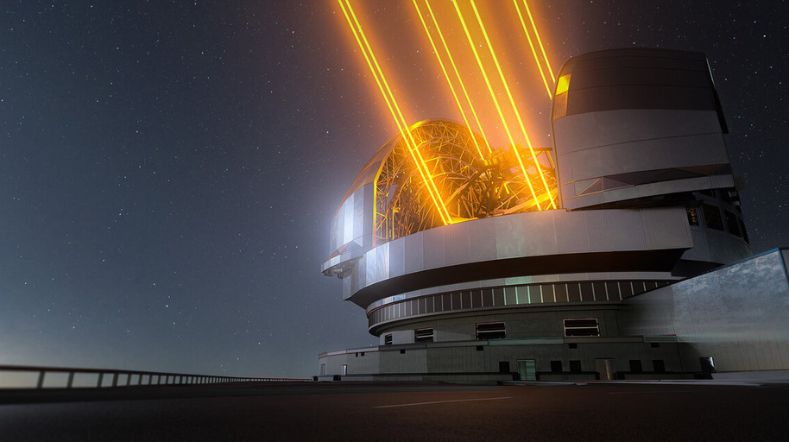
Laser projection systems play a key role in this process. They project powerful laser beams towards the sodium layer high in the atmosphere, creating artificial guide stars. A wavefront sensor observes these guide stars and measures how the atmosphere has distorted their light. The adaptive optics system uses this information to control a deformable mirror, which corrects the telescope’s view in real time.
TNO develops laser projection systems for major astronomical observatories, building on technology already in operation at the Very Large Telescope. Together with Demcon, TNO also developed laser projection systems for the Extremely Large Telescope. These systems help provide the accurate artificial guide stars needed for adaptive optics and, ultimately, clearer observations of the universe.
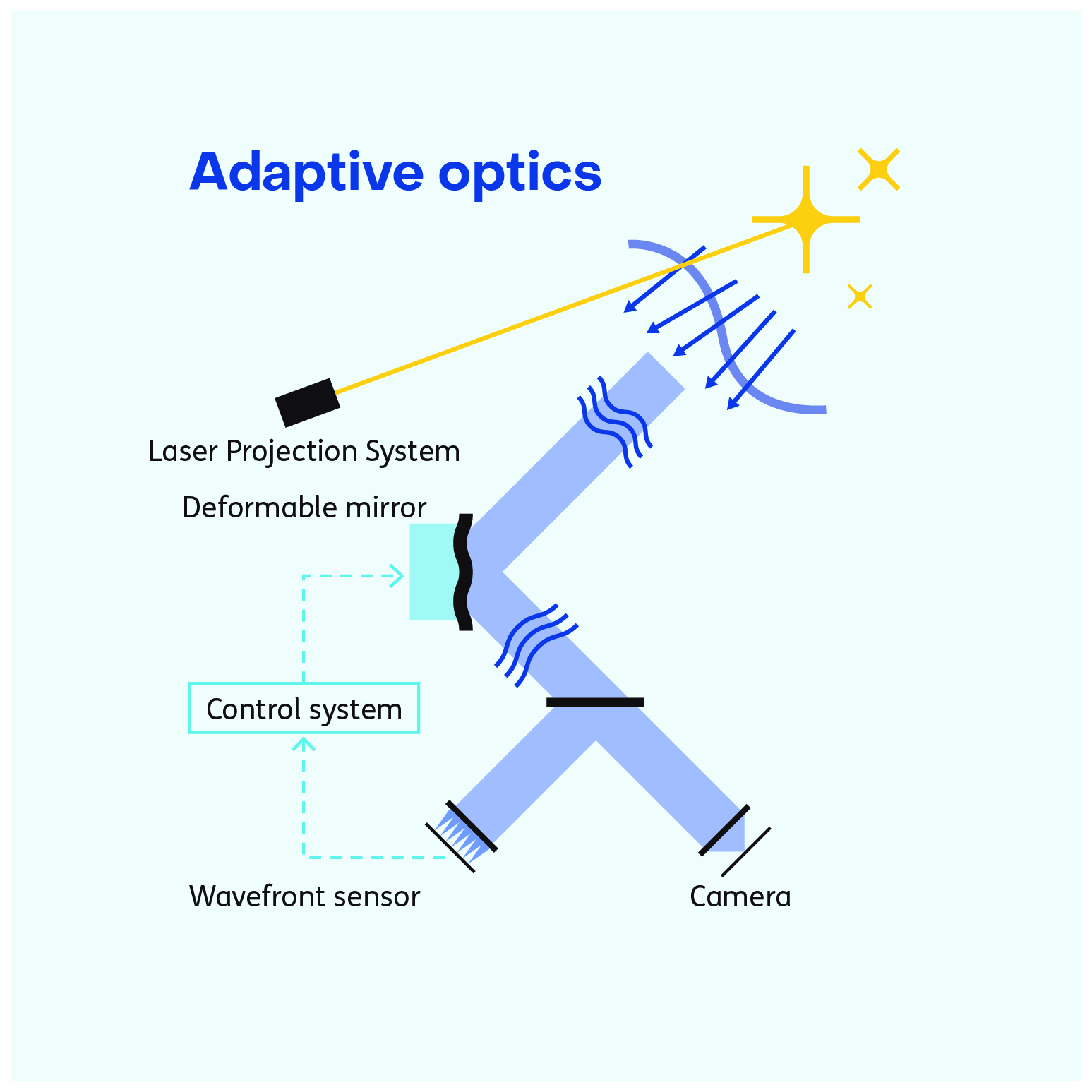
Visual explanation laser projection system
The Earth’s atmosphere bends and distorts incoming light, causing telescope images to appear blurred. A natural star can sometimes provide the reference needed to measure this distortion, but a sufficiently bright star is not always available in the right part of the sky. Laser projection systems allow astronomers to create an artificial guide star where it is needed.
TNO designed, built and delivered the laser launch telescopes for ESO’s VLT Four Laser Guide Star Facility. These systems have been operating since 2016, helping the telescope compensate for atmospheric distortion and obtain sharper views of the universe.
For the GRAVITY+ upgrade, TNO and Demcon are developing laser projection systems for ESO’s Very Large Telescope. The systems will create the artificial guide stars needed by the telescope’s adaptive optics, supporting observations of fainter objects across more of the sky.
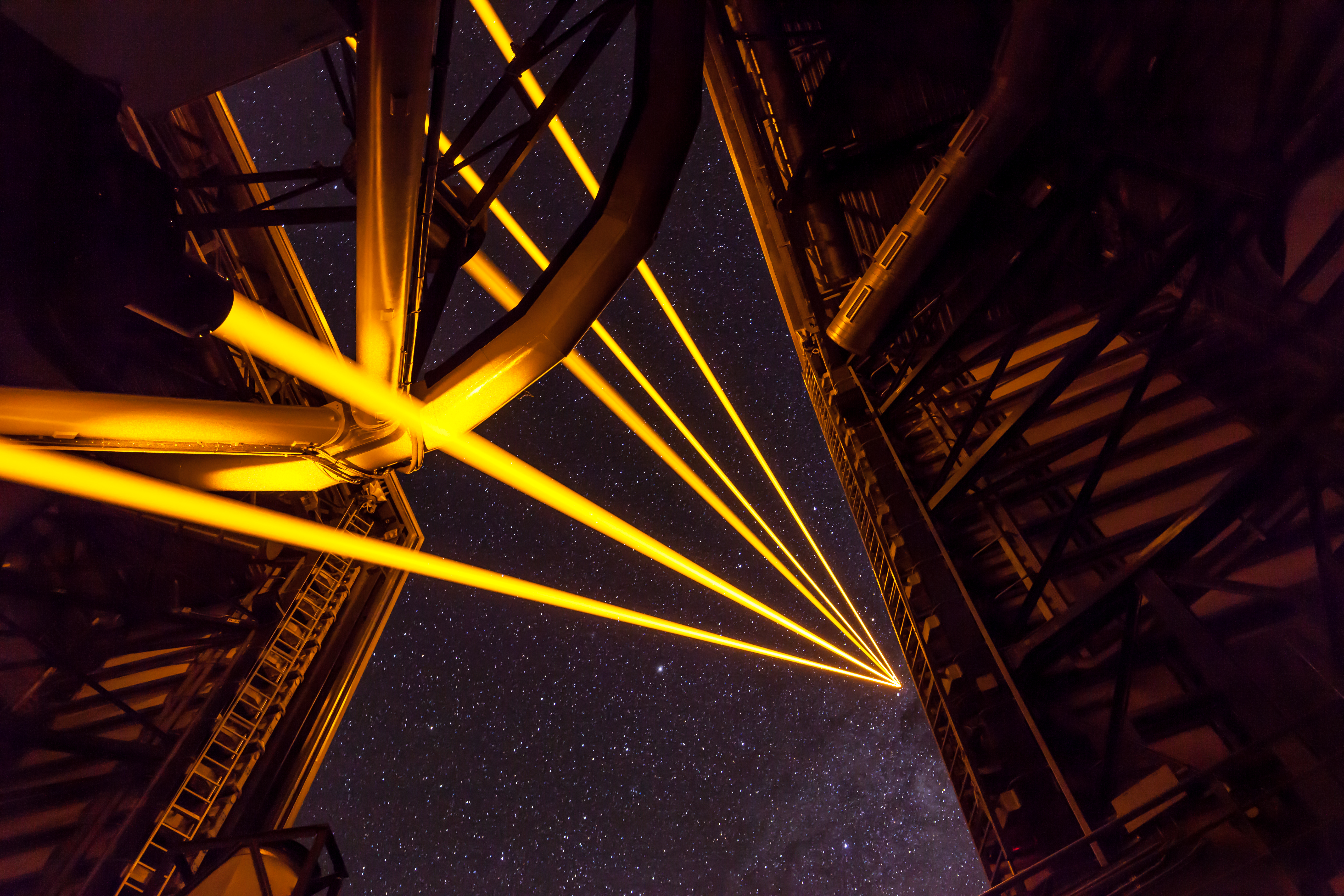
Laser Guide Star, credit: Fred Kamphues
Building on its experience with the Very Large Telescope, TNO is working with Demcon to design and build laser projection systems for ESO’s Extremely Large Telescope. TNO has further developed the laser launch telescope design, while Demcon has improved ESO’s Beam Conditioning and Diagnostics System.
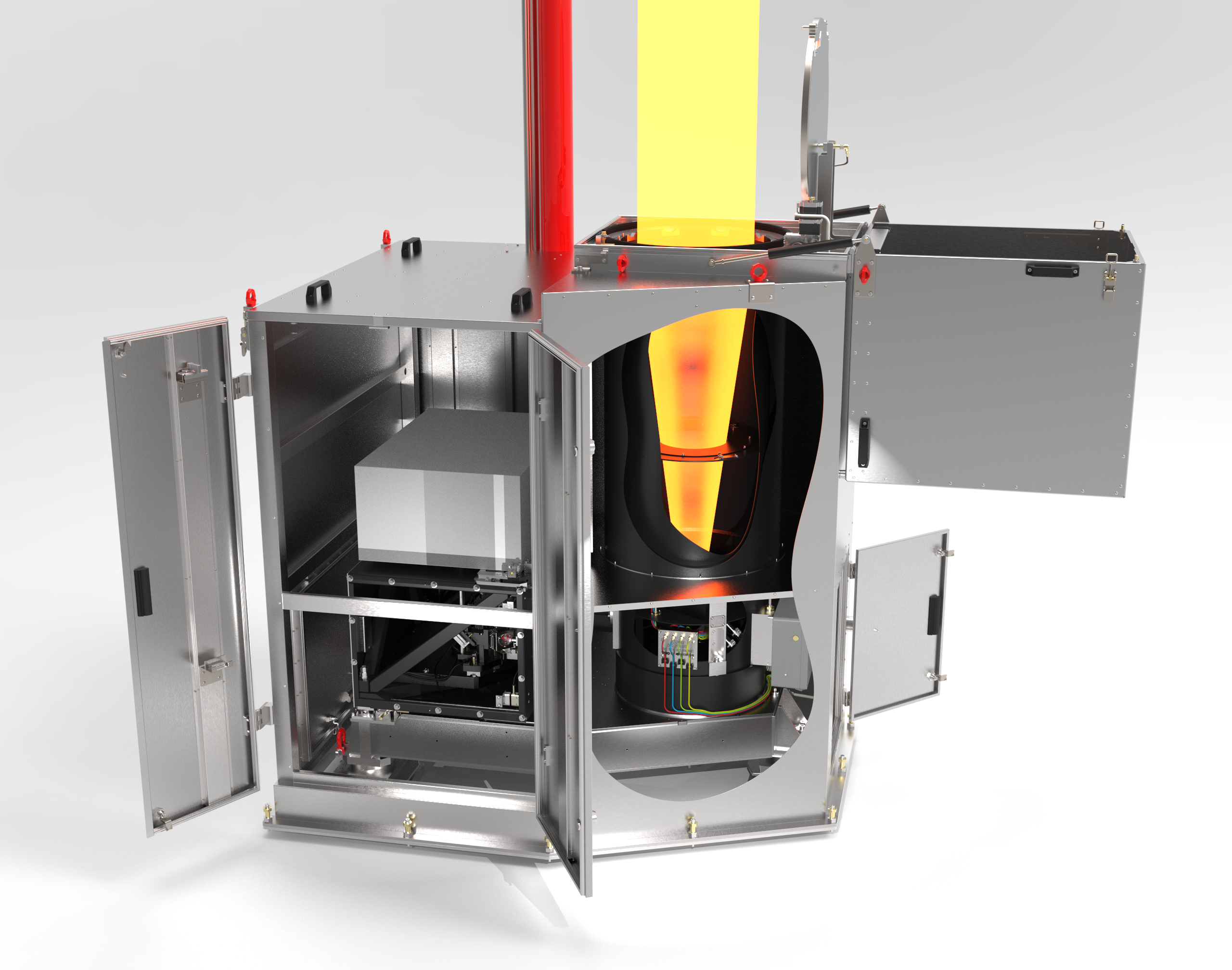
TNO and Demcon's laser Beam Conditioning and Diagnostics System (BCDS) for ESO
The ELT is designed to explore some of the greatest astronomical questions of our time. Its advanced technologies will support research ranging from the formation of stars and galaxies to the study of planets beyond our Solar System. ESO describes the ELT as “the world’s biggest eye on the sky”.
The primary mirrors of Extremely Large Telescopes can measure between 24 and 39 metres in diameter. A single mirror of this size could not support its own weight with the required precision. Instead, the primary mirror is made from multiple segments that are carefully shaped, supported and aligned to function as one optical surface.
The ELT’s primary mirror is 39 metres in diameter and consists of 798 hexagonal segments. Together with VDL and NOVA, TNO designed the support structure for these segments. The adjustable design accommodates the different segment shapes used across the primary mirror while maintaining the required optical surface.
The mirror surfaces must maintain their shape with nanometre-level accuracy. TNO’s design for the ELT met surface-form correction requirements of 25 to 30 nanometres in all gravitational orientations. This precision is essential for preserving the quality of the incoming light. With its partners VDL and NOVA, TNO successfully completed the design for the Primary Mirror (M1) support structure for ESO's Extremely Large Telescope (ELT).
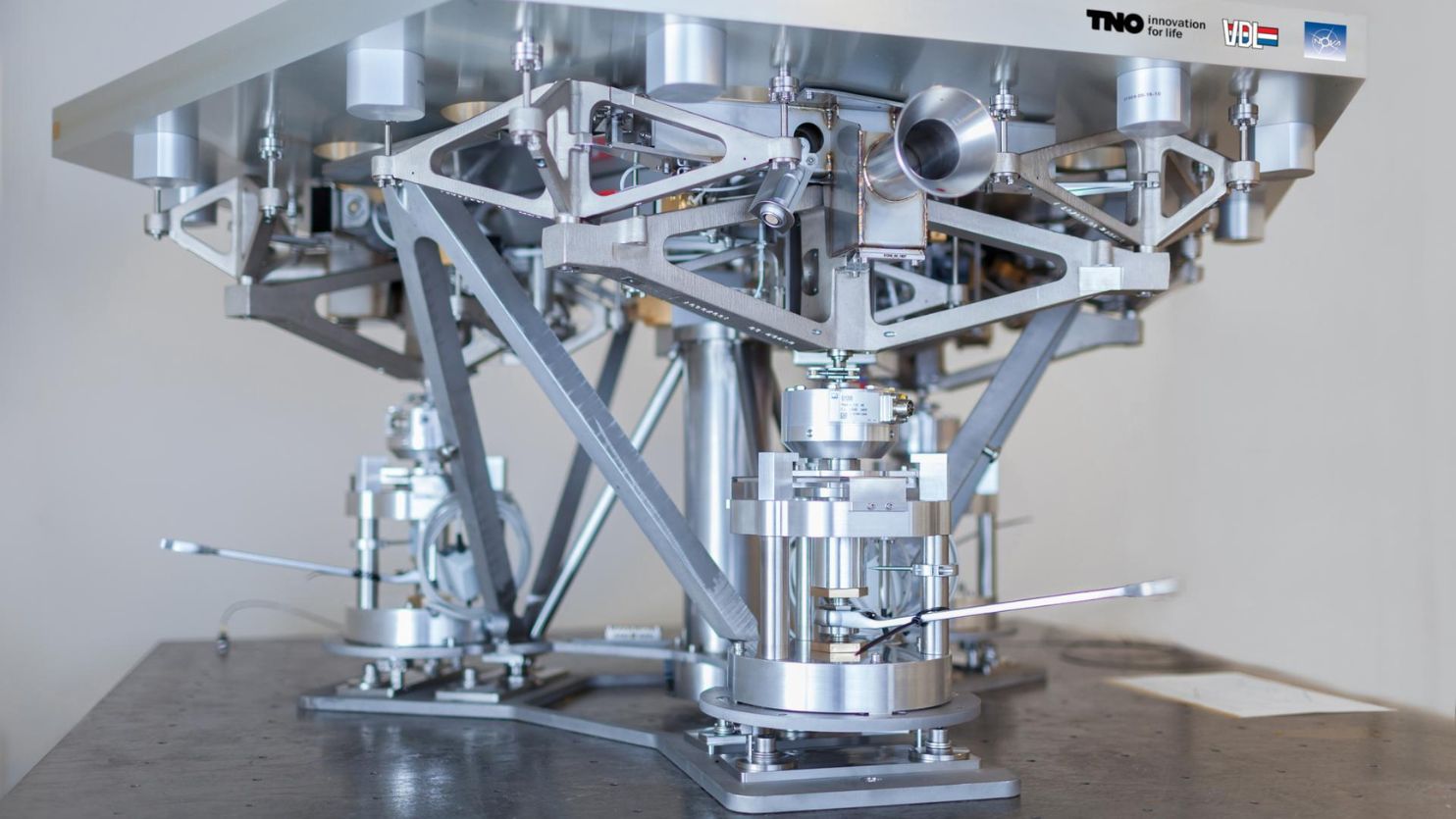
ELT primary mirror support structure
LISA will detect gravitational waves generated by events that ground-based observatories cannot observe, including interactions between supermassive black holes. To support this mission, TNO contributes BAM OMA, a highly complex optical system consisting of flat mirrors, beam splitters, fibre-optic collimators and periscopes. This technology is essential to the mission and will help scientists study previously invisible phenomena in the universe.
TNO combines expertise in optical design and engineering, precision mechatronics, systems engineering and high-end optics manufacturing. With more than 60 years of experience in scientific and space instrumentation, TNO works with research organisations and industry partners to develop, test and industrialise complex, mission-critical technologies for astronomy.
Contact us
-

Matthew Maniscalco
Functie:Senior Business Developer-
Standplaats:Delft - Stieltjesweg
-
Email:Email Matthew
-
LinkedIn:Matthew on LinkedIn
-
Get inspired
Laser projection systems
Deformable mirrors

Jan Nijenhuis appointed Knight in the Order of the Lion of the Netherlands

A View of the Universe: TNO Contributes to TMT Success
TNO is awarded conceptual design of the Gemini North Telescope’s Adaptive Optics Bench
