

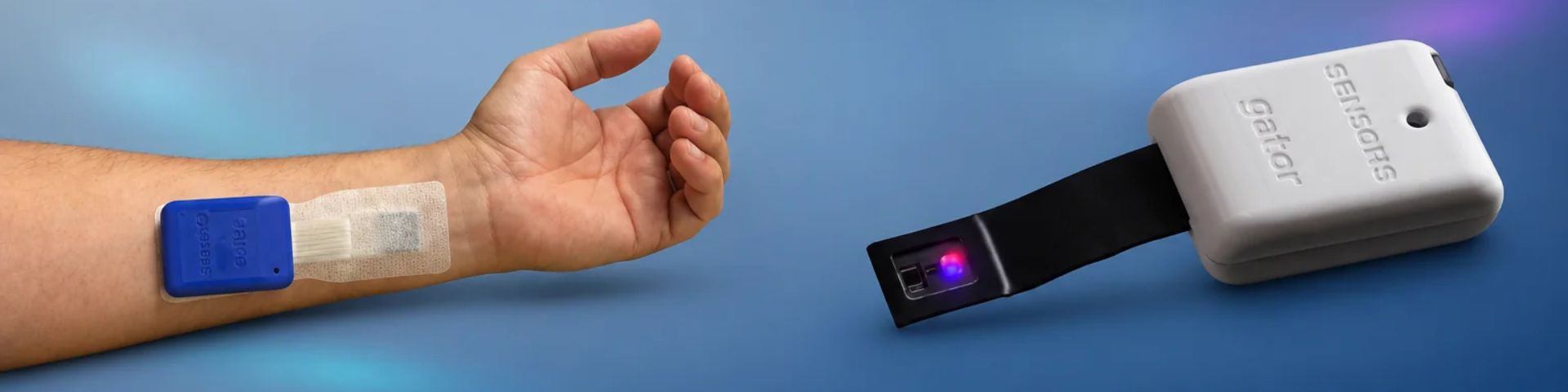
Wearable optical sensors
Remote patient management refers to keeping track of the health of a patient at a distance, and makes use of remote health sensing technology. It allows patients to be dismissed from critical care to medium care earlier and patients can be monitored in a home care setting, while care professionals keep track of their health remotely. Remote patient management is expected to increase the efficiency in health care while reducing het amount of labour of health care professionals.
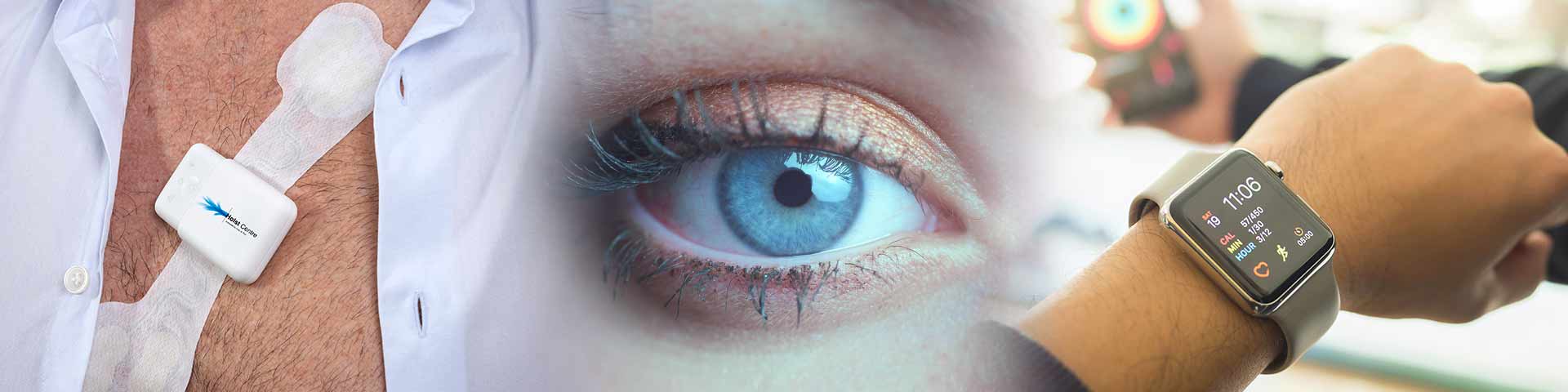
Technological advancements in the field of thin film flexible electronics and miniature light sources have enabled the development of compact, low cost wearables with optical and electronic sensors. Recently the amount of commercial wearables has grown tremendously, ranging from smart watches, smart rings to smart glasses. Many wearables are equipped with optical health tracking sensors measuring biomarkers such as heart rate (variability), oxygen saturation and blood pressure.
A clear distinction should be made between medical and non-medical wearable sensors. Medical wearable sensors are required to comply with CE (MDR) within a certain “intended use”. Of all commercial wearables only very few may be used medically. For example, the SpO2 sensors in the majority of smart watches may not be used to monitor a patient due to their poor accuracy.
TNO supports industrial parties in their development of optical sensors for medical and health/performance tracking wearables. This support ranges from (optimisation of) sensor design by means of Tissue Optics Monte Carlo Analysis, calibration on tissue phantoms, to validation in a TNO test facility or with a clinical partner. TNO has access to a hypobaric chamber (e.g. for SpO2 sensing) and a climate room.
TNO has expertise on designing and improving sensors for existing biomarkers such as heart rate, SpO2 and blood pressure and we are exploring the optical detection of ‘new’ biomarkers for wearables such as the ‘average microvascular diameter’, ‘bilirubin’ and ‘systemic hydration’.
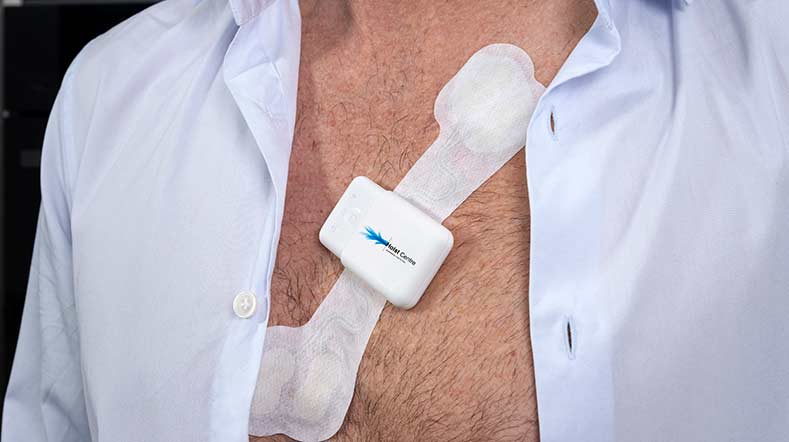
TNO Holst centre is involved in the design and manufacturing of prototypes of wearable health sensors. The TNO spin-off company AIKON HEALTH has developed a medical wearable for the monitoring of heart failure.
Explore our flyer
Contact us
-

Michiel Oderwald
Functie:Senior Business Developer-
Standplaats:Delft - Stieltjesweg
-
Email:Email Michiel
-
Get inspired
Retinal imaging
IPUT
Monitoring your health using light: TNO designs wearable optical sensors
TOMCA
Medical devices
