Mobility as a driver of accessible, liveable and inclusive cities
Mobility is essential for accessibility and economic development, but also takes up a considerable share of scarce urban space. TNO develops innovative models and decision-support solutions that enable public authorities and businesses to connect mobility with liveability, spatial development, sustainability and inclusion. In this way, we help design future mobility systems that contribute to multiple societal objectives.
Mobility choices affect the entire city
Policies on parking, car-low areas, public transport, shared mobility, mobility hubs and automated transport not only influence how people travel. They also affect health, land use, liveability, economic development and access to jobs and essential services for different population groups.
The consequences of these interventions are difficult to anticipate. Traditional transport models are not always equipped to assess new mobility concepts, low parking capacities and changes in activity and travel behaviour, for example as a result of remote working and online shopping. Nor do these models automatically show how benefits and disadvantages are distributed across areas and population groups.
Decision-makers therefore need to do more than assess individual measures. They must also be able to understand how interventions interact, which groups benefit or are adversely affected, and which combination of measures makes the greatest contribution to the desired societal objectives.
From assessing individual measures to designing better mobility systems
TNO does not only aim to predict the effects of a mobility measure. We also want to show how future mobility systems contribute to social, economic and sustainability objectives. To achieve this, we are developing a new generation of mobility models that represent behaviour, activities, spatial factors and differences between population groups more realistically and at a higher level of detail.
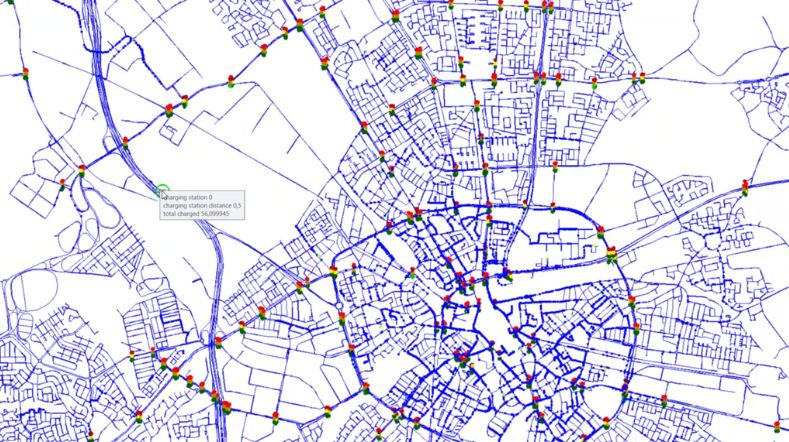
Using activity-based modelling and traffic simulation, we analyse how daily activities, choices between modes of transport and individual trips collectively shape the mobility system. This enables us to investigate interventions that are difficult to assess with traditional models, such as low parking standards, car-low areas, shared mobility, mobility hubs and new forms of automated transport.
We connect these models with broad-prosperity indicators, spatial analyses and optimisation methods. This provides insight not only into the effects of an individual measure, but also into which combinations of interventions contribute to accessibility, liveability, inclusion, sustainability, safety and efficient land use.
Clients gain insight into assumptions, uncertainties, system-level and distributional effects, and alternative solutions before policies, investments or spatial designs are finalised.
Our solutions
1. Parking, car-low areas and public space
Municipalities and area developers often have to make early decisions about parking capacity, vehicle access and the design of public space, while the long-term effects on behaviour and accessibility remain uncertain. TNO compares alternatives and shows how their effects differ between households, road users and areas. This enables mobility and spatial choices to be considered in an integrated way.
Detailed analyses reveal differences in car ownership and parking demand between different types of households and areas. Scenario analyses subsequently show how parking standards, parking policies and restrictions on car use affect mobility behaviour, accessibility and different population groups. This supports municipalities and developers in substantiating parking policies and the development of car-low areas.
A detailed pedestrian model predicts where and when pedestrians will move through existing and proposed urban designs. This reveals potential congestion, safety risks and gaps in pedestrian infrastructure.
Our analyses show how changes in parking, walking, cycling and car traffic affect the use of available space. This allows alternative designs for car-low and high-density areas to be compared.
2. Public transport and new mobility concepts
Transport authorities, public authorities and mobility service providers are investing in public transport, shared mobility, mobility hubs and automated transport. New concepts can improve accessibility and sustainability, but may also compete with existing services, require additional space or be less accessible to certain population groups.
TNO investigates the role a concept could play within the overall mobility system, where it adds societal value, and under which conditions its introduction or scaling can be justified.
Using mobility and spatial models, we analyse how public transport, shared mobility and mobility hubs relate to transport demand and existing networks. We compare network designs and potential hub locations based on accessibility, use, system-level effects and their alignment with policy objectives.
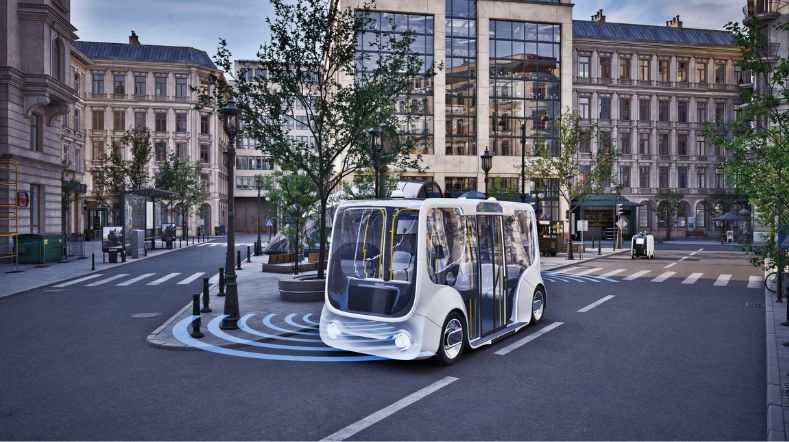
TNO assesses how new mobility services and automated transport may influence choices between travelling by car, public transport, bicycle and on foot. An integrated assessment framework connects technological possibilities with societal objectives and identifies potential positive and negative effects at an early stage.
Together with mobility service providers, software developers and consultancies, we improve models and digital applications for emerging mobility challenges. TNO contributes innovative modelling concepts, behavioural and system analysis, and independent validation of assumptions and results.
3. Broad prosperity and distributional effects
Mobility measures may deliver positive results on average while adversely affecting specific population groups or areas. TNO shows how societal benefits and disadvantages are distributed, enabling decision-makers to look beyond travel time, traffic volumes and average accessibility.
We connect mobility scenarios with indicators for accessibility, liveability, land use, sustainability and socioeconomic effects. Our analyses show how outcomes differ between population groups and areas, and where policies reduce or increase inequalities in accessibility.
In addition to direct changes in mobility, we investigate potential longer-term societal and socioeconomic effects. This makes it possible to assess mobility scenarios based on impacts that fall outside the scope of conventional transport indicators.
Our impact
LABS & LABS4U
Don't jump on every innovation bandwagon: TNO's framework to help cities make smarter mobility choices
Working together on a mobility challenges
TNO supports ministries, provinces, municipalities, transport regions and transport authorities in designing and assessing mobility policies and future mobility systems. We model system-level and distributional effects, compare alternative scenarios and help substantiate mobility and spatial choices in an integrated way.
We work with mobility service providers, software developers and consultancies to improve and scale up products and services. TNO develops platform-independent knowledge and technology, including innovative model components, behavioural and impact models, enriched datasets, optimisation methods and independent validation approaches.
Would you like to understand how mobility measures contribute to accessibility, liveability, land use and inclusion? Or would you like to work with TNO on the next generation of mobility models and applications? Contact us to discuss your mobility challenge.
Contact us
-

Marianne Aalbersberg
Functie:Business Developer Living environment, climate adaptation and spatial choicesI am responsible at TNO for the innovation programmes for liveable cities and regions, with a focus on mobility, climate adaptation, and spatial planning decisions. How do we solve the spatial puzzle effectively, both for now and the future? We work closely with businesses and governments to achieve the most impactful innovations.
-
Standplaats:Delft - Molengraaffsingel
-
Email:Email Marianne
-
Get inspired
Smarter and faster construction: TNO helps Eindhoven Metropolitan Region with historic leap of scale
Don't jump on every innovation bandwagon: TNO's framework to help cities make smarter mobility choices
Urban space

How governments can make MaaS work to societal goals

With Urban Strategy, TNO connects with innovative U.S. West Coast in San Diego