EarthCARE: analysing clouds and aerosols in reflecting solar radiation
In cooperation with
Surrey Satellite Technology Ltd, ADS NL, Xenics
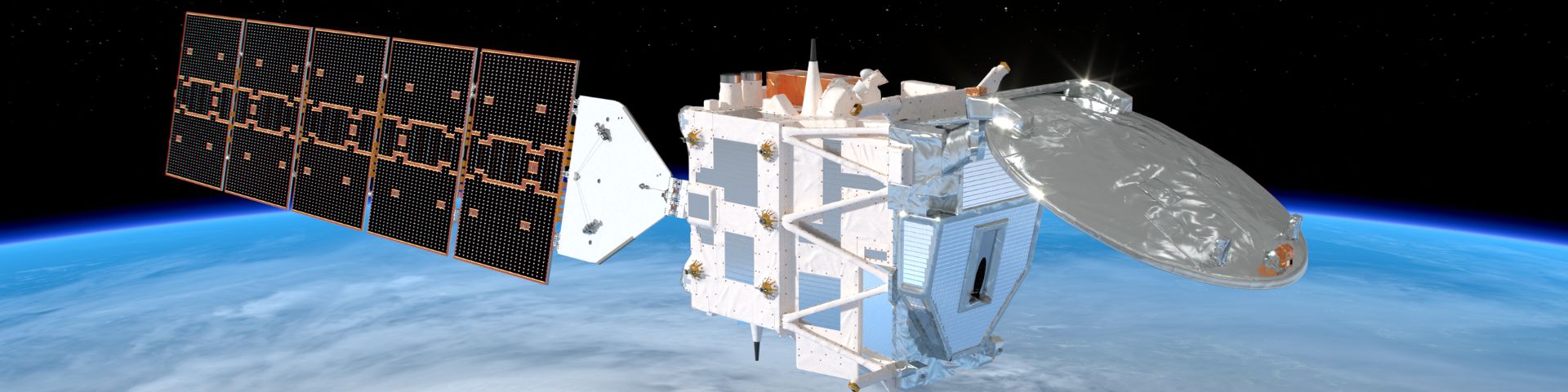
The EarthCARE mission is launched on the 28th of May 2024. It is the largest and most complex Earth Explorer to date and has been designed to make a range of different measurements that together will shed new light on the role that clouds and aerosols play in regulating Earth’s climate. TNO is proud to have contributed to the Multi Spectral Imager (MSI), which will provide information on clouds and aerosols with channels in the visible, near infrared, shortwave and thermal infrared. The first data is expected to be available for scientists at the end of this year or start of 2025.
Improve current climate and numerical weather prediction models
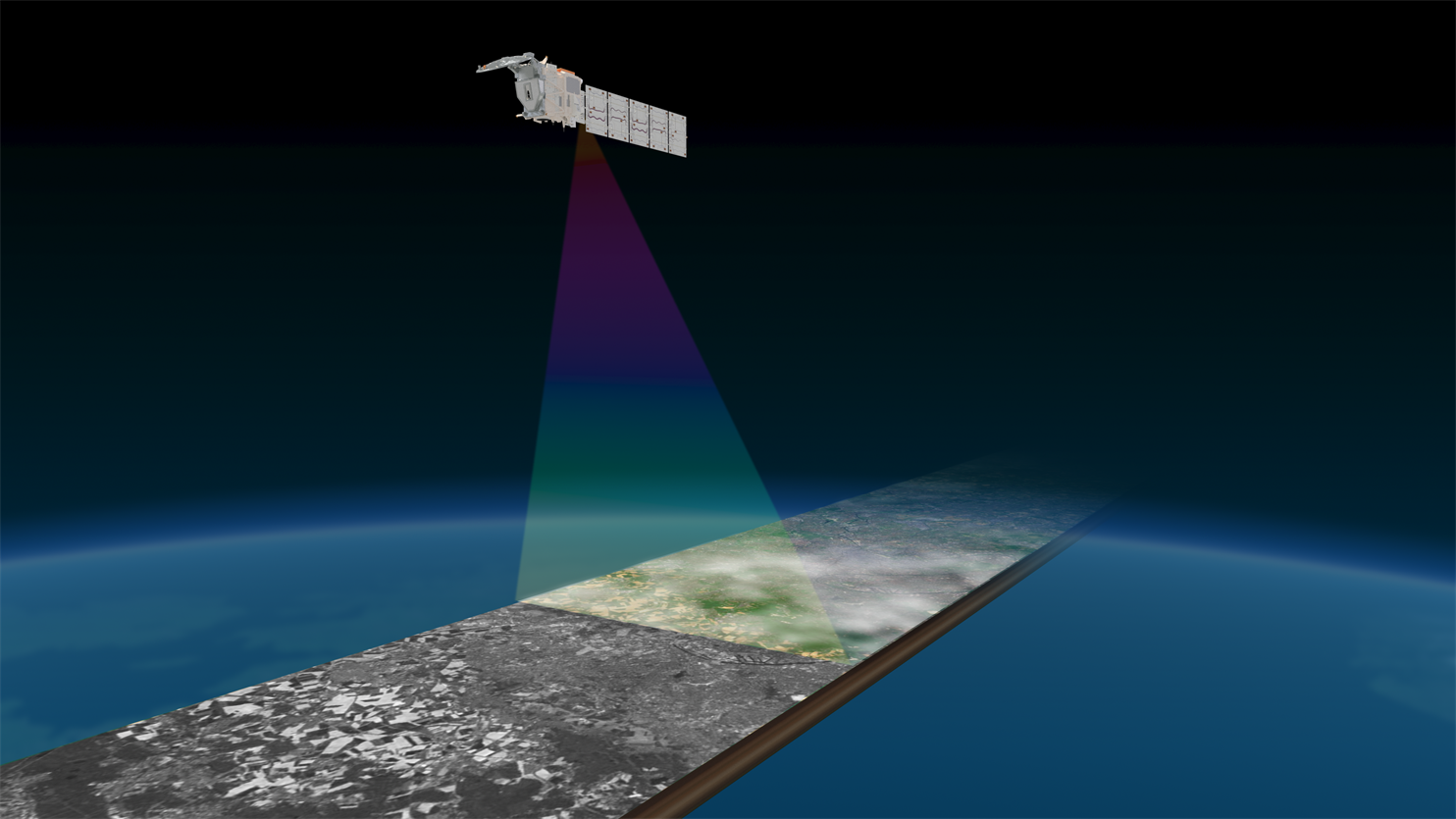
The EarthCARE (Cloud, Aerosol and Radiation Explorer) satellite mission is equipped with four instruments, together they form a complete dataset to be used by scientists to study the climate and numerical weather prediction models by analysing the role that clouds and aerosols play in reflecting solar radiation. In The Netherlands SRON, KNMI and TU Delft will use these data for research on aerosol and aerosol-cloud interaction from Remote Sensing Enhancement. SRON and KNMI study the synergy between EarthCARE and SPEXone on PACE in project AIRSENSE.
Multi Spectral Imager
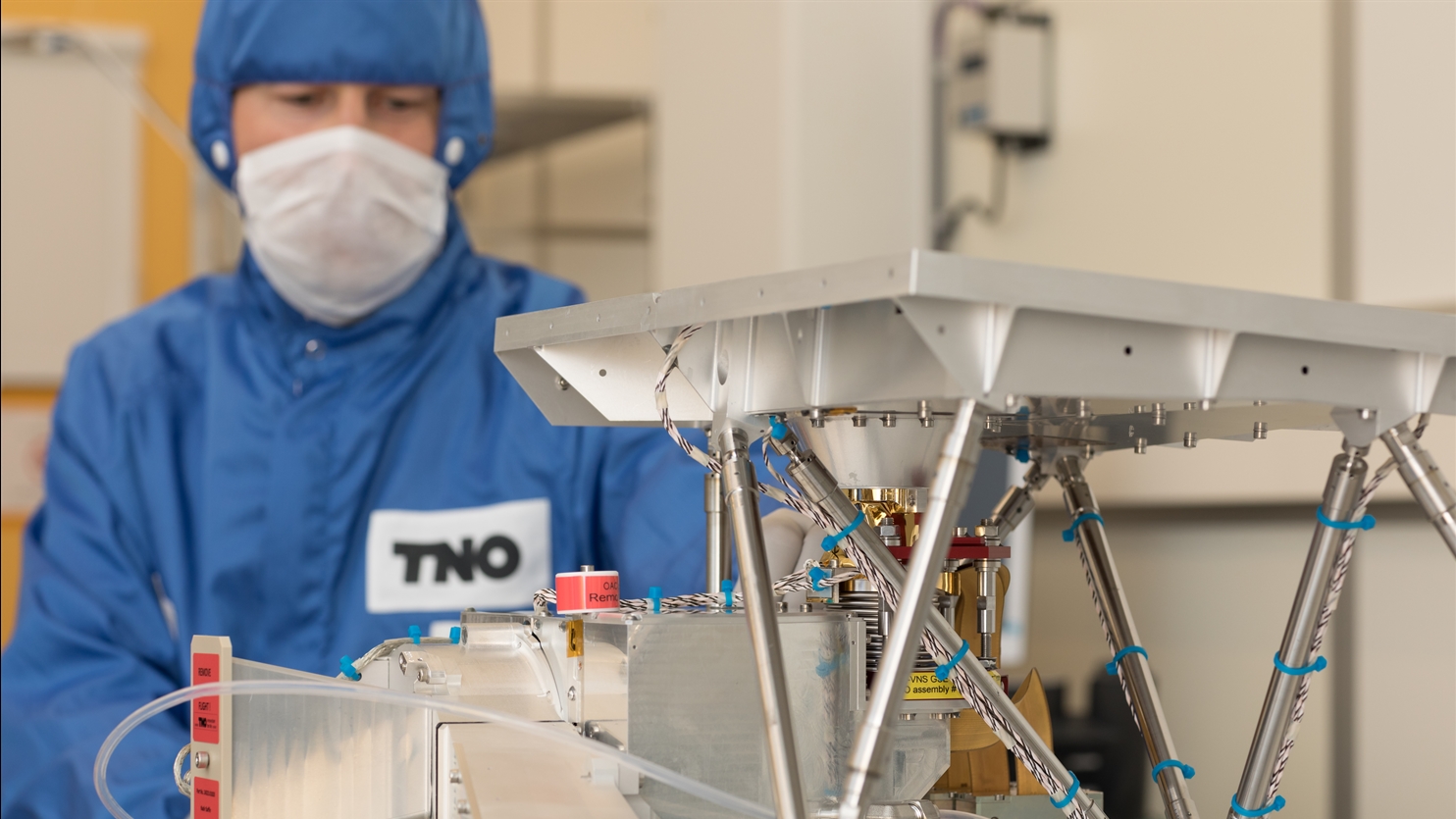
In cooperation with Surrey Satellite Technology Ltd (SSTL UK), TNO designed and developed the MSI, where TNO has realized the instrument module that observes the Visible and Near- and Shortwave Infrared (VNS) light reflectance of sunlight by clouds and aerosols.
The two optical cameras in the MSI instrument make sure that reflected sunlight on the earth combined with warmth from the earth is measured to give a clear view on aerosols. With these camera’s visible, near infrared, shortwave and thermal infrared light is captured, after which specifically designed detectors convert this in electric signals. Data packages are sent from the MSI to ESA throughout the day, ready to be analysed by scientists throughout the world.
As all elements need to be positioned with micrometer precision, the alignment of the design of the cameras ensures the exact fixing of the six degrees of freedom. With a satellite launch being a rough and jerky moment, it was a challenge to make sure this alignment is kept exactly equal. To avoid any deviation during measurement the MSI instrument calibrates every day.
Developing groundbreaking new concepts and designs
The technology development for MSI EarthCARE paved the way for the Dutch earth observation missions TROPOMI and coming TANGO, and the first developments at TNO on optical satellite communication technology.
European collaboration
ADS NL supported TNO in the design and development of the thermal control of the instrument. The company Xenics supported TNO with the development of the detectors and its readout integrated circuits.
Contact us
-

Ton Maree
Functie:Senior Business Developer, Space & Scientific InstrumentationContact me to connect with TNO and solve your challenges in Earth Observation (EO) and Space-Based Astronomy instruments. I work with governments and industries to open up new global markets for TNO’s Space innovations.
I also manage the R&D investment portfolio for Space-Based Astronomy technologies, like highly accurate space mechanisms, metrology systems, sun sensors, telescopes, and more.
-
Standplaats:Delft - Stieltjesweg
-
Email:Email Ton
-
LinkedIn:Ton on LinkedIn
-
-

Anton Leemhuis
Functie:Director Earth observationContact me to partner with TNO on satellite instrumentation and data technology for global and independent monitoring and reduction of greenhouse gases and air pollution.
I connect governments and industries with our Earth Observation (EO) teams and open new global markets for TNO’s EO innovations.
-
Standplaats:Delft - Stieltjesweg
-
Email:Email Anton
-
LinkedIn:Anton on LinkedIn
-
-
Kees Buijsrogge
Functie:Director Space & Scientific InstrumentationContact me to uncover how to connect with TNO’s long-term roadmap for Space & Scientific Instrumentation. As Director, I am responsible for the strategic vision of the unit, and for ensuring that the unit’s objectives align with both society’s needs and TNO’s goals.
In addition, I connect international stakeholders and governments to the high-tech Dutch ecosystem in this domain.
-
Standplaats:Delft - Stieltjesweg
-
Email:Email Kees
-
Automated 3D inspection and repair without CAD data
Services

From non-recyclable to sustainable electronics: how TracXon is scaling the technology
Time setter in the spotlight: the tech by Iris Kerkhof that you can feel on your skin
In the future, our electronics will simply come out of the printer