

Remote Data Collection Platform: device-agnostic infrastructure for secure digital health studies
TNO’s Remote Data Collection Platform is a certified, GDPR (AVG)-compliant, device-agnostic platform that helps hospitals, research teams, pharma, and MedTech partners run remote and hybrid studies without building their own infrastructure. It brings together data from wearables, smartphone sensors, and questionnaires (including PROMs) in one secure environment, with a study portal for monitoring and a participant app for data collection and engagement.
Why remote data collection is hard in digital biomarker studies
Remote studies often involve multiple devices and data streams, but many platforms are tied to a single vendor ecosystem. This limits device choice and makes it harder to combine wearable data, app-based measures, and questionnaires into one study dataset. At the same time, certified infrastructure for sensitive health data is scarce, so teams spend time building or setting up their own infrastructure with compliant workflows before a study can begin.
What the platform enables
The platform provides secure, ISO- and NEN-certified infrastructure that is GDPR compliant and suitable for sensitive health data, designed for clinical and research environments, with a pay-for-use model that supports both feasibility pilots and larger deployments. The platform can also connect to EHR (Electronic Health Record) systems in hospitals, enabling seamless integration with existing clinical workflows.
Because the integration approach is flexible (including 'Bring Your Own Device'), the platform can be configured to connect with a wide range of consumer-grade wearables and apps, as well as medical-grade apps and novel/customer-specific devices - so you are not locked into one device ecosystem.
Study teams can configure data capture and monitor data quality, participant progress, and logistics in a study portal. Participants use a dedicated app for remote onboarding and device pairing, and can receive reminders and personal data visualisation (real-time feedback can be enabled or switched off where needed). Study execution support can also be added to help keep studies running smoothly and data quality high. Importantly, the platform provides full access to raw data, enabling transparent, research-grade analysis and publication-ready results.
What sets TNO's platform apart
TNO's Remote Data Collection Platform offers several unique advantages:
The platform integrates diverse medical-grade wearables, apps, and custom devices in various ways, avoiding vendor lock-in.
Supports small-scale pilots, medium studies, and large multi-site clinical trials with rapid deployment. Pay-per-use model allows clients to engage without long-term subscriptions.
Full access to raw data, open biomarker pipelines, and validated endpoints enable reproducible research and publication-ready results.
As part of TNO, the platform benefits from scientific credibility, a neutral position, and access to a broad network of hospitals, key opinion leaders, and research institutions.
The platform has already enabled multiple validated studies across lifestyle interventions, workplace health monitoring, and emotional state prediction. In the short term, it accelerates time-to-study launch by eliminating infrastructure setup, reduces costs through the pay-per-use model, and improves data quality through integrated monitoring. In the long term, it will enable wider adoption of digital biomarkers in clinical practice and support regulatory acceptance through validated methodologies, thereby contributing to the transition to patient-centric, real-world evidence in healthcare.
Platform portfolio and modules
A modular set of components can be configured to your study needs:
- Flexible device and app integration (consumer-grade, medical-grade, and customer-specific devices)
- Questionnaires module for PROMs and other configurable questionnaires
- Participant app for data collection, device pairing, and engagement features
- Study portal for data quality monitoring and study logistics
- Raw data access and export to support downstream analysis and validation
If you also need validated digital biomarker endpoints and standardised pipelines, the platform can be combined with Digital Biomarker Lab services.
How to get started
Getting from initial contact to a successful collaboration involves these steps:
- Initial consultation and feasibility assessment: Discuss your study objectives, data requirements, and device preferences whilst we evaluate whether the platform meets your specific needs
- Study execution and data access: Launch your study with ongoing support for monitoring and troubleshooting, then access your raw data for analysis with optional Digital Biomarker Lab services for validated endpoints
Who we work with
The platform is designed for hospitals and academic medical centres, research teams, pharmaceutical companies developing digital biomarkers for clinical trials, and MedTech companies validating medical devices and digital health technologies.
Without this infrastructure, these groups face significant barriers: building their own compliant systems is time-consuming and resource-intensive, whilst relying on vendor-specific platforms limits device choice and data transparency. The TNO Remote Data Collection Platform removes these barriers, enabling teams to focus on their research rather than infrastructure development.
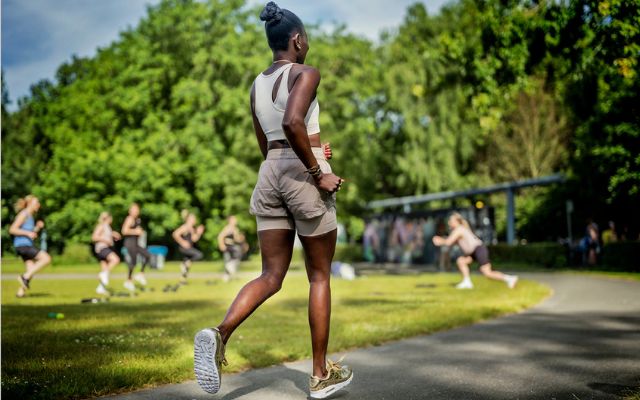
Example 1: Personalised lifestyle intervention with digital support
SLIMMER: A combined personalized lifestyle intervention incorporating physical activity, nutrition, and behaviour maintenance, with guidance provided by physiotherapists, dietitians, and lifestyle coaches. The predecessor to the Remote Data Collection Platform was used to collect participants' responses to questionnaires, allow them to set goals, provide feedback and advice, and gather data from their wearable devices. For healthcare professionals, a dashboard was created to monitor the participants' progress.
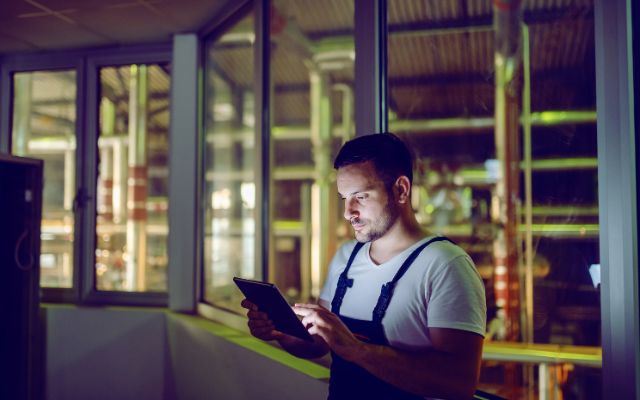
Example 2: From workplace exposures to night shifts: insights into health impacts
One study within the EPHOR project examined how the working-life exposome affects respiratory health, while a second study investigated the impact of night shift work on health. Both studies used the predecessor to the platform to allow participants to complete personalized morning and evening questionnaires at times of their choosing.

Example 3: Predicting emotional states using wearables and questionnaires
The CAMSTAM study aimed to develop models for predicting emotional states using various data sources (e.g., physiological signals via wearable sensors, questionnaires) over time. It focused on creating both individual-specific and general prediction models to improve accuracy in measuring emotions. The predecessor of the platform was used to gather questionnaire and wearable data.
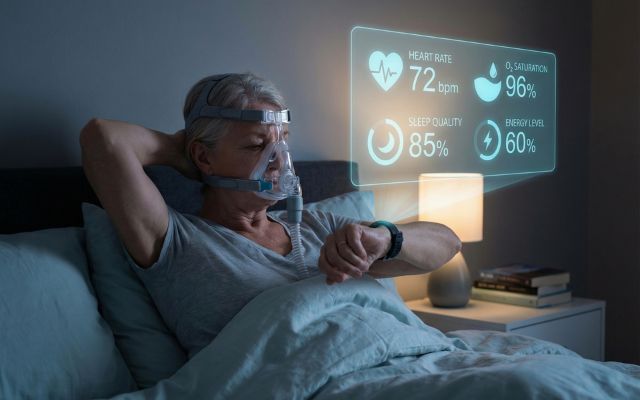
Example 4: Monitoring sleep apnea
The TNO OSA monitoring study collects data to monitor patients with obstructive sleep apnea (OSA) around diagnosis and 3 months after treatment initiation.
The study combines medical-grade wearable and nearable sensors with daily questionnaires and validated PROMs in patients starting on therapy.
Contact us
-

Annika van Rosmalen
Functie:Business Developer-
Standplaats:Leiden - Sylviusweg
-
Email:Email Annika
-
LinkedIn:Annika on LinkedIn
-
-

Ferry Jagers
Functie:Systems EngineerFeel free to contact me for more information about the digital solutions we provide within the human studies domain, including support for the development of digital biomarkers. Central to this is our Remote Data Collection Platform: a flexible, scalable, and certified platform for collecting a wide variety of data.
-
Standplaats:Leiden - Sylviusweg
-
Email:Email Ferry
-
-

Meike van den Eijnden
Functie:Scientific Consultant Digital BiomarkersI believe that digital biomarkers only become truly valuable when healthcare, research, and industry work together. As a scientific consultant at the Digital Biomarker Lab, I build collaborations to support the development, validation, and implementation of digital biomarkers that are clinically relevant and practically applicable.
-
Standplaats:Leiden - Sylviusweg
-
Email:Email Meike
-