

VCF Thermal vacuum environmental calibration test-setup
- Category:
- Systeem
- Type:
- Vacuum Specials
Description
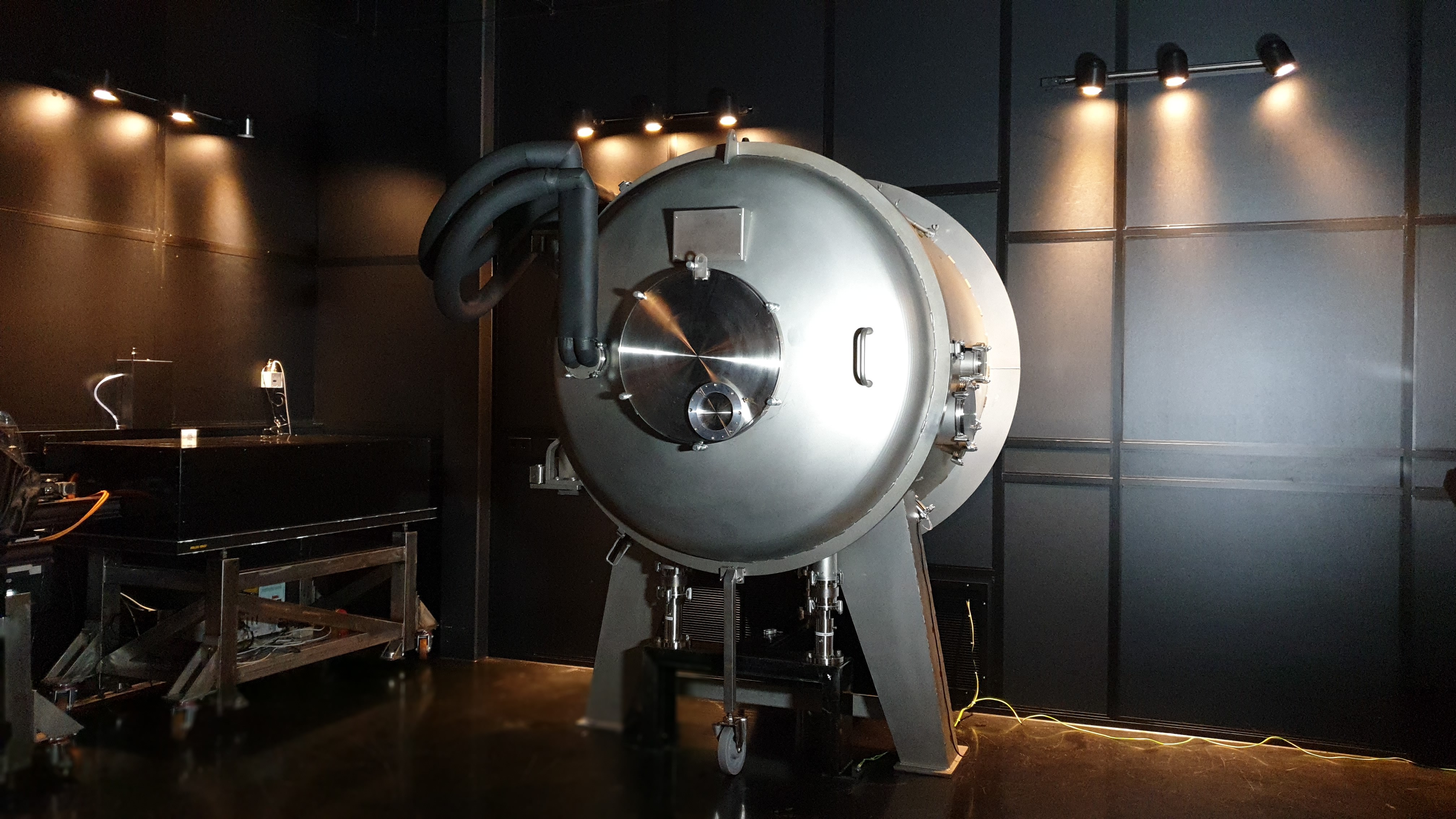
The VCF is a large thermal‑vacuum test set‑up for calibration, qualification, and optical characterization of space instruments. The VCF Thermal Vacuum test set‑up of TNO’s Space Systems Engineering department is a large, highly stable thermal‑vacuum chamber designed for high‑quality optical, thermal, and mechanical testing under realistic space conditions. With more than 60 years of experience in thermal‑vacuum testing, TNO provides a reliable and accurate environment for validating the performance, stability, and reliability of space instruments, from subsystems to larger payloads.
Technical details
Thermal & Vacuum
• Shroud temperature range: +100 °C (±2 °C) to –175 °C (±5 °C)
• Cold plate: +100 °C to –170 °C
• Vacuum:
• Cold finger (cold trap): –196 °C
• Mass spectrometer range: 0–200 amu
Optical access & test flexibility
• Two optical windows (Ø 200 mm):
o Infrasil quartz
o Russian opal
• Black coated shroud and darkened environment for low light optical measurements
• Access from both the front and rear for efficient setup
• Object plate positioned outside the vacuum chamber and connected to the floor for minimal alignment deviations
• Space for larger instruments thanks to an internal volume of Ø1500 × 2000 mm
Mechanics & interfacing
• Electrical feedthroughs: Sub D configurations for various test setups
• Optional instrument positioning: azimuth/elevation vacuum stage
• Black finished front area to reduce reflections
Additional techniques
The VCF is located in the Anthony van Leeuwenhoek laboratory at the TNO Delft site and complies with ISO Class 7 cleanroom specifications. The environment is designed for accurate, safe, and reproducible space qualification tests and offers:
• ESD safe flooring with continuous monitoring
• 50 m² of cleanroom space for GSE and instrument preparation
• PT100 temperature measurements with high accuracy
• A fully remotely operated control system
• Configurable SMS alarm notifications
• Connection to a 24/7 staffed emergency response system
Applications
The VCF distinguishes itself through:
• Large test volume for bigger instruments
• High thermal stability and precisely controlled conditions
• Excellent vacuum performance
• Advanced optical access and darkness control
• Flexible configurations for a wide range of test campaigns
• Reliable performance thanks to a stable mechanical design and minimization of alignment errors
This combination makes the VCF a high quality, versatile, and very reliable test environment for optical, thermal, and mechanical space engineering tests.