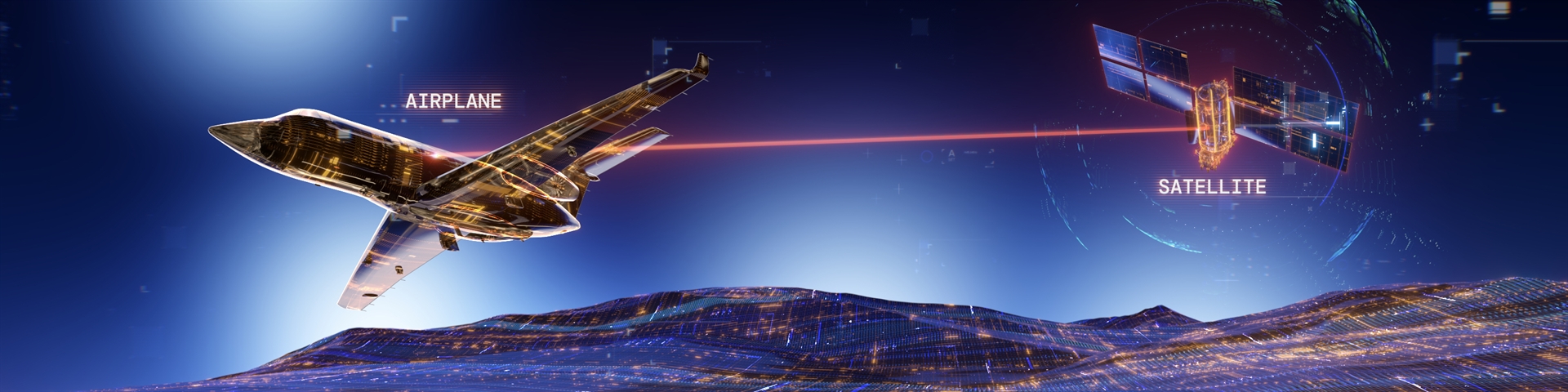
Globally relevant success: Airbus and TNO achieve new heights in optical communication
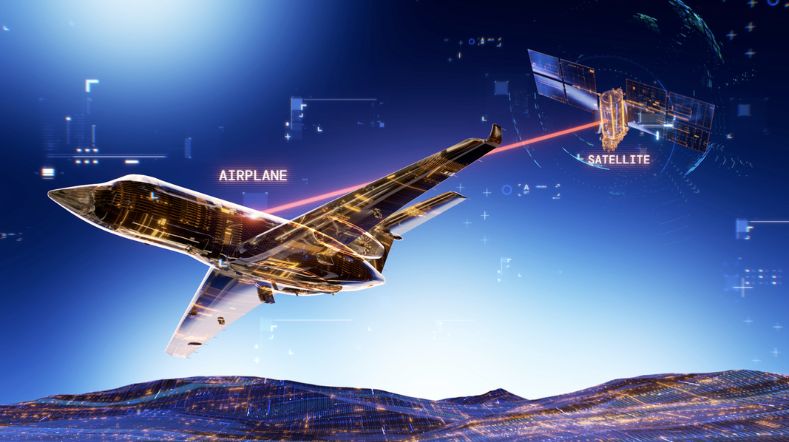
How do you create an optical data link between an aircraft and a geostationary satellite more than 36,000 kilometres away? TNO and Airbus have been working toward the answer. And in December 2025, they successfully made that connection at a data rate of 2.6 Giga Bit per second (Gbps). The significance? It’s proof that secure, high-speed communication from air to space is possible for both military and commercial connections, and it’s a boost for European competitiveness.
Making the connection
Current satellite communication takes place in radio-frequency (RF) bands. But these lack both the security and bandwidth for the growing amount of data being shared. Laser-based optical connections enable multiple terabytes of data to be transmitted in mere seconds – instead of several hours. In critical communication, such as among military aircraft and Unmanned Aerial Vehicles (UAVs), every second counts. Laser satellite connections are also more secure and harder to jam or intercept, of course a crucial requirement for military communications.
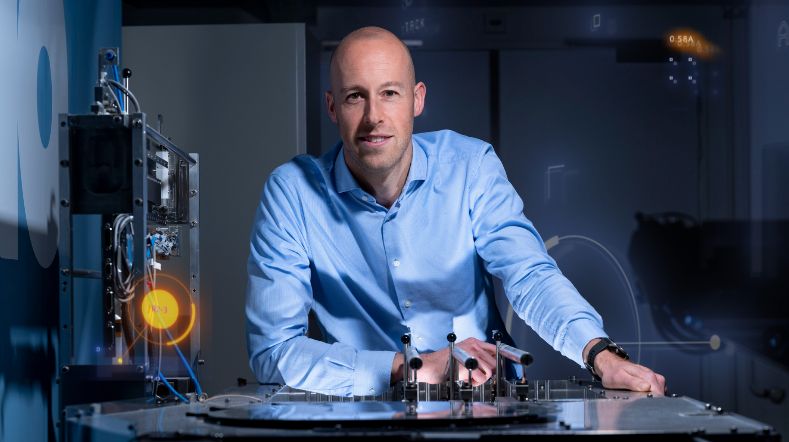
‘Military drones fly in stealth mode, but the moment they make an RF connection to receive commands or transmit data, they lose this advantage. They can be localised and thus be jammed or even intercepted,’ explains Thomas Liebig, Systems Engineer at TNO. ‘Using an optical data link will make – and keep – drones virtually invisible.’
The successful Airbus and TNO project, called UltraAir, also has implications for ordinary citizens. Commercial aircraft can eventually be equipped with these high-precision optical connections, enabling high-speed, secure internet in-flight. ‘An optical connection is a significant leap forward in bandwidth,’ Thomas explains. ‘Passengers will be able to enjoy the same bandwidth on an aircraft that they get at home with a fibre optic connection.’

‘More than 100 TNO experts contributed to solving the many challenging questions of this technology. Success meant pushing each technological component to its limits.’
Addressing the complexity
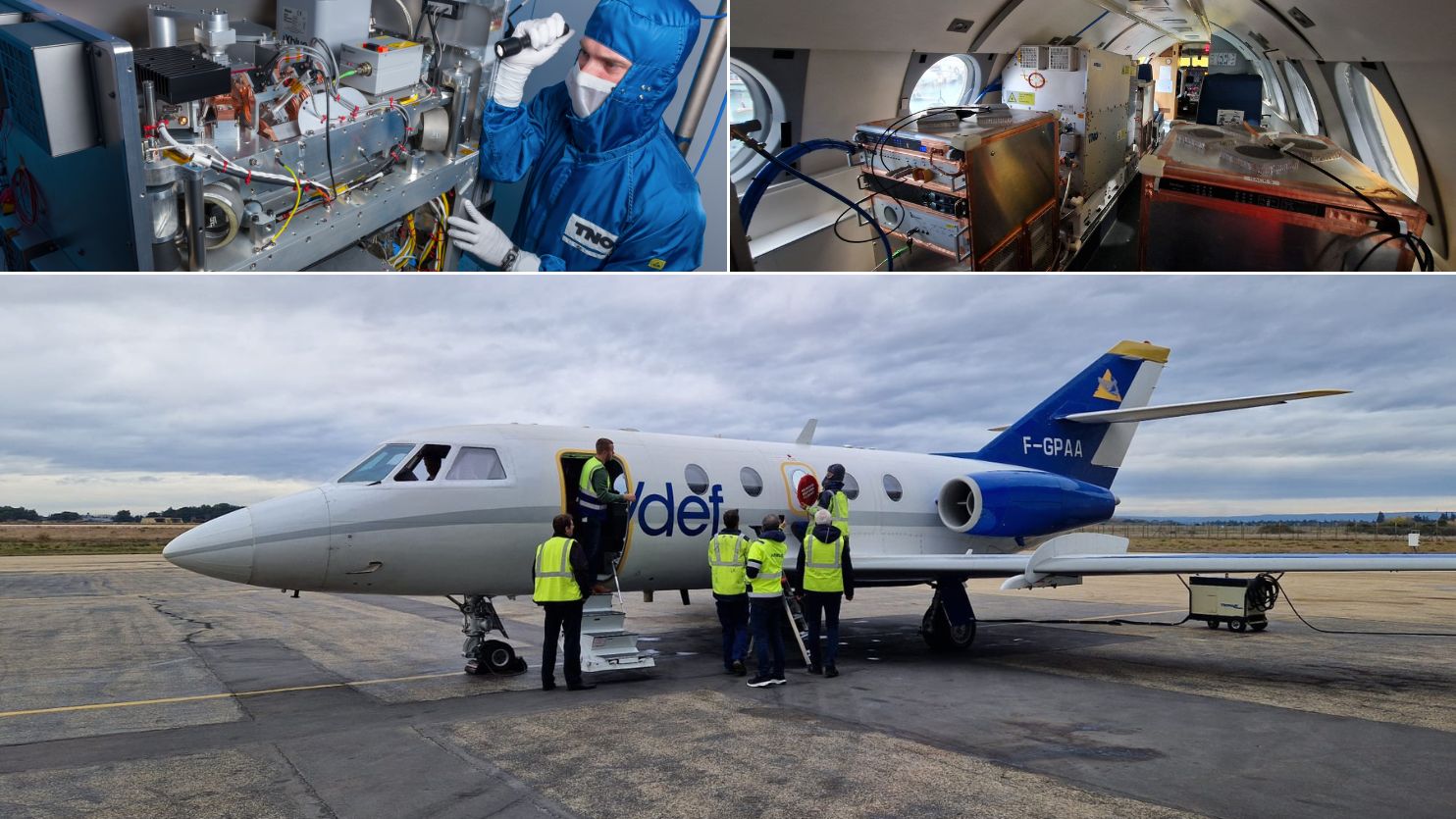
Transmitting a laser beam over 36,000 kilometres of space, crossing the atmosphere, and connecting two moving objects is a technological challenge. The beam pointing must not only remain stable despite continuous movement; it must also compensate for platform vibrations and atmospheric disturbances. TNO developed the optical, mechanical, and control technology needed to achieve this stable laser link and maintain the accuracy needed for a connection with the satellite.
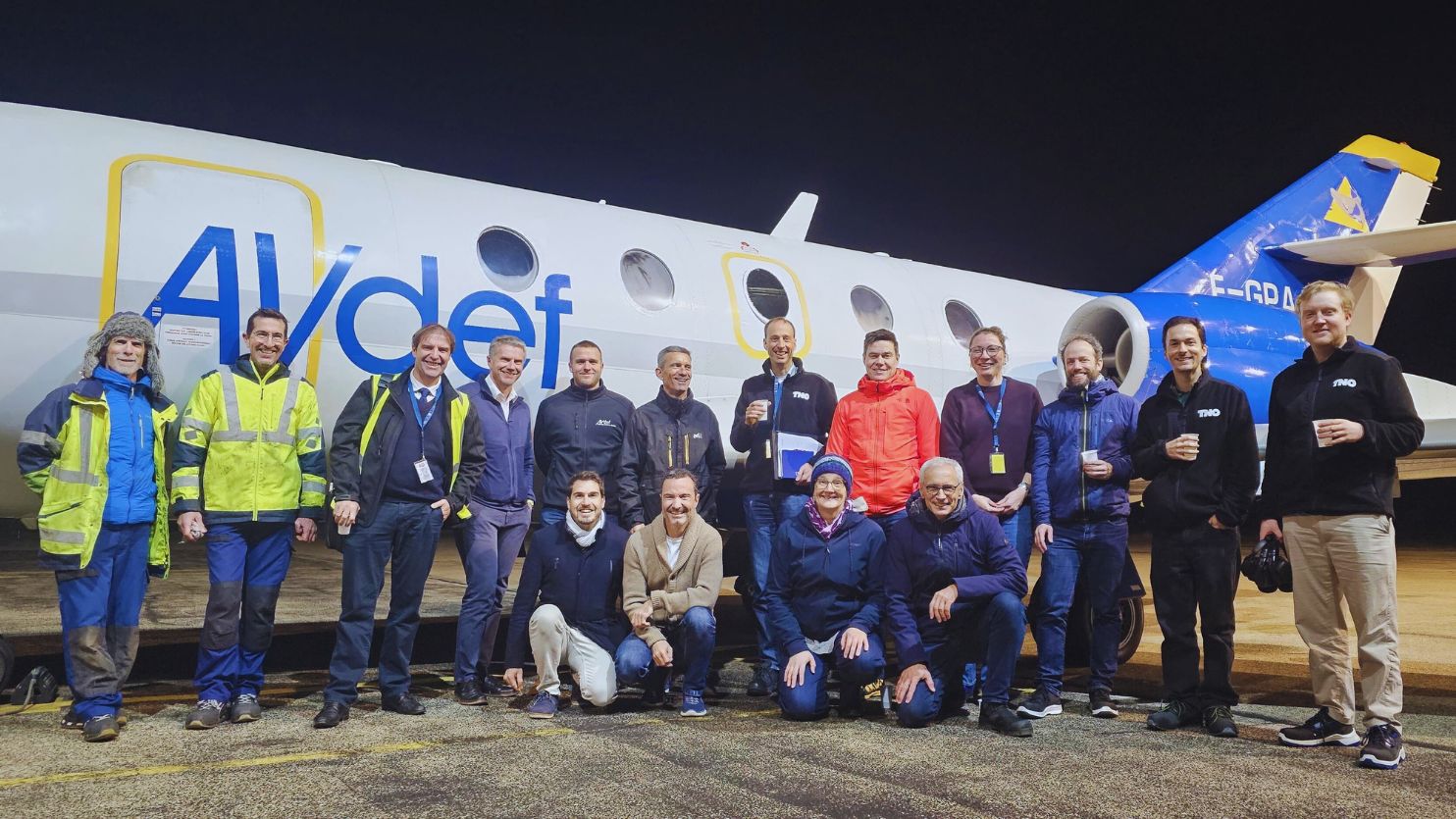
‘UltraAir is a perfect example of TNO’s value-add,’ Thomas says. ‘When there is a challenge that’s too big to solve on your own, we help you find the solution. More than 100 experts in optics, optomechatronics, radar, electronics and space and scientific instrumentation came together in the project. We pushed the boundaries of our expertise and the components themselves. But in the end, we’re proud that all that effort has paid off.’

‘We only had one chance to flight test our airborne terminal, and we worked to the very last day to secure its success.’
Technical details of the demonstration
On December 2025, 31 planned linked opportunities all resulted in successful acquisition and tracking of the TDP-1 terminal embarked on Alphasat in geostationary orbit. The planned link durations varied between 6 and 14 min and generated several hours of telemetry with the airborne terminal in closed-loop optical tracking. Seven of the links were dedicated to testing phase-modulated communication at a data rate of 2.6 Gbps. These showed several minutes of uninterrupted bit-error-free communication, which is unprecedented for this application.
Thomas says that every aspect of the project – from the countless development questions to the testing of the implemented solutions – was daunting. ‘In typical R&D, you can test a system, adjust components, and re-test it later,’ he says. ‘But we only had one chance to flight test our airborne terminal, and we worked to the very last day to secure its success.’
Now that the optical connection has been demonstrated successfully, Airbus, TNO, and industrial partners will work to implement the lessons learned. The system will be adjusted for recently developed standards of optical communication. The entire system will also be miniaturised and tailored to enable installation in various types of manned and unmanned aircraft and increase its operational envelope for real-world application.
The team will also optimise the system to connect with low-Earth orbit (LEO) constellations. While their satellites are much closer, their individual visibility above the horizon is much shorter. Their faster relative motion makes a rapid and robust link acquisition even more important.
‘By leading in this field, the Dutch industry strengthens Europe’s security and competitiveness.’
Making a global impact
The success of UltraAir paves the way for global data connections that are faster, more efficient, and more secure. It also opens the door for innovations that will lead to laser-driven communication solutions among other moving platforms, like cars and ships. Global innovations like this help to position the Netherlands, and Europe, to compete on the global stage.
‘This breakthrough proves that the Netherlands delivers technology with strategic global impact,’ says Kees Buijsrogge, Director of Space at TNO. ‘Secure high-speed laser communication is essential for both defense operations and civil connectivity. By leading in this field, the Dutch industry strengthens Europe’s security and competitiveness.’
Contact us
-

Ewa Lukkezen
Functie:Business Developer, Space & Scientific InstrumentationContact me to partner with TNO and uncover new opportunities in Satellite Communication (SatCom) in the optical and radio frequency (RF) domains. I work with industry partners to develop innovative SatCom solutions and build technologies of tomorrow.
My work focuses on optical SatCom, radar/RF technology for SatCom, deep-space communication, Quantum Key Distribution (QKD) and 5G/6G technology for SatCom.
-
Standplaats:Delft - Stieltjesweg
-
Email:Email Ewa
-
LinkedIn:Ewa on LinkedIn
-
Get inspired
Airbus and TNO demonstrate secure laser link between aircraft and satellite
Quantum internet and quantum networks series 1.0

Time setter story: Project manager Stephan van den Broek
Dutch partners announce construction of climate satellite TANGO
The invisible force behind our daily lives