A future‑proof and resilient North Sea requires an integrated and flexible energy system
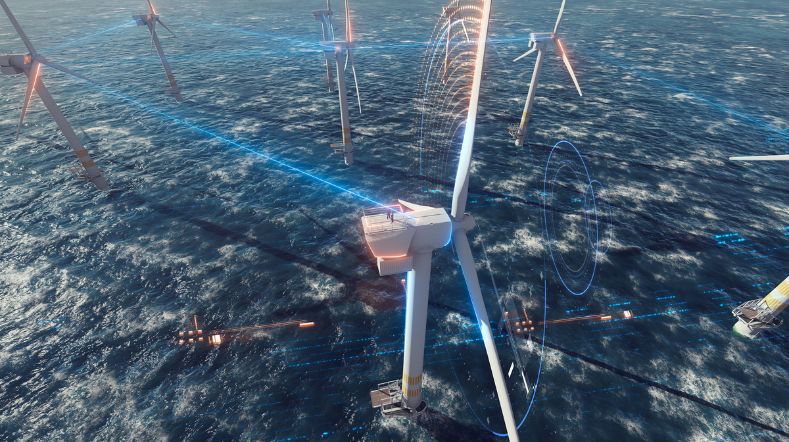
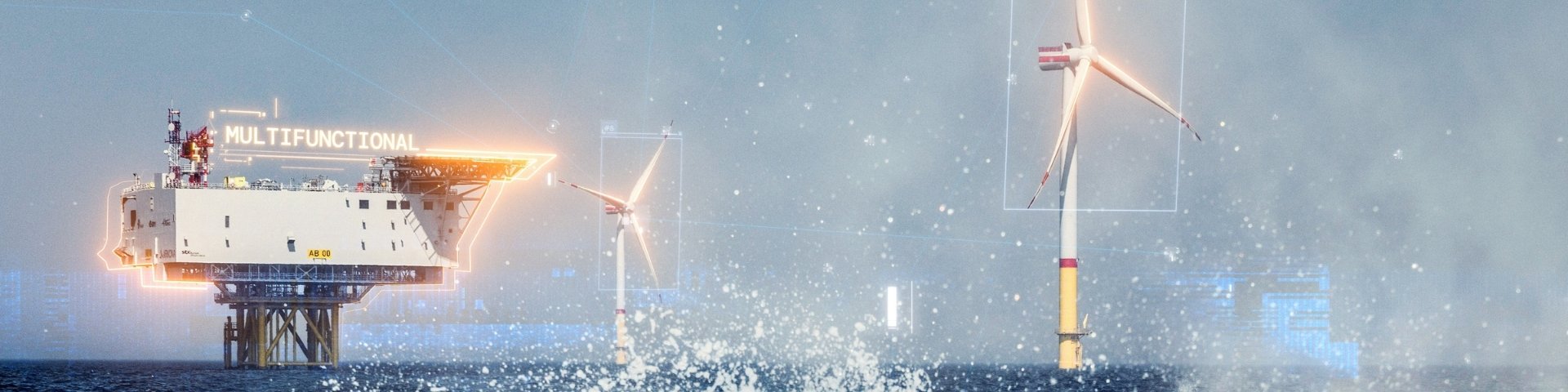
The North Sea is on track to become the sustainable energy hub of North-West Europe. Offshore wind, hydrogen, CO₂ storage and electricity come together here in a single integrated system. A system that is not only cleaner, but also more cost-efficient, faster to realise, and that strengthens the Netherlands’ strategic energy independence.
At TNO, we focus on four key challenges: system integration, spatial synergy, resilience and security, and international coordination.
Watch our webinar on demand
Discover how system integration and cross-border cooperation can contribute to a resilient, sustainable and cost-effective energy system in the North Sea.
System integration: the North Sea as an energy hub
At present, the North Sea remains primarily an important supplier of oil and gas for North-West Europe. Together with our partners, we are exploring how this system can be transformed into a sustainable energy hub by integrating a range of existing and new systems.
The main objectives of system integration are clear: achieving a net reduction in CO₂ emissions, minimising societal costs through smart reuse of infrastructure, and accelerating the energy transition.
This means connecting different energy carriers, infrastructures and markets. Offshore wind power is converted into hydrogen via offshore electrolysis platforms. CO₂ from industry is transported through pipelines to depleted gas fields for storage. Cables, conversion stations and digital systems provide the links between offshore and onshore infrastructure, and between the Netherlands and neighbouring countries.
By approaching this as an integrated system rather than a collection of separate projects, societal costs can be reduced, the energy transition accelerated, and strategic autonomy strengthened. The North Sea as an energy hub makes the Netherlands less dependent on imported energy, forming a strategic backbone of the national energy system.
Concrete steps are already being taken. Porthos starts this year, followed by the Aramis project, both focused on CO₂ storage. The capacity of these projects will be expanded progressively over the coming fifteen years. In addition, we are working on PosHYdon, producing hydrogen from offshore wind and testing how this can be integrated into the wider energy system.
Spatial synergy: making smart use of limited space
Although the North Sea appears vast, available space is limited. Energy production, ecology, fisheries, shipping, sand extraction and defence all need to coexist within the same area. The challenge lies in finding an optimal balance between these functions.
A concrete example is the potential wind development area Lagerlanden, which was recently removed from consideration due to spatial conflicts with mining installations and fisheries. This illustrates why integrated planning is required from the outset—not resolving conflicts afterwards, but determining in advance how multiple functions can coexist at a single location.
This calls for data-driven models, scenarios and trade-offs, with multi-use as a guiding principle. In addition, faster and more harmonised permitting processes are needed, along with clear legal frameworks on ownership, safety and use of the subsurface. Only then can spatial decision-making become predictable and robust.
Resilience and security: protection against disruption
Resilience is crucial in the current geopolitical context. The North Sea is governed by different security and jurisdictional zones: from 0 to 12 nautical miles the Netherlands exercises full sovereignty; up to 24 nautical miles it can enforce regulations; and from 24 to 200 nautical miles (approximately 370 kilometres offshore) lies the Exclusive Economic Zone. In this latter zone—where most offshore wind turbines are located—all vessels have the right of passage. This increases the vulnerability of the system. Recent geopolitical developments demonstrate that this risk is not merely theoretical.
For this reason, security by design is essential: protecting infrastructure from the design phase onwards. This includes burying pipelines at greater depth and linking energy flows through a meshed grid—an interconnected network offering alternative routes if one pathway fails. By combining electricity, hydrogen, CO₂ and heat, a more flexible system emerges with improved recovery capacity following disruptions.
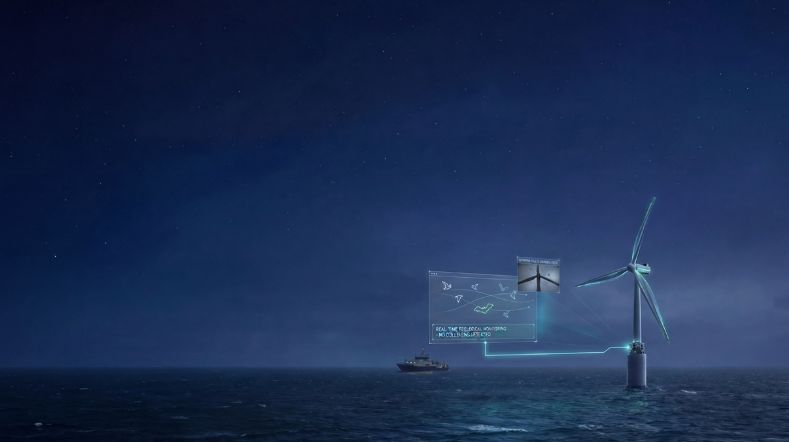
Data integration plays a key role in resilience. By combining monitoring of weather conditions, energy assets and security, anomalies in pipelines can be assessed immediately: is this a technical fault, or is another type of disruption involved? The large volumes of data available on pressure fluctuations and operational systems enable rapid response in the event of unforeseen circumstances.
International coordination: the North Sea is cross-border
No single country can optimise the North Sea independently. The offshore energy transition requires close coordination among all North Sea countries. Through the North Sea Energy Cooperation (NSEC), energy ministers collaborate on joint research, data and model exchange, and the harmonisation of standards.
Synchronising investments is critical. If the Netherlands builds wind farms that produce hydrogen while Germany has not yet developed sufficient hydrogen infrastructure, the full value of those investments cannot be realised. Coordinated timelines for wind farms, electrolysis capacity and cross-border infrastructure such as cables and pipelines are therefore essential.
Shared operational strategies can also reduce costs: maintenance vessels serving both Dutch and Belgian wind farms, joint monitoring systems, and coordinated security measures. A synchronised North Sea delivers lower costs, higher reliability and greater system flexibility for all countries involved.
The energy system of the future
Imagine an energy system that always works, is affordable for everyone, and emits no CO₂. A system where companies are not hindered by grid congestion, municipalities can build without energy shortages, and Dutch industry remains competitive in a changing world. This is the concrete ambition for 2050.
Projects
The energy transition in the North Sea requires collaboration between all stakeholders. Since 2017, the North Sea Energy programme has brought these parties together: 35 partners jointly working on four offshore energy transitions, ranging from major wind farm operators and innovative SMEs to governments and network operators. In the new phase starting in early 2026, security will become a more explicit focus.
A number of concrete projects demonstrate that the transition is already well underway. These pilots are essential for learning what works in practice before large-scale deployment.
On an oil and gas platform in the North Sea, a consortium has been testing the production of green hydrogen from seawater. The pilot installation converts renewable electricity into hydrogen via electrolysis, which is transported to shore through existing gas pipelines. The project provides valuable insights for large-scale offshore hydrogen production after 2030.
As the number of installations in the North Sea increases, the protection of cables, pipelines and other infrastructure becomes increasingly important. Through its involvement in SeaSEC (an international test centre) and PBNI (the Programme for the Protection of North Sea Infrastructure), TNO contributes detection technologies and monitoring solutions to help safeguard critical infrastructure.
At the OranjeWind offshore wind farm (Hollands Kust West), a knowledge programme initiated by developers RWE and TotalEnergies is underway. TNO works with universities and companies on innovations in system integration. The resulting knowledge is widely shared with education, government and industry to support the energy transition.
North Sea Energy is an international programme focused on combining offshore renewable electricity (wind, solar and others), hydrogen production, CO₂ storage (CCS) and existing but gradually phased-out gas infrastructure. The objective is to develop a North Sea energy system that delivers affordable and reliable energy through synergy, while respecting ecological and societal interests.
In this follow-up to the HY3 project, TNO and Arcadis have been studying since 2024 how to ensure security of supply in the cross-border hydrogen network linking the Netherlands, Germany and Belgium. HY3+ goes beyond annual supply-and-demand balances by modelling production, transport and storage on an hourly basis, identifying critical locations, opportunities and bottlenecks.
- Porthos initiates large-scale CO₂ storage in depleted offshore gas fields from 2026.
- Aramis follows as a subsequent CCS project with a 15-year development trajectory.
- OESTER investigates offshore electricity storage to better align supply and demand.
Dutch offshore industry: global leadership
For Dutch companies, the North Sea offers a unique opportunity. The Dutch offshore industry is recognised worldwide. Companies such as Van Oord, Allseas and Fugro—often traditional family-owned firms—are active in wind projects across the globe. Not primarily as turbine manufacturers, but through foundations, cabling and installation.
The Dutch section of the North Sea functions as a demonstration environment for innovative technologies developed and tested locally and subsequently deployed worldwide. Many of these companies now generate more than half of their revenue from sustainable energy rather than fossil projects, which is economically significant for the Netherlands.
Working together
The energy transition runs through to 2050, and the steps taken today are decisive. The North Sea provides an opportunity to demonstrate what a future-ready, resilient and economically robust energy system can look like—integrated across sectors, disciplines and national boundaries.
Are you active in the offshore industry, developing new technologies, or working on North Sea-related policy? And would you like to contribute to one of the four challenges—system integration, spatial optimisation, resilience or international cooperation? Then connect with the experts from the North Sea Energy programme.
Contact us
-

Rene Peters
Functie:Business Director Energy Infrastructure-
Standplaats:Rijswijk - Kesslerpark
-
Email:Email Rene
-
LinkedIn:Rene on LinkedIn
-
-

Quenteijn van Cooten
Functie:Business Developer-
Standplaats:Rijswijk - Kesslerpark
-
Email:Email Quenteijn
-
LinkedIn:Quenteijn on LinkedIn
-
-
Joris Koornneef
Functie:Strategy Consultant-
Standplaats:Utrecht - Princetonlaan
-
Email:Email Joris
-
Get inspired
A future-proof North Sea energy system

Breakthrough for nature-inclusive wind energy: realtime detection of small birds and bats
Smart Energy Networks & Grid Solutions
The energy system of the future

Smart networks for a future-proof energy system