How far can you travel in an electric car?
On paper, electric cars are becoming increasingly efficient, but in practice, that’s not always the case. In fact, the gap between what manufacturers promise and what drivers experience is widening. TNO is investigating how to predict real-world energy use and battery capacity more accurately, helping policymakers, fleet managers and consumers make informed decisions.
WLTP paints a rosy picture
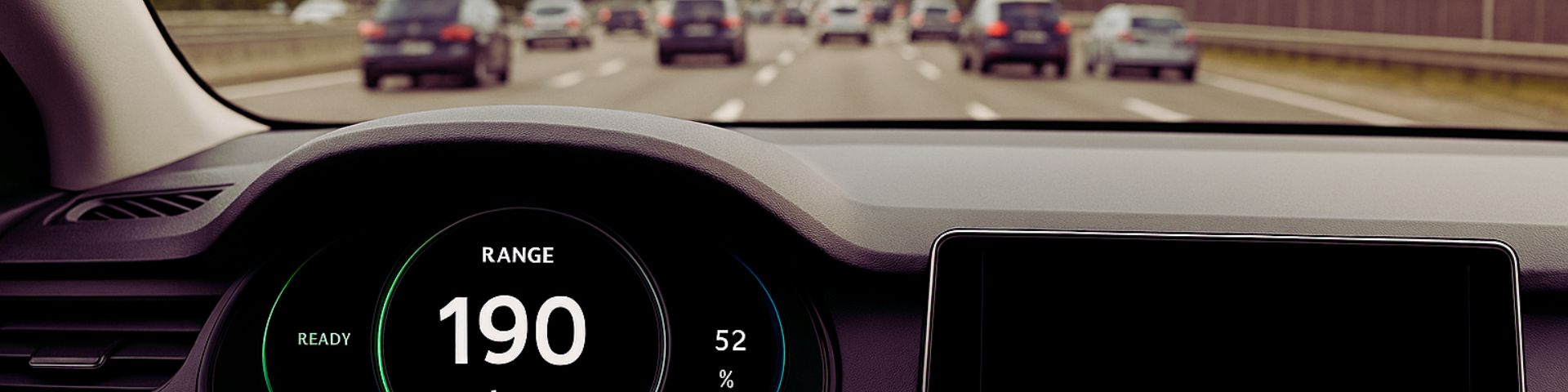
Every electric car has an official range based on the WLTP the Worldwide Harmonised Light Vehicle Test Procedure. This test is carried out under controlled conditions: 23 degrees Celsius, no weather influences, and a fully charged, temperature-conditioned battery. It provides a fair comparison between vehicles, but not necessarily a realistic picture of how far you can actually drive.
According to researcher René van Gijlswijk, that’s not the WLTP’s purpose.
'The test was designed to allow uniform comparison of cars and to hold manufacturers accountable for the CO₂ emissions of combustion-engine vehicles they sell. But no one drives in real life on a rolling road in a factory hall without wind or rain. The difference with the WLTP figure is most noticeable on long journeys, precisely when range matters most.'
Why is real-world consumption higher?
It’s not just the technology – battery type, vehicle weight and aerodynamics – that affects range. How we use the technology matters too.
First and foremost: the energy consumption of an electric passenger car is always lower than that of a comparable petrol or diesel car, thanks to its efficient technology. But speed, braking behaviour and anticipation significantly influence energy consumption, as does the type of journey. WLTP assumes an average mix of city, rural and motorway driving.
But if you drive 300 kilometres non-stop on the motorway, you’ll use more energy than that average. Add air conditioning, heating and driver-assistance systems, and don’t forget that EVs consume energy even when stationary, for example, pre-heating or cooling the battery and cabin during charging or before departure.

'Real-world energy use in electric cars has increased year on year, while WLTP figures have gone down.'
The gap between stated and actual range is growing
The difference between WLTP range and real-world range is substantial and widening. René explains: 'Real-world energy use in electric cars has increased year on year, while WLTP figures have gone down. In 2020, the gap was 13%. By 2024, it had grown to an average of 22%.'
Differences between brands and models are also significant. Some cars perform close to WLTP figures, while others consume far more. There’s no simple explanation, says René: 'We suspect a combination of factors. Manufacturers optimise new models for the test, so they score better on paper but aren’t necessarily more efficient on the road. At the same time, greater range and faster charging tempt drivers into less economical behaviour, for example, consistently driving faster. Increasing comfort features, such as heavier infotainment and climate systems, also contribute to higher energy use.'
How do batteries really perform?
These insights come from analysing driving data from 45,000 EVs on Dutch roads. Based on these findings, TNO is conducting further research.
René: 'We’re now carrying out specific measurements under varying conditions, such as different speeds, weather, and charging losses at different rates, which WLTP doesn’t account for.'
TNO also studies battery performance and ageing, as this affects range. 'In our Battery Lab, we test how batteries respond to intensive use, charging cycles and temperature changes. This helps manufacturers improve batteries and gives policymakers insight into lifespan and reliability.'
'In our Battery Lab, we test how batteries respond to intensive use, charging cycles and temperature changes. This helps manufacturers improve batteries and gives policymakers insight into lifespan and reliability.'
Better policy through realistic data
Hundreds of thousands of EVs using 10% more energy than expected quickly adds up to tens of millions of euros in extra costs and higher CO2 emissions from electricity generation. Fleet owners and leasing companies need reliable real-world data. Policymakers do too, for tackling grid congestion and improving charging infrastructure.
These issues aren’t just Dutch, they’re European. The upcoming Euro 7 legislation will require minimum battery capacity after a set time or mileage: 80% after 100,000 km or 5 years, and 72% after 160,000 km or 8 years. These rules aim to keep EVs reliable long-term. TNO provides expertise to support this, working with the Ministry of Infrastructure and Water Management.
What can EV drivers do?
If you’re considering an EV or already own one, independent information on energy use and range is increasingly available. The Green NCAP website, a programme TNO contributes to, lets you compare new cars based on test results. TNO reports also provide practical insights. René: 'These sources give a more realistic picture than WLTP figures. We’re not trying to shame the industry; sustainable mobility benefits us all.'
Collaborate?
Are you a policymaker or fleet manager? We’d be happy to discuss monitoring, efficiency improvements and the impact of EVs on grid load and charging infrastructure. Want to know more or collaborate? Read TNO’s report on excess energy use or contact us.
Contact us
-

René van Gijlswijk
Function not knownAt TNO I work as researcher sustainable mobility. My work is focussed on acquiring insight in the environmental impact of zero emission road vehicles and mobile machinery by means of monitoring and data analysis. Ultimate goal is to improve vehicle legislation in the EU, and to provide unbiased environmental information to consumers.
-
Standplaats:Den Haag - New Babylon
-
Email:Email René
-
Get inspired
Reliable monitoring of battery condition for transparent battery passports
National Growth Fund invests in Dutch battery consortium for heavy duty transport
TNO opens test cell for sustainable marine engines
Battery technology: 4 developments according to the Battery Lab
Fuel cells crucial for decarbonising heavy-duty transport and non-road machinery