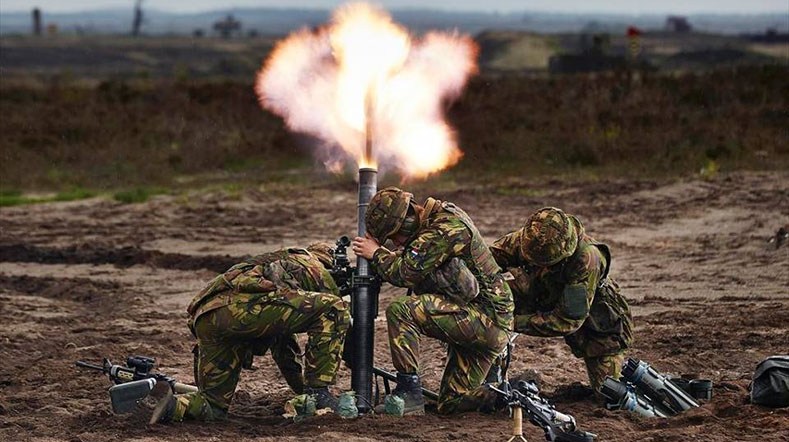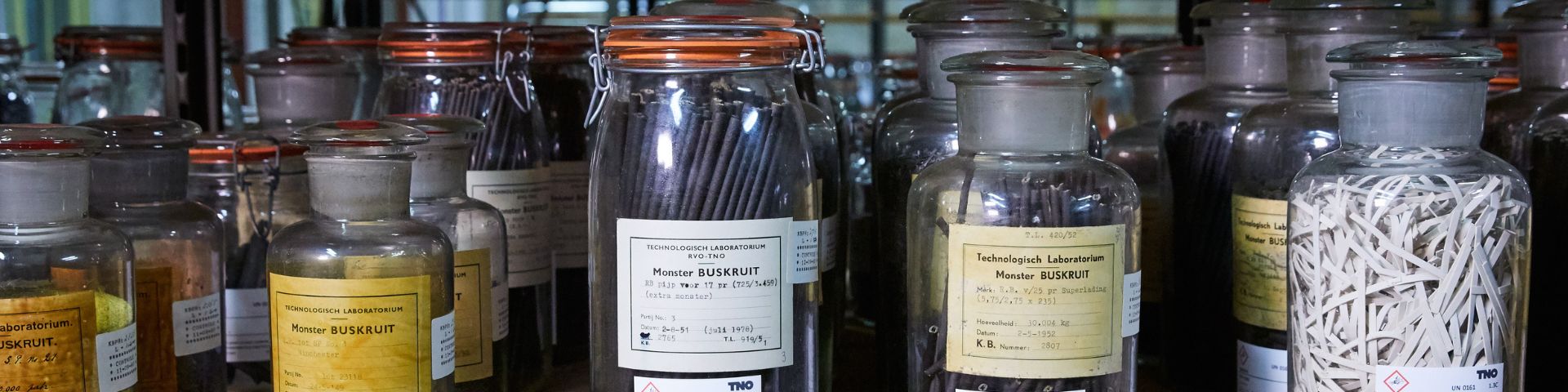
Why continuous knowledge development is crucial in munitions safety
'Knowledge is power': a powerful statement made centuries ago by the English philosopher Francis Bacon. Now, in an era of rapid progress, this idea is more relevant than ever. Those who possess knowledge and insight are able to make better decisions and thus influence their environment. How does Defence view the power of knowledge? And what is its value when it comes to a subject as complex and risky as munitions?
Safe handling of munitions largely depends on the knowledge that Defence employees develop and share in this field. From this responsibility, Albert, Head of Conventional Munitions at the Defence Munitions Company, and Wim, Business Coordinator at TNO’s unit Defence, Safety and Security, explain how - by renewing, building, and passing on knowledge - they contribute to greater safety in the field of munitions.
Ensuring munitions safety as a driving force
'The Defence Munitions Company is part of the Command Materiel and IT (COMMIT),' Albert begins. 'Within the Ministry of Defence, COMMIT is responsible for materiel and information technology.' He continues: 'The question ‘How do we work more safely with munitions throughout the entire chain?’, which the Chief of Defence Staff (CDS) openly posed in 2019, was taken by us as a powerful call to action. It is our core business to continuously improve processes and techniques and to build our knowledge and scientific insights. We are a self-learning organisation that strives to safeguard the safety of all Defence employees that work with munitions and in every part of the munitions chain.
Within the Dutch Ministry of Defence, COMMIT (Command Materiel and IT) is responsible for materiel and information technology. COMMIT looks at the needs of operational units and translates these into the technical means required to carry out their work safely and effectively.
COMMIT consists of several directorates:
- Joint Information Provision Command
- Procurement Directorate
- Projects Directorate
- Weapons Systems & Companies Directorate
The Weapons Systems & Companies Directorate provides technical knowledge for requirements, acquisition, maintenance, and disposal of maritime systems, land-based weapon systems, and aviation systems. The directorate ensures that all armed forces always have the most modern and effective equipment.
Within the Weapons Systems & Companies Directorate, there are three chain logistics companies:
- Clothing and Personal Equipment Company
- Defence Fuel and Business Supplies Company
- Defence Munitions Company
The Defence Munitions Company (DMunB) is the specialised ‘munitions branch’ focusing exclusively on munitions and munitions logistics. DMunB is responsible for the setup, storage and management, distribution, testing and trials, and return flows of weapons and munitions articles.
DMunB works closely with other parts of COMMIT and with operational commands to ensure that munitions stock, logistics, and supply also run smoothly during crises or international support.
This chain, as mentioned by the CDS, runs from procurement to destruction: from the start with determining specifications and setting requirements, to purchase, transport, and storage, ending with the disposal of remnants. Each step has its own risks and requires specific expertise. Therefore, every step in the chain includes a training or educational aspect.
New Defence employees starting work in the munitions chain follow an Orientation Munitions Technology course at the EOD-school (Explosive Ordnance Disposal). The course provides important insights in areas such as quality assurance and decision-making. The knowledge helps employees to understand better the effects certain choices can have.
Specialization through follow-up modules
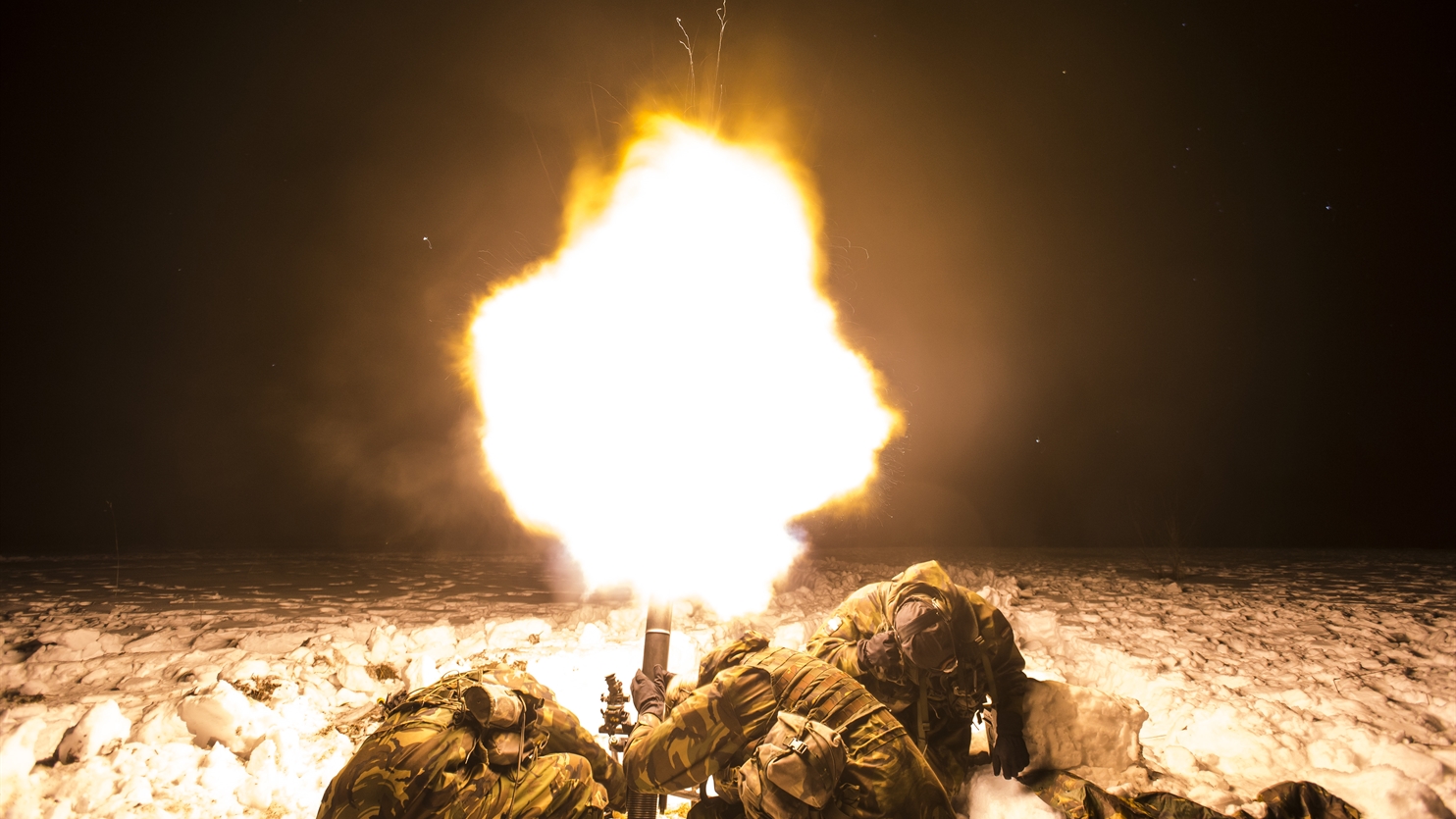
'As scientific research provides new insights, safety requirements are more controlled, or new techniques and materials are introduced, the munitions chain continues to develop,' Albert explains. 'Defense employees working with munitions need more than just a single training session. They must be regularly retrained and specialized. Small groups are trained in specialist areas relevant to them.
TNO has a long and successful track record in supporting the development, testing, and validation of munitions. With this specific expertise, TNO makes an important contribution to improving munitions safety and is also the designated partner in providing follow-up training in this field.'
Flexible and future-proof course material
'Two years ago, at the request of the Munitions Company, we started writing new modules that are building forward on the Orientation Munitions Technology course,' Wim explains. 'We work with modules so that Defence employees can follow the specific specialisations they need. For us as the knowledge provider, a modular system makes the teaching material easier to adapt. Now the developments within the munitions chain move quickly, it is important to keep the course material flexible and up to date.
Of course, some scientific principles remain the same. Physical laws do not change, but the technological context does. The use of software and electronics continues to grow and in recent years drones started to play a big role. Now, extremely versatile devices can, among other things, be used as carriers of explosives. Such developments need to be included in the course content.'
Health monitoring, energetic materials, and practice
'In the first modules, we cover ignition methods, quality control, health monitoring, and data loggers,' Wim mentions. 'Medical aspects and potential toxicity are also addressed, as well as functioning and ballistics under different conditions and classification of energetic materials. There is also attention to storage safety, safety zones, demilitarization or destruction, and environmental aspects.'
He continues: 'The aim of the training is not only to provide up-to-date knowledge, but also to make participants alert to the risks and situations that may arise. To support the theory, demonstrations and practical exercises have been developed for certain modules. Case studies and examples make the material more engaging and therefore easier to remember.
When developing the new modules, we included the latest innovations in munitions. Think of high-energy lasers, hypersonic missiles, miniaturisation, ‘smart munitions’, and drones. We will also focus on robotics and autonomous systems.'
What is ‘smart munitions’?
The term ‘smart munitions’ is used for munitions equipped with sensors, controllable components, and data logging. This allows the munitions to be used more effectively, accurately, and safely.
- Sensors and data loggers: This built-in technology continuously collects data on mechanical and environmental conditions. Analysis of the collected data can contribute to a better understanding of the projectile’s load.
- Munition health management: This allows the status and health of munitions to be monitored better throughout their lifecycle. It makes maintenance and management more efficient and safer.
- Track & trace functionality: By using sensors, the position and condition of munitions in storage or during transport can be tracked for greater munitions safety.
- Safety: Improved monitoring allows deviations or harmful effects to be detected early. ‘Smart munitions’ therefore reduce risks, both during storage and transport and during use.
- Efficiency and precision: ‘Smart munitions’ can be deployed more accurately and better tailored to the battlefield of the future, where unpredictability and diversity of threats play an increasingly important role.
- Cost savings: Innovative sensor technology can result in a longer lifecycle, requiring less replacement and saving costs.
Future expansions and innovations in training
Albert adds: 'At TNO, we find an important partner in ensuring munitions safety, now and in the future. It is a trusted group of knowledgeable people who are constantly engaged in innovation. Moreover, TNO is independent and works for other organisations too. This gives them a comprehensive overview of the market and technological developments. This broad perspective makes them valuable advisors.
For example, recently, we had a presentation from TNO experts to make us aware of everything happening in the field of AI. TNO, as it were, plants a seed: they show what is possible, so that we are able to do something with it in the future.'
AI and training for the battlefield of tomorrow
'What is our focus in the coming year? There will be more rounds of the follow-up training that has just been completed. There are also plans for a nine-week programme with more new modules. Again, these will cover both current topics and future areas of attention,' says Wim. 'AI will play an important role in the munitions chain. We will address this in the training.'
Albert concludes, 'The munitions chain is one of the cogs in our defence apparatus. With the new training courses we are taking a step towards greater efficiency, sustainability, and above all, safety. Building knowledge is a continuous and indispensable process for us all to be prepared for the battlefield of today, and the future.'
Contact us
-

Frans van Gemerden
Functie:Director Protection, Munitions & Weapons-
Standplaats:Den Haag - Ypenburg
-
Email:Email Frans
-
Get inspired
TNO’s Unit Defence, Safety & Security strengthens ties with South Korea

How the use of passive radars and satellite signals can detect and identify aerial threats
Responsible for safety: the crucial role of the range operator in bulletproof protection

Is the race between protection and weight of Defence vehicles changing?
Prevent mild brain damage (mTBI) in the military? TNO is helping to build knowledge