Action Agenda for digital solutions in the energy system
The National Energy System Plan (NPE) announced in late 2023 that a strong vision was needed on the role of data and digitalisation in the energy system. Digital solutions make our energy supply more flexible and resilient. Sharing data allows supply and demand to be aligned far more effectively. The Action Agenda on digitalising the energy system, submitted by Minister Hermans (KGG) to Parliament in mid‑December, outlines a set of digital solutions to support a sustainable, secure and affordable energy system.
Action Agenda
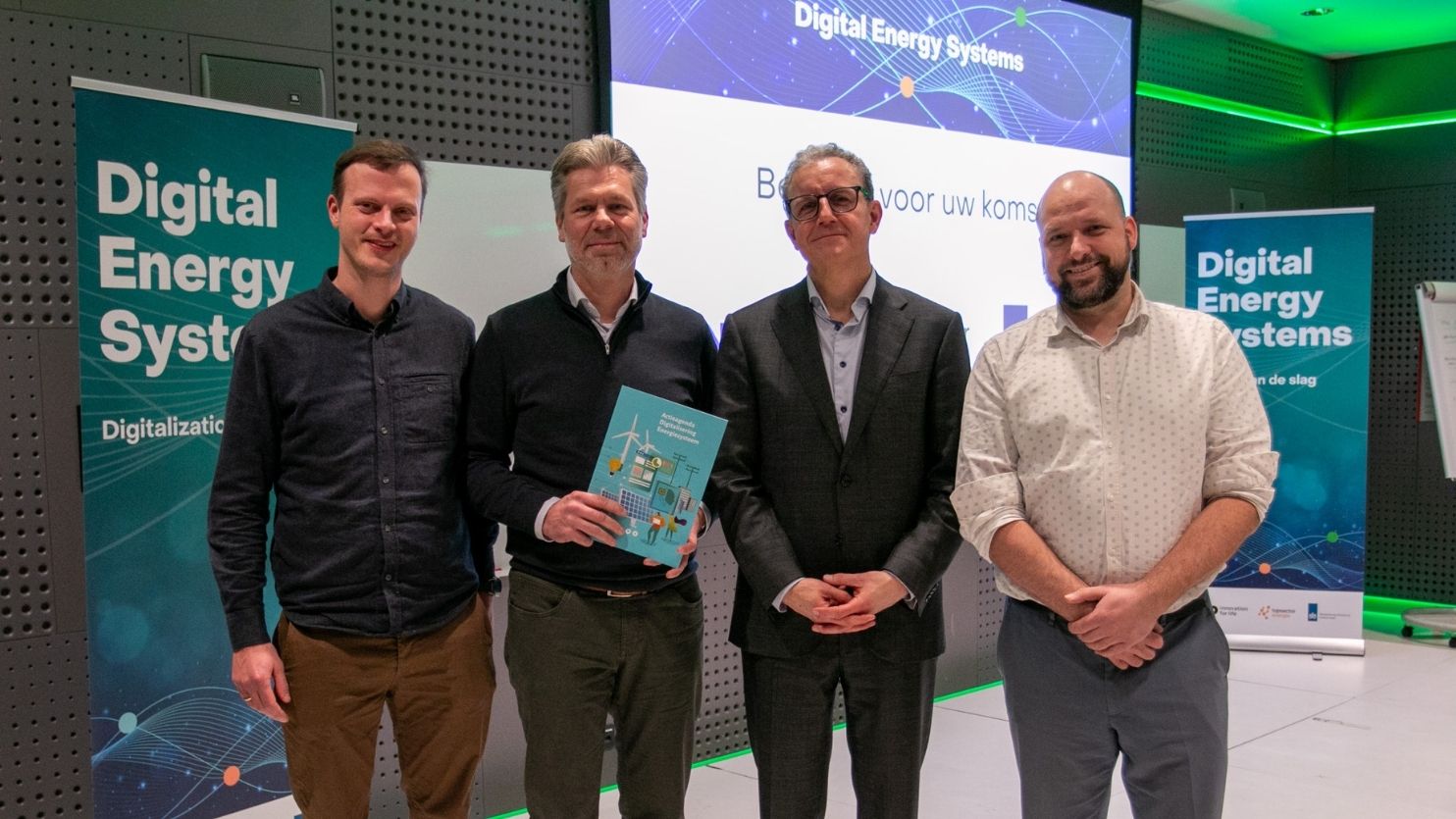
Download the Action Agenda here (in Dutch).
Broadly supported and widely shared
The agenda was developed jointly by the Ministry of Climate Policy and Green Growth (KGG) and TNO. “Thanks to input from many stakeholders across the energy and ICT sectors, this agenda is firmly rooted in practice and has broad support,” says Frank van der Harst, Senior Policy Officer for Data at the Ministry and a member of the project team.
Giving shape and structure
“We worked with a large group of partners to turn this complex topic into something tangible,” adds Fonz Dekkers, Cluster Lead Energy Innovation at KGG. “Digitalisation is a broad concept you can take in many directions. In this agenda, we’ve spelled out clearly what digitalisation means for the energy system, what themes are involved, who needs to act, how they should act, and what results that will deliver. In doing so, we answer the NPE’s question: how do you make digitalisation an integral part of the energy system?”
Targeted action points
The first of the agenda’s five themes is insight into the electricity system, for everything starts with data. TNO consultant Michel Emde explains: “High‑quality data that can be connected and enriched leads to new and better insights. Every organisation we consulted, from local energy hubs to large industrial users, from municipalities to SMEs, expressed that need. We brought data‑suppliers and data‑users together. That made the issues concrete and allowed us to formulate targeted actions.”
Public interests at the centre
The action agenda was completed within two years. “Our starting point was the National Energy System Plan, which places public interests at the heart of the energy transition: affordability, reliability and sustainability,” says Hugo Gelevert, Innovation Orchestrator at TNO. “We brought together all relevant stakeholders and discussed their perspectives in a series of workshops. Some wanted digitalisation to accelerate quickly; others preferred a more cautious, step‑by‑step approach. Key decisions on scope and objectives were taken by a steering group of ten organisations, each mandated to speak on behalf of their sector. In the end, this produced an action agenda the entire field can support.”
Cross‑chain solutions
The agenda’s five themes build on the strategic choices in the NPE. Alongside insight into the electricity system, they include:
- better use of grid capacity
- well‑equipped participants (households and businesses)
- an integrated and resilient electricity system
- planning, development and monitoring of the electricity system
The agenda focuses primarily on electricity because of the system’s complexity. “We’d rather tackle one domain thoroughly than try to do everything at once,” Frank says. “Many digital solutions cut across the entire energy chain. For example, an energy‑management system originates in the electricity domain but can also support other energy carriers like heat. Many of the solutions we identify will benefit multiple energy chains.”
Urgency
The choice to start with the electricity system also reflects urgency. Grid congestion and high electricity prices create immediate pressure. Digitalisation offers major opportunities here.
“Electricity is the key energy carrier in the NPE and underpins other carriers,” Michel explains. “It’s also a European system, everyone is interconnected. That makes it crucial to organise digitalisation properly.”
Action owners
Across the five themes, the agenda identifies seventeen digital solutions, elaborated into almost thirty concrete actions. Each action line includes a clear objective, expected outcomes, required steps and timeline. Action owners, organisations jointly responsible for execution, are specified for each action.
Now that the agenda has been adopted, Topsector Energie coordinates implementation under the responsibility of the Ministry of Climate Policy and Green Growth.
Wennink Report
One day after the agenda was published, the Wennink Report – The Path to Future Prosperity appeared. It highlights the same priority: “In energy and climate technologies, digitalisation can support smarter grid management, better integration of renewable generation, and a reduction in grid congestion.”
“This once again underlines the importance of digitalising our energy system,” says Fonz. “It must help address urgent challenges such as grid congestion, rising costs and vulnerabilities. Ultimately, it’s about ensuring a reliable, secure and affordable energy system for everyone.”
Contact us
-

Michel Emde
Functie:Senior Business Consultant-
Standplaats:Groningen - Zernikelaan
-
Email:Email Michel
-
Get inspired
TracXon raises €4.75 million to pioneer sustainable alternative to printed circuit boards

Digital Energy Systems

Electricity system in transition requires new strategy for success
Time setter story: Karim El Assal

Capgemini becomes partner of research group ESI (TNO) - TNO