Automated driving: from smarter speed advice to depot automation for buses
A bus driver arrives at the depot, steps out, and lets the bus drive itself to its parking bay. Cars that adjust their speed based on real time traffic information. The possibilities of automated driving continue to expand. By combining key technologies in a smart way, TNO is making intelligent driving increasingly precise and safe.
From driver control to autonomy at the push of a button
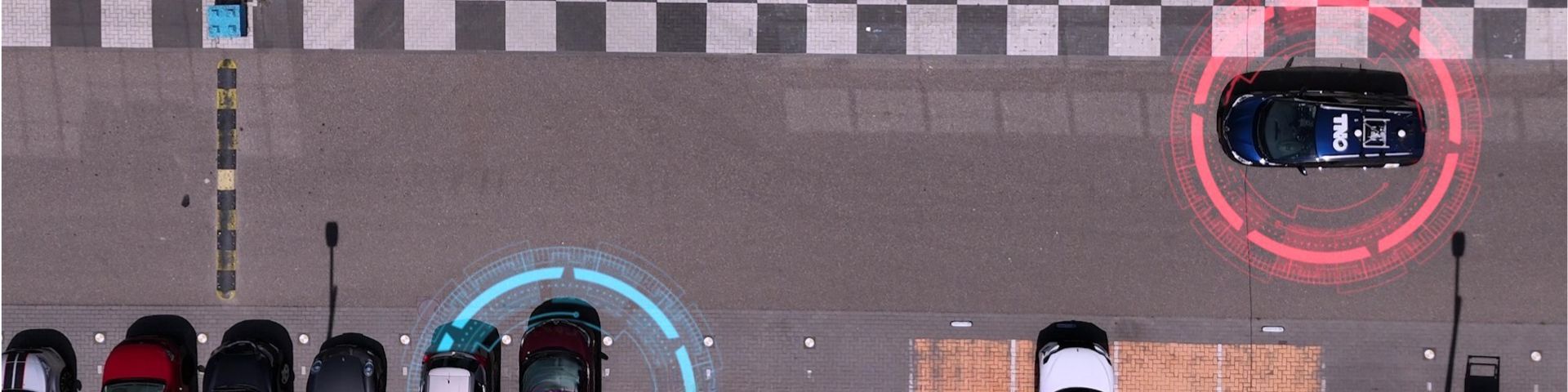
It is April 2025. A blue Renault Scénic is driving on public roads. Despite different speed limits per lane, the vehicle knows exactly which maximum speed the driver should observe. The destination is a closed site where the driver can relinquish control: the car operates fully autonomously and drives smoothly to the designated parking space.
'This was one of the first demonstrations showing a seamless transition from a driver assistance system with the driver in control to a fully autonomous vehicle operating on a logistics site, at the push of a single button,' says Jochem Brouwer, consultant in automated driving at TNO.
Together with Daniel Altgassen, systems engineer/architect at TNO, he is closely involved in TNO’s work on automated and autonomous driving, a topic that is receiving increasing attention across Europe and the Netherlands. According to the two engineers, TNO is currently achieving the greatest impact by intelligently combining existing key technologies.
Accurate speed advice on public roads
How does this work in practice? Take speed advice on public roads. For this, Intelligent Speed Assistance (ISA) is used: a system that informs drivers of the applicable speed limit. Since July 2024, ISA has been mandatory in all new vehicles in the EU. Most ISA systems rely on a digital map and a camera that reads traffic signs.
'A map is almost always already out of date,'says Jochem. 'And a camera may not see things because something is blocking the view, or because a lorry has just passed.' TNO therefore added a third source: certified, up to date speed data delivered to the vehicle via a digital infrastructure, such as information from the National Data Warehouse for Traffic Information (NDW).
To use this data effectively, the vehicle must know exactly which lane it is in. TNO therefore combines ISA with several methods for lane level accurate localisation. One of these methods uses cameras to recognise fixed objects in the environment, such as lampposts, and compares them with highly accurate map data from partners such as TomTom and Geomaat. This can be combined with LiDAR, which creates a 3D point cloud – a detailed scan of the surroundings – allowing the vehicle to determine its position with centimetre level accuracy.

'The aim is the bus driver finishes the route, steps out, goes for a coffee or a sandwich, while the bus itself looks for a parking space in the depot.'
The bus finds its own parking space
On closed sites such as bus depots and distribution centres, the goal is not assistance but full autonomy. This is known as yard automation. Vehicles are controlled by a yard operating system: a central system that plans, coordinates and assigns missions. In this area, TNO works closely with VDL ETS.
The ultimate aim is to allow buses to drive as autonomously as possible once they leave the public road. Daniel explains: 'So the bus driver finishes their route, steps out, goes for a coffee or a sandwich, while the bus itself looks for a parking space in the depot.'
If the central system then signals that there is space at the washing lane or at an electric charger, the bus should automatically drive there on its own. Although it may sound like a luxury, automated driving could significantly improve daily operations at a bus depot.
'A lot of time is spent on small manoeuvres such as parking, charging and washing,' says Jochem. 'And when the first bus in a row is moved, all the others have to be shifted manually, one by one. That is not why most bus drivers chose this profession.' At the same time, there is a growing shortage of staff in public transport, and automation can provide immediate, tangible relief to workload pressures.
Accurate localisation also plays a key role in yard automation: to manoeuvre safely and independently on a busy depot, the vehicle must know its position to within a few centimetres. Here too, a 3D point cloud can be used. In addition, through collaborative perception, the digital sharing of sensor data between vehicles and infrastructure, a vehicle can detect hidden people or objects and respond in time. If one vehicle cannot see an obstacle, for example because it is around a corner, another vehicle might.
How can we always trust digital information?
Collaborative perception and up to date speed information are just two examples of the potential of digital infrastructure. Via digital infrastructure, a vehicle could also receive information about traffic lights, roadworks, an approaching ambulance or the status of a charging point. Translating this potential into everyday practice remains a challenge, however. How does a vehicle know that the quality of the information is sufficient and that it can be trusted?
'To keep the complexity of agreements around quality and trust manageable, manufacturers often partner with a single data provider,' says Daniel. 'But as soon as a vehicle could receive data from another source – for example when entering a different region or country – there is no clear way to assess that data.'
That is why TNO is developing a framework that continuously compares different sources – camera, map and digital infrastructure – and assesses their quality. By comparing sources not only at a single moment but also monitoring them over time, the system becomes increasingly effective at identifying unreliable information.
From concept to the real world
What distinguishes TNO’s work is that it does not stop at simulations and theory. The technologies described here have been implemented and tested on public roads and on closed sites, including the transition between the two. 'We bring concepts into practice and show that they work in the real world,' says Jochem. 'That is typically what TNO excels at.'
TNO has access to several test facilities. At the Automotive Campus in Helmond, for example, you will find the MARQ research environment. MARQ provides both physical and digital test infrastructure, including test drives on public roads. This makes it possible to move quickly from an idea to a working demonstration, the level that partners and clients need to say: this is something we want to pursue.
The software is also modular: it currently runs on TNO’s own research vehicle, but the architecture is designed so that other vehicle manufacturers can work with it. This work takes place within DITM (Digital Infrastructure for Future Proof Mobility), a collaboration of nineteen partners including NXP, TomTom, VDL and Geomaat, funded by the Dutch government and the EU.
Ready for the next step
Soon, TNO, in collaboration with VDL, will repeat last year’s demonstration, this time with a slightly larger vehicle: a passenger bus. The next challenge is to move from demonstration to actual deployment, in buses, lorries and passenger cars. 'We have shown that it works,' says Daniel. 'Now we need partners who are willing to take the step towards implementation with us.'
Interested in exploring what these technologies could mean for your organisation together with TNO? Contact the Integrated Vehicle Safety team for co development, pilots or integration.
Our expert

Contact us
-

Jochem Brouwer
Functie:Consultant Automated DrivingWith a background in System and Control Engineering, I have extensive experience in application development for automated driving. I apply this knowledge at TNO to improve vehicle safety and mobility.
My personal focus is on how we can make impact with innovations in the domain of Connected and Cooperative Automated Mobility (CCAM). We do this both by developing and evaluating (r)evolutionary assistive and automated driving systems. In my role, I am an all-round sparring partner for parties active in the mobility domain.
-
Standplaats:Helmond - Automotive Campus
-
Email:Email Jochem
-
Get inspired
Korea-Netherlands joint conference on smart mobility for future transportation
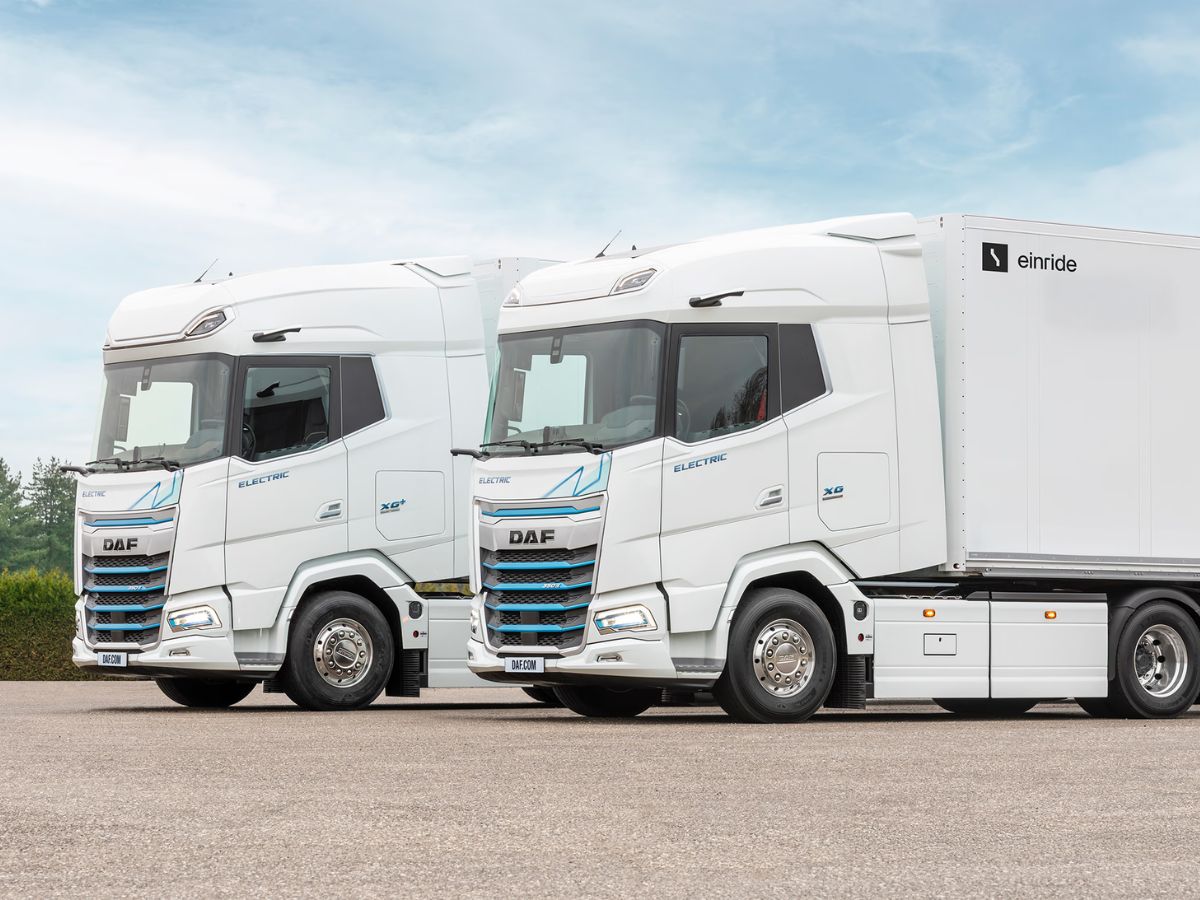
TNO, DAF and Einride collaborate to support deployment of Level 4 autonomous transport
Innovation Matters: TNO and Plantanious organise logistics for greater delivery reliability
Fewer trucks, fewer traffic jams, higher profits through smarter logistics

Self-organising logistics