A sustainable, integrated and resilient energy system in the North Sea
The North Sea is rapidly developing into a key region for the energy supply of North-West Europe. The large-scale deployment of offshore wind, increasing electrification, hydrogen production and CO₂ storage are all coming together in this area.
A future-proof energy system in the North Sea requires more than individual projects. It calls for the smart integration of renewable energy and infrastructure, coordination between countries, and collaboration between industry, government and knowledge institutions.
Dutch organisations such as Gasunie, TenneT and TNO play an important role in this development. TNO works with partners on the development of an integrated energy system that supports a sustainable, economically strong and resilient energy system in Europe.
An integrated ecosystem of knowledge, infrastructure and industry
'We have strong knowledge capabilities, favourable wind conditions, major ports, and a well-established offshore and onshore industry. This creates something unique in North-West Europe that we do not see elsewhere in the world. It is a place where knowledge development, new technologies and practical application come together,' says Michel Dubbelboer, Strategic Energy System Advisor at TenneT.
Ecology as a key consideration
According to Robert Evers, Senior Advisor at Gasunie, the Netherlands is also distinctive in the way multiple functions in the North Sea are balanced within limited space. Energy production and transport need to coexist with shipping, fisheries, defence and nature.
'The Ecowende offshore wind farm (Hollandse Kust West) is a good example. Multiple parties collaborate on knowledge and solutions to ensure that wind energy does not harm marine ecosystems or bird life. In tenders for offshore wind projects, ecological considerations play an important role.'
Acceleration through system integration in the North Sea
TNO is a co-initiator of the North Sea Energy (NSE) programme, which has been running for over ten years. Within this programme, dozens of public and private organisations explore innovative concepts for an integrated energy system and the associated infrastructure in the North Sea.
According to René Peters, Director of Energy Infrastructure at TNO, the Netherlands is well positioned to take a leading role in Europe’s energy transition by accelerating system integration in collaboration with other North Sea countries.
Watch our webinar on demand
Watch our webinar from 9 July and explore how system integration, cross border cooperation and a focus on ecological balance can help future proof the North Sea energy system.

'Our neighbouring countries, such as Germany and Denmark, have strong players in advanced wind turbine manufacturing, while the Netherlands has a strong offshore installation sector and a solid knowledge base stemming from oil and gas activities.'
Strengthening security of supply and competitiveness
'Our neighbouring countries, such as Germany and Denmark, have strong players in advanced wind turbine manufacturing, while the Netherlands has a strong offshore installation sector and a solid knowledge base stemming from oil and gas activities. The entire value chain — from offshore wind generation and installation to cables, pipelines and electrolysers — comes together in the North Sea region,' says René Peters.
'The potential is significant, with up to 300 gigawatts of offshore wind capacity in the North Sea. However, international competition is increasing, including from China. This highlights the importance of further development and scaling to support a secure and resilient energy system.'
Hydrogen at sea
Another important collaboration platform is the North Seas Energy Cooperation (NSEC), in which North Sea countries — Belgium, Denmark, Germany, France, Ireland, Luxembourg and the Netherlands — work together. The European Commission is also a member, and cooperation with the United Kingdom continues following Brexit.
During the Dutch presidency in 2023, TNO analysed, on behalf of the Ministry of Economic Affairs and Climate Policy, how a coordinated approach to offshore hydrogen production and conversion could be developed.
European cooperation on electricity and hydrogen networks
Through NSEC, governments work on the harmonisation of regulations and the development of cross-border infrastructure for gas, hydrogen and electricity. The introduction of Contracts for Difference (CfD) in 2027 — agreements between governments and renewable energy producers designed to balance subsidies and avoid excessive gains — is considered an important incentive.
'These European policies make it easier to agree on the distribution of costs and revenues, which in turn supports the development of interconnections,' says Robert Evers. 'Recent examples include agreements between Denmark and Germany to directly connect offshore wind generation to the German grid. TenneT’s LionLink project connects the Netherlands with the UK. At Gasunie, we are developing concepts to convert offshore wind energy into hydrogen at sea and transport it ashore, which is particularly relevant for industries where electrification is not feasible.'
The North Sea as a European energy hub
European transmission system operators (TSOs) have been working closely together since 2022 to develop infrastructure projects aimed at making the North Sea a major renewable energy hub for Europe. Security of supply and the decarbonisation of industry are key drivers.
Within the Offshore TSO Collaboration (OTC), several cross-border projects have been identified in a shared “grid map”, contributing to a coordinated regional approach.
'We are also learning from each other,' says Michel Dubbelboer. 'Knowledge developed in initiatives such as the North Sea Wind Power Hub is applied in other projects, such as LionLink. While not everything is directly transferable, it creates synergies. Other regions are also closely observing developments in the North Sea, including the Baltic states and Mediterranean countries. In the future, these regions may become connected.'

'We take a system-level perspective and develop concepts and models that are based on cost-effectiveness and security of supply. We collaborate with all stakeholders across the value chain.'
Orchestrating innovation
In this context, TNO acts not only as a provider of knowledge and developer of new technologies, but also as an orchestrator of innovation and collaboration within the energy system.
'System integration is about combining electrons and molecules effectively,' says René Peters. 'We take a system-level perspective and develop concepts and models that are based on cost-effectiveness and security of supply. We collaborate with all stakeholders across the value chain — TSOs, offshore wind developers, contractors, suppliers, CO₂ storage parties and governments. There are clear opportunities to strengthen innovation and autonomy through European knowledge, technologies and industry.'
Contact us
-

Rene Peters
Functie:Business Director Energy Infrastructure-
Standplaats:Rijswijk - Kesslerpark
-
Email:Email Rene
-
LinkedIn:Rene on LinkedIn
-
-
Joris Koornneef
Functie:Strategy Consultant-
Standplaats:Utrecht - Princetonlaan
-
Email:Email Joris
-
-

Quenteijn van Cooten
Functie:Business Developer-
Standplaats:Rijswijk - Kesslerpark
-
Email:Email Quenteijn
-
LinkedIn:Quenteijn on LinkedIn
-
Get inspired
Energy infrastructure and transport
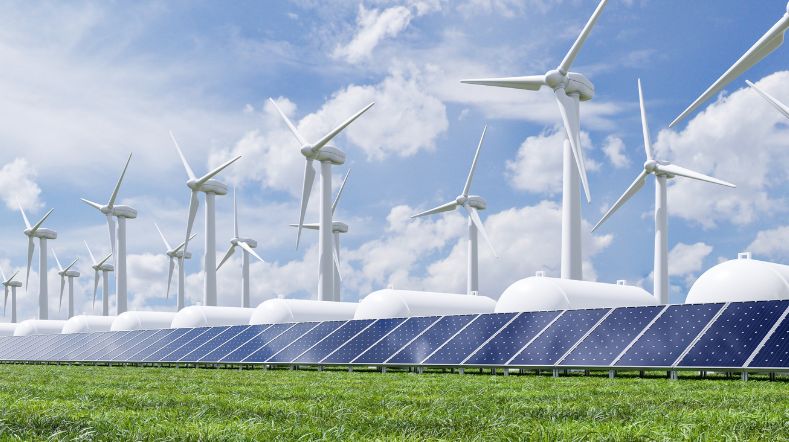
Tomorrow’s hydrogen production and infrastructure: building towards a secure and robust energy system
CO2 infrastructure and transport
Energy system with systems integration
Expansion of energy infrastructure