Research facility for industrial electrification
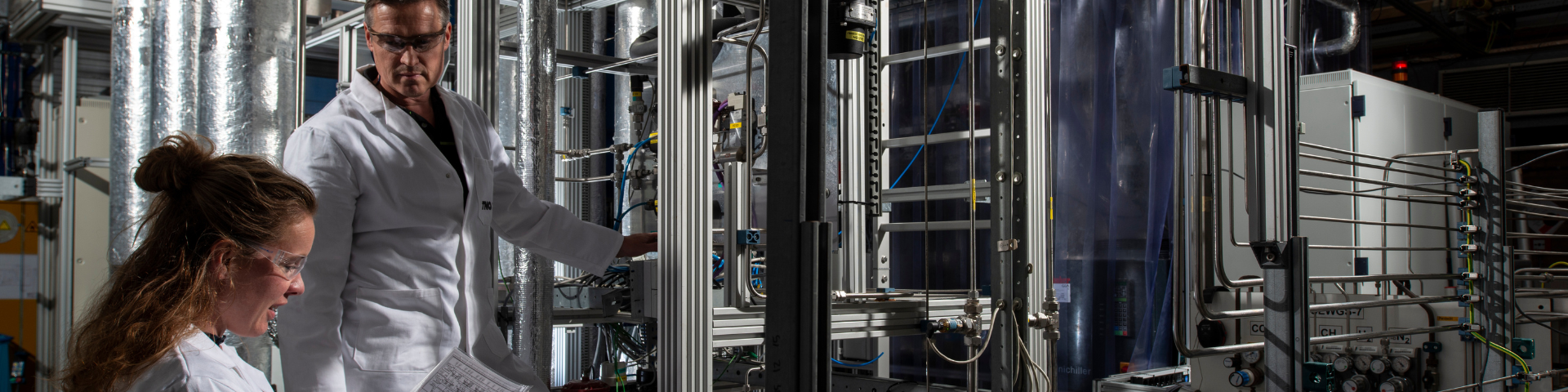
Electrification is a spearhead for making industry more sustainable. For example, the Rotterdam-Moerdijk port industry cluster is a major consumer of energy and causes almost twenty percent of CO2 emissions in our country. In order to accelerate the transition from fossil sources to electricity and green hydrogen, existing technologies must be taken to a higher level more quickly. The research facility Industrial Electrification will play an important role in this.
Pilot hall opening
Decarbonising industrial processes requires a rapid shift away from fossil energy towards electricity, hydrogen and green molecules. Yet scaling innovations into industrial practice often lags behind, as investment risk, system complexity and a lack of suitable test environments slow the step from lab to real‑world application.
Fieldlab Industrial Electrification (FLIE) provides a practical environment to bridge this scale‑up gap. Within the fieldlab, TNO combines expertise in electrification and system integration with partners and industrial practice, enabling innovations to be tested, validated and prepared for deployment at industrial scale.
Collaboration within Fieldlab Industrial Electrification
Within Fieldlab Industrial Electrification, TNO works with public and private partners on applicable solutions for industrial electrification and decarbonisation. The partnership includes Deltalinqs, the Port of Rotterdam, InnovationQuarter, FME, PlatformZero and TNO, and is supported through regional and European programmes.
Each partner contributes its own expertise and network, with the aim of bringing innovations into practice more quickly, from exploring opportunities and project support to pilot and test activities and demonstration in an industrial environment.
Strategic hub for climate innovation in Rotterdam
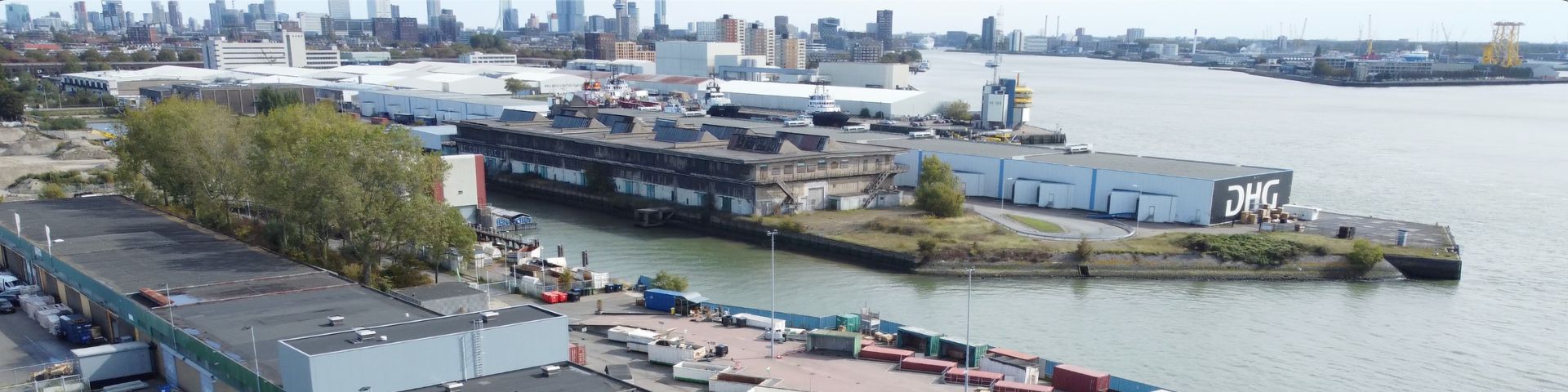
The FLIE pilot hall is located at Sub Zero in Rotterdam’s M4H innovation district, at Keileweg 78–80, 3029 BT Rotterdam. Sub Zero offers 2,700 m² of test and production space (plus office space) and is designed to support organisations working on hydrogen, electrification and related climate-tech. Its position in Rotterdam’s innovation ecosystem makes it well suited for prototyping, testing and (early) scale-up activities in close proximity to industrial and port stakeholders.
The research facility is intended for organisations that want to take concrete steps in electrifying industrial processes, including:
- Industrial end users in the port and industrial cluster who want to assess technologies for applicability within their own process chain.
- Innovative technology providers seeking to test or demonstrate solutions at an industrially relevant scale.
- Energy companies looking to trial new services or concepts and connect them to the wider energy value chain.
- Knowledge institutes and other fieldlabs/public authorities wishing to join joint initiatives and knowledge‑sharing activities.
The research facility supports several steps towards industrial application, including:
- Pilot and test activities at an industrially relevant scale (TRL 4–6).
- Validation and demonstration towards market introduction, including making performance visible in a realistic setting.
- Integration in (representative) process environments, to better understand the conditions required for implementation in existing installations.
- Knowledge sharing and project support within the network of FLIE partners.
TNO expertise: electrification, energy and system integration
Within FLIE, TNO helps accelerate industrial electrification by connecting knowledge, methods and practical experience. In its role as an independent research organisation, TNO supports companies and partners in testing, integrating and scaling up electrification technologies towards industrial application.
Specifically, TNO contributes expertise in industrial electrification, energy and system integration, and assessing technical and system impacts. In the pilot hall, these insights are applied to test technologies under realistic conditions and align them with existing industrial processes and infrastructure.
TNO also supports bridging the step from development to validation in practice (TRL 4–6). This combines technical analysis with knowledge of industrial requirements such as safety, reliability, scalability and integration into value chains. Working with other FLIE partners, TNO helps reduce investment risks and prepare further industrial implementation.
From prototype to industrial practice
Would you like to understand how FLIE can support the next step in your development? Or explore how your innovation can be tested or scaled up towards industrial application? Contact TNO to explore the possibilities within Fieldlab Industrial Electrification (FLIE).
Contact us
-

Martijn de Graaff
Functie:Business Director Industrial Transformation and Power-2-XMartijn is in charge of programme management and business development for the VoltaChem Shared Innovation Programme on Power-2-X, and for cluster management at TNO’s programme on industrial transformation.
-
Standplaats:Rijswijk - Kesslerpark
-
Email:Email Martijn
-
LinkedIn:Martijn on LinkedIn
-
Get inspired
CO2 storage

Ten things to know about carbon capture and storage (CCS)

Unique test installation for CO2 capture and conversion to green chemicals
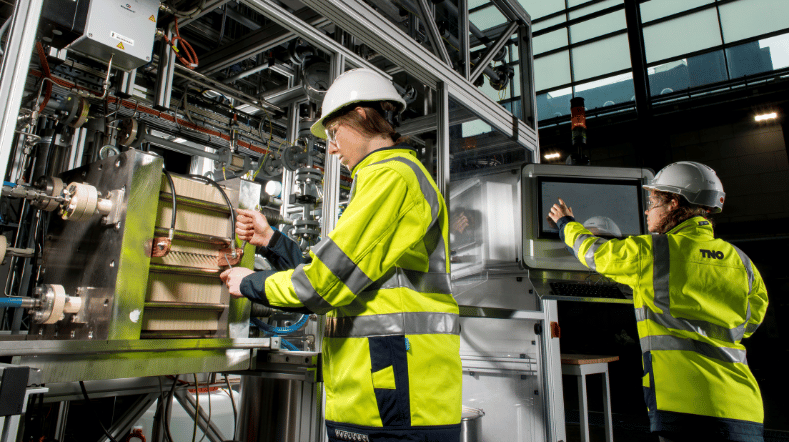
SEWGS: revolutionary CO2-reduction technology

Capturing carbon emissions