Process safety and dangerous goods testing
New materials, hydrogen systems, fertilizers, fireworks, explosive products and chemical processes create room for innovation. They also raise one essential question: how will they behave when conditions change?
Make risk visible before it becomes a problem
TNO helps companies, authorities, insurers and safety organisations answer that question with independent testing, classification and expert judgement. From dangerous goods classification to custom experiments under extreme conditions, we turn uncertainty into evidence you can use for compliance, market access and safer operations.
What we help you solve
Classify dangerous goods correctly
Get the right classification, packaging and labelling for transport, storage and use under the UN Manual of Tests and Criteria, ADR, RID, ADN, IMDG, GHS and CLP. We test explosive substances and articles, fireworks, ammonium nitrate fertilizers, organic peroxides, self-reactive and self-heating substances, oxidizers, airbags and selected class 9 materials.
Carry out testing where standard laboratories cannot
Explore how materials, components and processes behave under cryogenic temperatures, high pressure, high temperature, reactive chemistry, fire or explosion conditions. Our facilities support safe testing with hydrogen, ammonia, hydrocarbons, composites, pyrotechnics, organic peroxides, energetic materials, dusts, liquids and flammable gases.
Validate safer scale-up
We help you identify process hazards, test the assumptions behind your safety case, assess hazardous intermediates and determine whether your operating window can be widened without introducing unacceptable risk.
Investigate incidents and prevent recurrence
After an explosion, fire or hazardous materials incident, we reconstruct the scenario, test the relevant hypotheses and identify measures to reduce the chance or consequences of repetition.
Why work with TNO?
- Independent evidence: our results help you make decisions that can be defended to management, regulators, insurers, customers and other stakeholders.
- Regulatory authority and international insight: in the Netherlands, TNO acts as competent authority under ADR, RID and ADN for explosives, self-reactive substances, organic peroxides and certain fertilizer types. Our experts also contribute to international criteria through the UN Committee of Experts in Geneva.
- Specialised facilities: reinforced test areas, remote-controlled setups, fortified bunkers and dedicated laboratories make it possible to test energetic, toxic, flammable, oxidizing, cryogenic and high-pressure materials safely and realistically. Download the flyer below to explore the available testing capabilities.
- Practical interpretation: you do not only receive test data. You receive what the results mean for classification, compliance, market access, production, storage, transport, safety distances and safe use.
Specialist testing and advisory areas
Ammonium nitrate
Detonative properties, sensitivity to heating under confinement, self-sustaining decomposition, oxidizing behaviour, thermal stability, oil retention, safety distances, storage layout and mitigation advice. TNO is a Notified Body under Regulation (EU) 2019/1009 for relevant ammonium nitrate fertilizer testing.
Fireworks and pyrotechnics
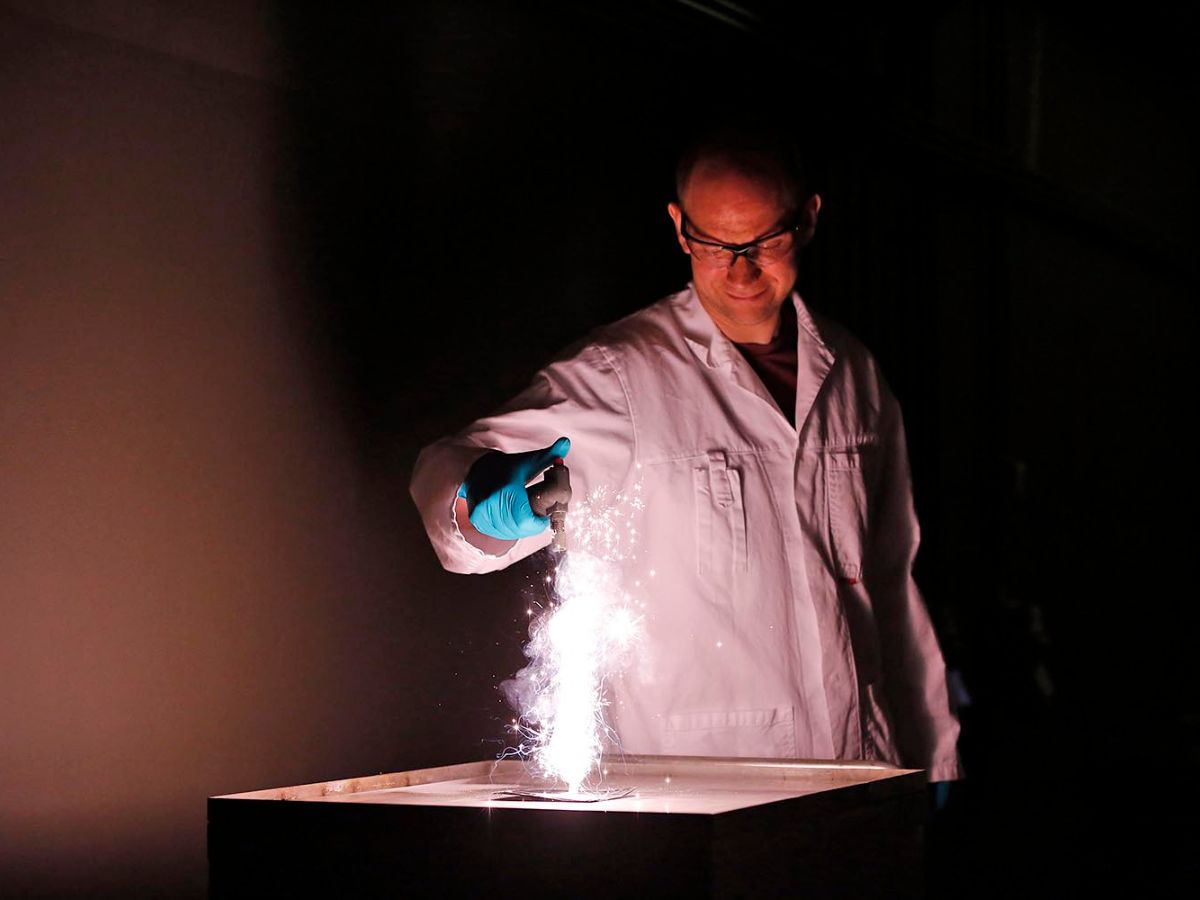
UN Test Series 6 testing, single package and stack tests, external fire tests, desk studies, default classification assessments, chemical and structural analysis, article dismantling and determination of pyrotechnic composition weights, burst charges and flash compositions.
Liquid hydrogen
At the Liquid Hydrogen Experiment Facility at TNO Ypenburg, we test materials and components under real liquid hydrogen conditions, including cryogenic compatibility, boil-off and dispersion, hydrogen permeability, material qualification, fatigue, fracture mechanics and long-duration cryogenic immersion.
- Which tests do I need for transport, storage or market access?
- Is my material explosive, self-heating, oxidizing, thermally unstable or detonable under certain conditions?
- Can I intensify my process without increasing the risk?
- Can a hazardous intermediate form under realistic operating conditions?
- What safety distance does my ammonium nitrate storage require?
- Will my component survive liquid hydrogen exposure, hydrogen permeation or cryogenic cycling?
- What happened during an explosion, fire or hazardous materials incident?
Put the question to us. We will help you define the right test approach, generate reliable evidence and translate the results into decisions you can act on.
Contact us
-

Frans van Gemerden
Functie:Director Protection, Munitions & Weapons-
Standplaats:Den Haag - Ypenburg
-
Email:Email Frans
-
Get inspired
Escalation in fireworks-related violence requires new security and response strategies
TNO and MBDA sign agreement to advance laser weapon capabilities
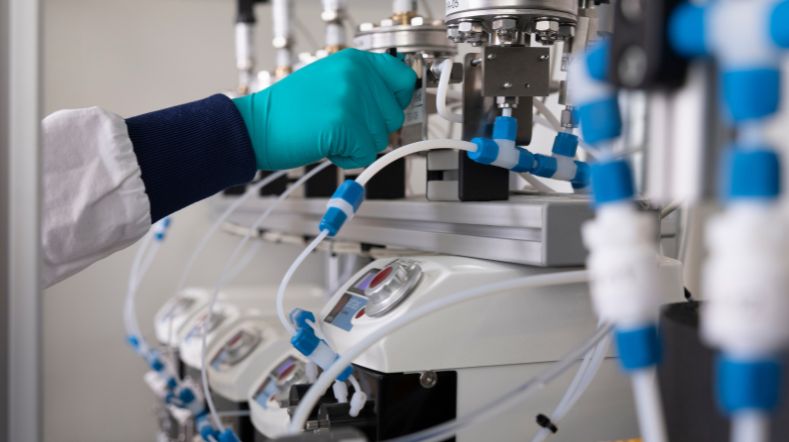
From dependence to control: microfactories as the key to European access to energetic materials
Why continuous knowledge development is crucial in munitions safety
TNO’s Unit Defence, Safety & Security strengthens ties with South Korea