Liveable and resilient cities
Overlapping transitions, scarce space and interdependent systems are making urban decision-making increasingly complex. TNO develops and scales digital and methodological innovations that help governments and businesses expand the solution space and make better decisions for sustainable, healthy, safe and accessible living environments for all.

Decisions on housing, mobility, energy, infrastructure, nature, climate and health have impacts across domains. Due to limited oversight, promising solutions often remain out of sight. TNO provides insight into interdependencies, impacts and distributional effects and translates these into courses of action for policy, investment and implementation. This enables governments and businesses to make inclusive and equitable choices for sustainable, healthy and accessible living environments for all.
Why TNO?
TNO combines in-depth knowledge of mobility, spatial planning, climate, behaviour, infrastructure, energy and health with advanced data, modelling, AI and digital twin technology. From a strong position in the public and private ecosystem, we develop scalable innovations that expand the solution space and accelerate decision-making, from integrated modelling and optimisation to creating shared system understanding.
These three elements give TNO a unique position
Faster, integrated modelling with a new generation of models
Existing models cannot adequately or quickly enough calculate the interdependencies and dynamics of complex urban challenges. TNO develops a new generation of scalable models that analyse large areas at a high level of detail and account for behaviour, time, location and differences between groups.
By connecting models for mobility, spatial planning, energy, climate and broad welfare, governments and businesses can compare policy options, investment strategies and development scenarios faster and more comprehensively. This leads to better-informed decisions, less risk of costly adjustments and greater transparency about impacts on different groups.
From scenario analysis to optimal solutions
Understanding the effects of possible choices is not enough. The greatest challenge is often finding new solutions that combine multiple ambitions and are also feasible. TNO therefore develops AI-driven optimisation and prescriptive digital twins that not only show what a measure delivers, but also generate solution pathways based on stakeholders’ goals, values and constraints.
This expands the solution space and reveals promising alternatives that may not emerge in conventional decision-making. It helps governments and businesses translate societal, spatial and economic goals into concrete measures, designs and investments
Shared system understanding for feasible choices
Technological innovation alone is not enough. Breakthroughs occur when stakeholders understand the wider system, recognise interdependencies and explore new solutions based on shared interests. TNO provides insight into impacts, vulnerabilities, synergies and distributional effects through data-driven narratives, future visions and assessment frameworks.
We translate this system understanding into methods and tools that help parties connect their perspectives, develop a shared direction and discuss limiting assumptions. This makes technological possibilities not only visible, but also more applicable, supported and feasible.
Our applications
The three knowledge and innovation areas are applied across interconnected domains. Each domain addresses a distinct market and decision-making challenge, while knowledge, models and technology are developed and applied across domains.
Building and managing resilient, climate-adaptive cities and infrastructure networks requires an integrated understanding of climate, asset and system risks. TNO translates this knowledge into actionable insights and decision support for municipalities, provinces, infrastructure and asset managers, and area developers. We also help assess and scale nature-based, grey and hybrid measures.
Ministries, provinces, municipalities, transport authorities and mobility providers face the challenge of developing a sustainable, accessible and less space-intensive mobility system. Through systems thinking, innovative mobility models and impact assessments, TNO provides insight into the effects of mobility policies and new mobility concepts on accessibility, behaviour, land use and broad welfare.
Complex spatial choices require governments, area developers, urban planners, and consultancy and engineering firms to balance competing demands. Using integrated assessment frameworks, spatial scenarios and advanced modelling, TNO translates policy ambitions into concrete spatial demands and development options. This provides early insight into impacts, synergies and tensions, enabling faster and better-informed area development.
Our impact

Innovating with market partners
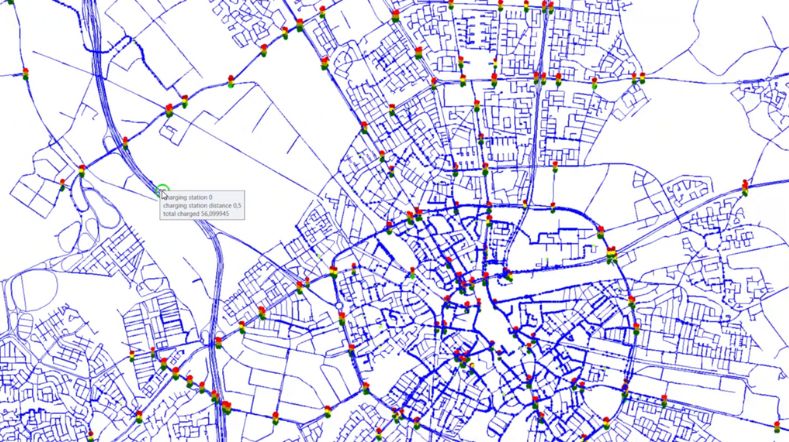
TNO does not develop competing end-user applications but aims to work with companies on a platform-independent basis to strengthen their products and services. Examples include plug-ins and reusable modules, access to complex and enriched datasets, AI applications and joint innovation environments. This allows new knowledge and technology to be integrated into existing tools, scaled and applied by governments and businesses more quickly.
Contact us
-
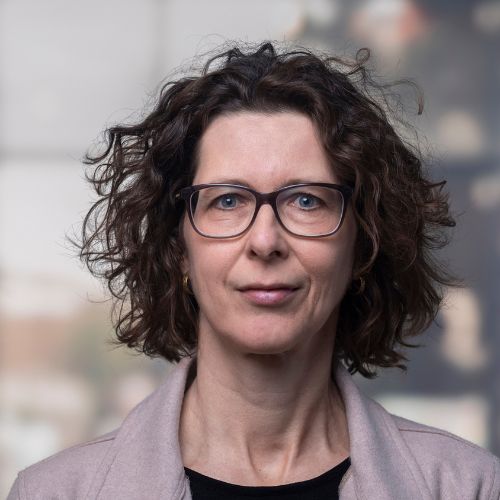
Marianne Aalbersberg
Functie:Business Developer Living environment, climate adaptation and spatial choicesI am responsible at TNO for the innovation programmes for liveable cities and regions, with a focus on mobility, climate adaptation, and spatial planning decisions. How do we solve the spatial puzzle effectively, both for now and the future? We work closely with businesses and governments to achieve the most impactful innovations.
-
Standplaats:Delft - Molengraaffsingel
-
Email:Email Marianne
-
Our latest developments
Smarter and faster construction: TNO helps Eindhoven Metropolitan Region with historic leap of scale
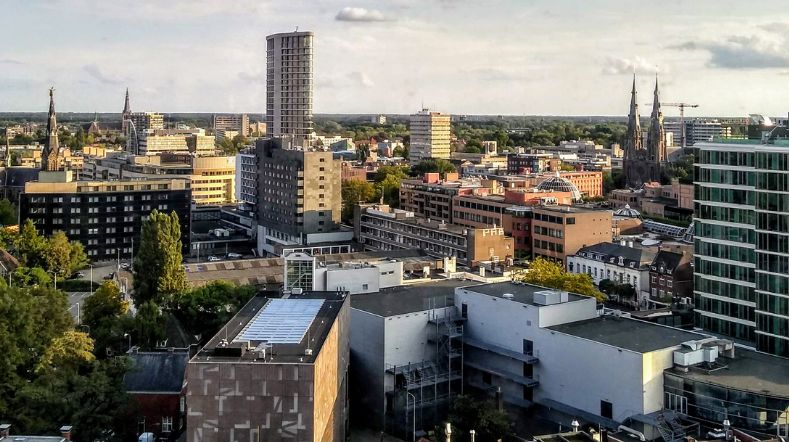
Don't jump on every innovation bandwagon: TNO's framework to help cities make smarter mobility choices
Urban space

How governments can make MaaS work to societal goals

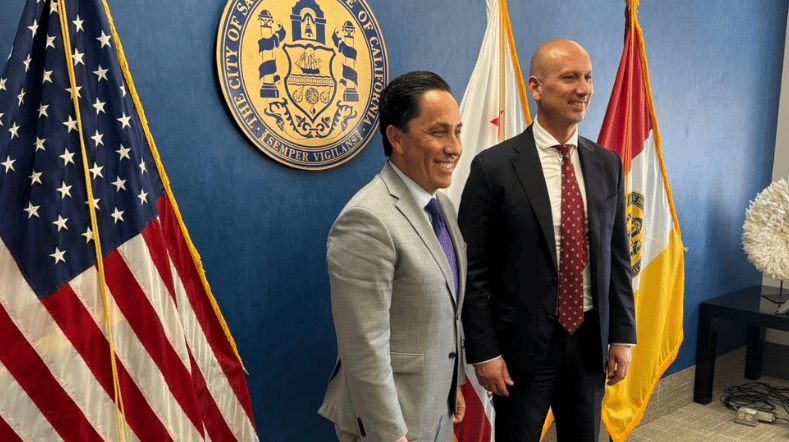
With Urban Strategy, TNO connects with innovative U.S. West Coast in San Diego