Airbus and TNO demonstrate secure laser link between aircraft and satellite
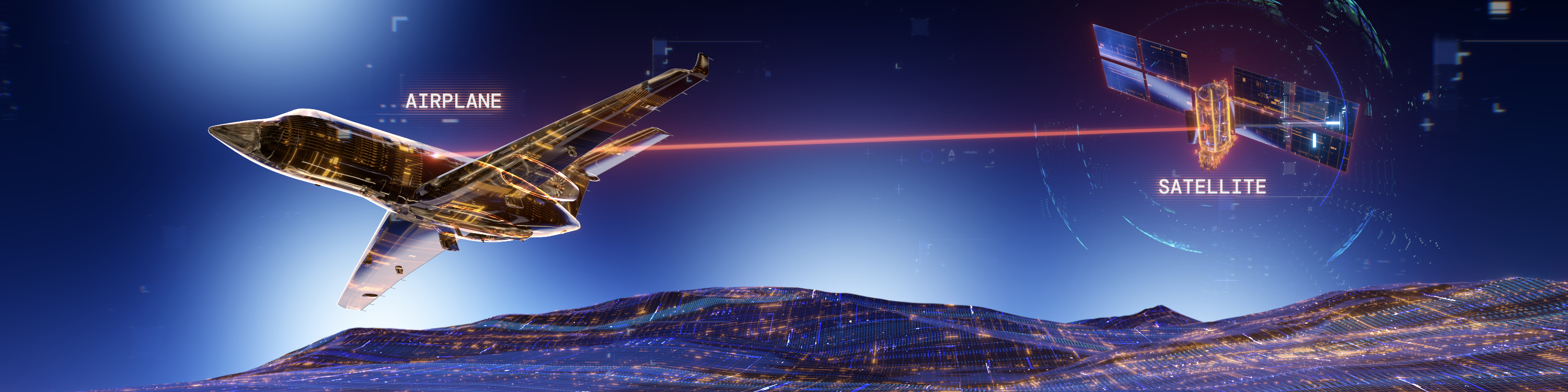
In December 2025, Airbus and TNO successfully established a secure laser communication link between an Airbus aircraft and a satellite in geostationary orbit, 36,000 kilometres above Earth. This achievement proves that high speed, resilient air to space connectivity is no longer a vision but a reality. Using the UltraAir terminal, co developed by Airbus and TNO, the test showcased the ability to transmit massive amounts of data via laser technology with unprecedented speed and security. This milestone opens the door to a new era of global communications, faster, more efficient and far harder to intercept, transforming both military and commercial aviation.
The campaign delivered 31 successful links with closed loop tracking, each 6–14 minutes and generating hours of telemetry. Seven tests sent data at 2.6 Gbps for several minutes with zero bit errors. This first public demonstration marks a key step toward commercial laser communication for aviation and space.
‘Establishing laser links between moving targets at this distance is technically very challenging. Continuous movements, platform vibrations and atmospheric disturbances require extreme precision.’
Why laser communication matters
Current satellite communication relies on radio frequency (RF) bands, which lack the bandwith and security demanded by today’s data volumes. Laser based optical links can transfer terabytes in seconds rather than hours, and their tightly focused beams are inherently harder to jam or intercept, a critical advantage for military operations. With this technology, aircraft and UAVs can securely and rapidly exchange large datasets via multi orbit satellite constellations, strengthening mission flexibility and information security.
‘Establishing laser links between moving targets at this distance is technically very challenging. Continuous movements, platform vibrations and atmospheric disturbances require extreme precision’, said François Lombard, Head of Connected Intelligence at Airbus Defence and Space. ‘This milestone is a further development of our long successful laser communication history; it opens the door to a new era of laser satellite communications to meet defence and commercial needs in the next decades.’

‘Secure laser communication is essential for both defense operations and civil connectivity. By leading in this field, we strengthen Europe’s security and its autonomy.’
European leadership and next steps
This achievement provides clear proof that secure, high speed communication from air to space is feasible today, reinforcing European and Dutch competitiveness. It opens the door to global data links that are faster, more efficient and more secure, supporting mission critical military operations and enabling high speed in flight internet for passengers.
‘This breakthrough proves that European industry delivers technology with strategic global impact,’ says Kees Buijsrogge, Director of Space at TNO. ‘Secure laser communication is essential for both defense operations and civil connectivity. By leading in this field, we strengthen Europe’s security and its autonomy.’
Transmitting a laser beam over 36,000 kilometres, through the atmosphere, and between two moving objects is a formidable challenge. The beam must remain stable despite continuous motion and compensate for vibrations and atmospheric disturbances. TNO developed the optical, mechanical, and control technology needed to achieve this precision.
UltraAir and European autonomy
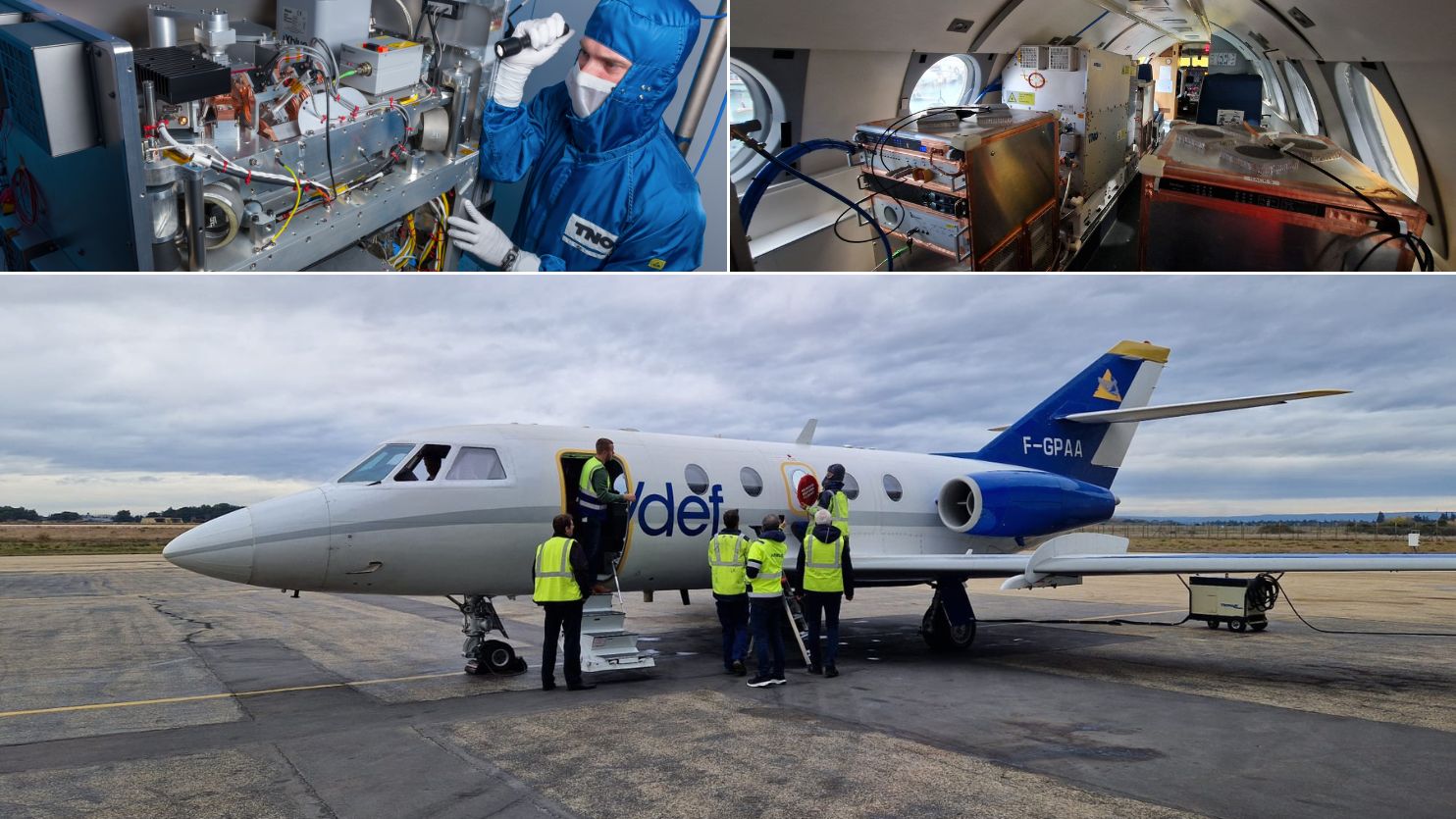
Airbus leads the project and integrates the terminal into the aircraft, while TNO provides critical optical and control technologies. Together with other partners we are working on miniaturizing the terminal for broader deployment. Beyond aircraft-to-satellite links, this technology could enable secure laser communication for ships, vehicles, and commercial high-speed internet from the air.
UltraAir is a cornerstone of ESA’s European initiative to mature optical satellite communication, accelerating the transition from demonstration to operational use with strong involvement from Dutch industry.
The project was co-financed by Airbus, TNO, the Netherlands Space Agency (NLSA) as well as the German Aerospace Center (DLR).
About Airbus and TNO
Airbus is a global leader in aerospace, defense, and related services, with a strong commitment to innovation and technological advancements. TNO is an independent research and innovation organization. For over 60 years, TNO’s Space group has delivered mission‑critical instruments and systems and translating optical and opto‑mechatronic innovations into operational capability.
Globally relevant success: Airbus and TNO achieve new heights in optical communication
UltraAir demonstrates that a stable laser link over 36,000 km is operationally achievable, with robust tracking and high data rates. The developed technology supports future implementation and miniaturisation. Read more about the technology, impact and TNO’s involvement. Click here.
Contact us
-

Ewa Lukkezen
Functie:Business Developer, Space & Scientific InstrumentationContact me to partner with TNO and uncover new opportunities in Satellite Communication (SatCom) in the optical and radio frequency (RF) domains. I work with industry partners to develop innovative SatCom solutions and build technologies of tomorrow.
My work focuses on optical SatCom, radar/RF technology for SatCom, deep-space communication, Quantum Key Distribution (QKD) and 5G/6G technology for SatCom.
-
Standplaats:Delft - Stieltjesweg
-
Email:Email Ewa
-
LinkedIn:Ewa on LinkedIn
-
Get inspired
Quantum internet and quantum networks series 1.0

First Dutch hybrid quantum channel for secure communication successfully established

Contributing to Europe’s sovereignty and security

TNO's laser communication terminal secures prestigious win at EARTO Innovation Awards
TNO launches Qu-STAR to pioneer quantum internet via space