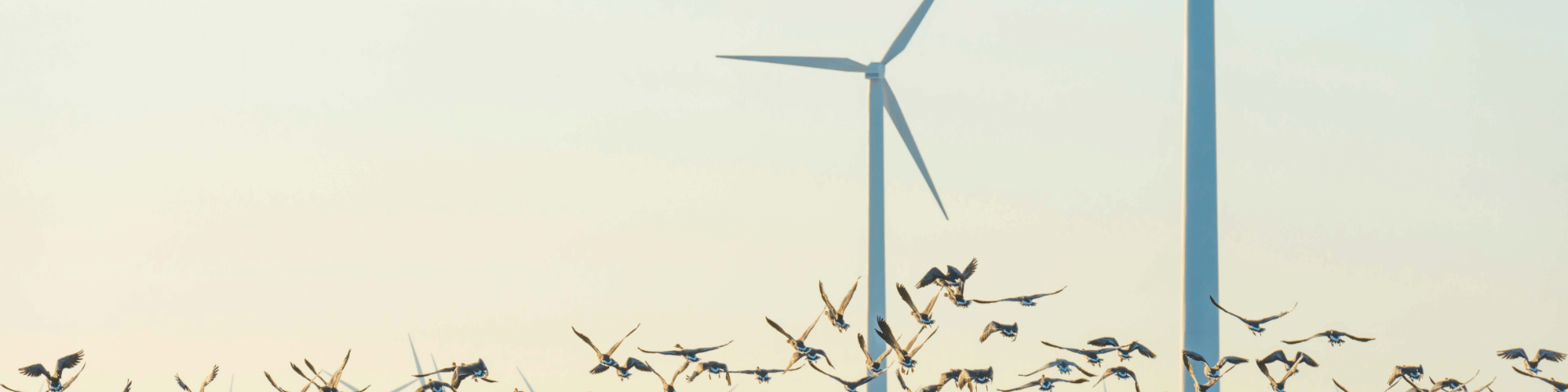
Breakthrough for nature-inclusive wind energy: realtime detection of small birds and bats
TNO and Western EcoSystems Technology (WEST) have achieved a significant milestone: the enhanced WTBird® multisensor systemhas been successfully demonstrated to detect collisions involving both birds and bats in real time, including smaller species and nighttime events. This advancement brings reliable ecological monitoring for onshore and offshore wind projects within reach.
Growing need for reliable ecological monitoring
As wind energy capacity expands, so does the need for accurate, continuous insight into how turbines interact with wildlife. Conventional methods, such as carcass searches, are challenging offshore and often miss small or nocturnal species.
The renewed WTBird® system addresses these gaps by combining:
- highly sensitive fibreoptic vibration sensors,
- advanced impactclassification algorithms, and
- AIsupported image analysis,
into a single, robust platform capable of detecting collision events under a wide range of environmental conditions.
Validated under realworld turbine conditions
During controlled testing on a 1.5 MW test wind turbine at a specialised research site in the United States, the updated vibration sensors showed strong detection performance for light objects (8–40 g) that represent small birds and bats. Falsepositive rates remained exceptionally low, demonstrating that the system can reliably distinguish genuine collision signals from background turbine noise or weatherrelated vibrations.
A threemonth deployment on a 2.5 MW turbine at the University of Minnesota recorded 15 collision events, most of which occurred during darkness. Parallel carcass surveys identified a similar number of fatalities. This makes WTBird® the first automated system to achieve parity with established onshore postconstruction monitoring methods: a longstanding benchmark in ecological impact assessment.
Unlocking ecological insight where it is needed most: offshore wind
Offshore wind farms urgently require objective, continuous biodiversity data. The validated WTBird® system offers operators, policymakers and regulators a scalable, evidencebased method to:
- quantify ecological impacts more accurately,
- support adaptive mitigation strategies, and
- report transparently to authorities and stakeholders.
Its ability to detect small species and nighttime events - areas where camerabased systems often fall short - addresses critical knowledge gaps in offshore impact assessment.
More information
The full public report is now accessible: 'A MultiSensor Approach for Measuring Bird and Bat Collisions with Offshore Wind Turbines'.
Contributing to a responsible and sustainable energy transition
TNO is committed to accelerating the transition to a climateneutral energy system while safeguarding ecological values. The successful demonstration of the upgraded WTBird® multisensor system reflects this mission: combining scientific excellence with practical, nature-inclusive innovation.
TNO welcomes collaboration with wind developers, government bodies and research partners to further advance WTBird® and accelerate its application, particularly in offshore environments.
TNO welcomes collaboration with wind developers, governments, and research partners to further advance the WTBird® technology and enable nature-inclusive offshore wind growth.
Contact us
-

Joep Breuer
Functie:Wind energy scientist-
Standplaats:Rijswijk - Kesslerpark
-
Email:Email Joep
-
Get inspired
TNO and Jungle AI collaborate to detect cyberattack on wind turbine and improve detection capabilities
TNO helps study effectiveness of Black Blades with sensors, cameras and radar
Consortium with TNO searches for Stone Age remains at the bottom of the North Sea
Wind farms in synergy with society and environment