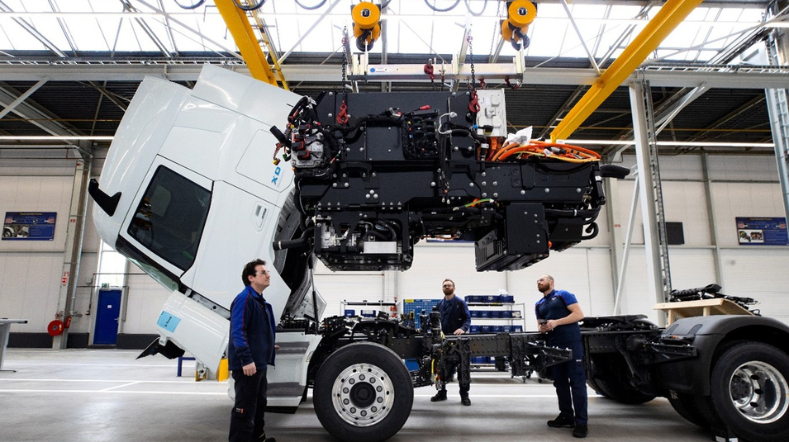
From grid congestion to resilience: flexibility accelerates the mobility transition
Switching to electric vehicles (EVs) is essential for the mobility transition and for meeting climate targets, but it is not straightforward for everyone. At the same time, pressure on the Dutch electricity grid is increasing and the further rollout of charging infrastructure is uncertain.
Challenge: grid congestion limits access to electric mobility
The Netherlands aims to switch to electric driving, but grid congestion is a constraint. TNO research shows that limited capacity on the electricity grid can delay the rollout of public charging infrastructure.
This constraint does not affect all groups equally. The allocation of grid capacity and the availability of a private charging option largely determine who can and who cannot switch to electric driving. Meanwhile, households are expected to make that switch themselves, even though this depends heavily on accessible and reliable charging facilities.
Many people currently charge at home, but according to research by the Netherlands Enterprise Agency (RVO), demand for public charging points will increase significantly. This is where the pressure arises: due to grid congestion, it is uncertain whether new charging points can be connected in time—partly because of ACM (Authority for Consumers and Markets) decisions on gridcapacity prioritisation.
Laadwerk, which is responsible for implementing public charging infrastructure in North Holland, Flevoland and Utrecht, also recognises this issue.
'The revised ACM prioritisation framework affects the rollout of public charging infrastructure in 2026 and beyond. This creates uncertainty. Grid operators, public authorities and market parties are working together on solutions, and the accessibility of electric mobility also requires attention.'
Unequal access to electric driving
Where grid capacity is limited, such as in the province of Utrecht, the impact is uneven. Households with a private driveway can charge at home, while residents without private parking depend on public charging points. This latter group faces additional barriers if public charging infrastructure lags behind:
- Fewer or no charging points nearby
- More crowding and longer waiting times at existing charge points
- Higher costs, for example through reliance on rapid chargers
- Less ability to benefit from favourable (dynamic) tariffs
According to the ANWB, higher costs and uncertainty can make people more reluctant to switch to electric driving.
'Grid congestion makes it clear that the mobility transition is not only a technical challenge, but also a question of accessibility and practical feasibility. If we want electric driving to remain achievable for everyone, choices regarding grid capacity and charging infrastructure must be considered in a coherent and integrated way.'
Why equitable access matters
Good and fair access to charging infrastructure is essential. The Council for the Environment and Infrastructure (Rli) emphasises that everyone must be able to participate in the transition. This strengthens public support and helps achieve climate goals. At the same time, a reliable electricity grid remains a precondition.
Decisions on the allocation of transmission capacity and the prioritisation of connections have a direct impact on municipalities, grid operators, chargepoint operators, and on residents of apartments and neighbourhoods without private charging options.
Want to know more?
Download the report: ‘The impact of grid congestion and a queue on the mobility transition’. Read more about the findings on charging infrastructure and small consumers in the province of Utrecht.
Solution pathways to make electric driving more accessible
Smart charging, dynamic tariffs, control via Home Energy Management Systems (HEMS), and collective solutions such as neighbourhood batteries reduce peaks, make better use of offpeak hours, and create room for additional public charging infrastructure.
Timely coordination between municipalities, grid operators and chargepoint operators on site selection, capacity and phasing.
Public charging strategies focused on neighbourhoods highly dependent on onstreet charging, with affordable tariffs and transparent availability.
Integrated insight and practical next steps
TNO combines system knowledge of electricity grids and markets with socioeconomic insights to support policy and delivery. Concretely, we help with:
- Access and distributional analyses: mapping differences between groups and assessing policy options
- Technical and operational advice: assessing load and flexibility on the lowvoltage grid and defining scenarios for smart control
- Roadmaps for public charging infrastructure: site selection, phasing and cooperation with grid operators under gridcongestion conditions
From insight to implementation
With clear insights into accessibility, realistic grid constraints and practical delivery, public authorities, grid operators and market parties can accelerate the rollout of public charging infrastructure without excluding groups.
TNO provides direction and evidence through data analyses, technical-operational advice and roadmaps that take grid congestion and distributional effects into account, so that the transition to electric driving is feasible and accessible.
Contact us
-

Marjolein Heezen
Functie:Consultant Urban Innovation and MobilityIn my role as a Consultant in Urban Innovation and Mobility, I focus on translating innovations into society in a way that contributes to societal goals and sustainability. My expertise lies in urban issues, emerging mobility concepts, and innovation capacity, aiming to provide insights into policy, governance, and strategy challenges.
-
Standplaats:Den Haag - New Babylon
-
Email:Email Marjolein
-
Get inspired
Reliable monitoring of battery condition for transparent battery passports
Decentralised developments offer major potential for reducing grid investment
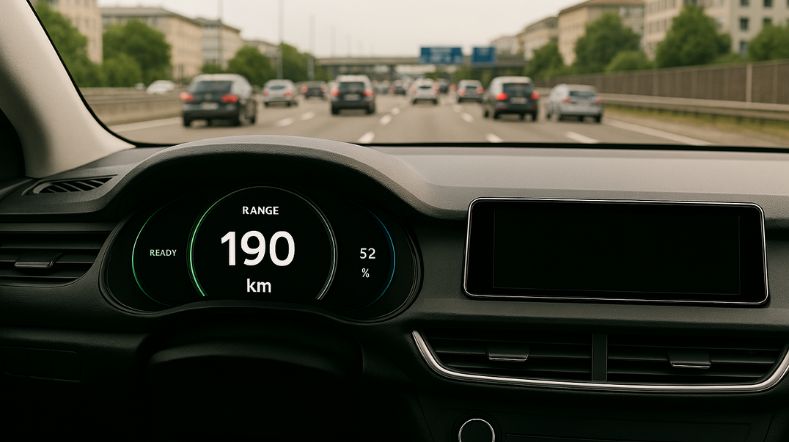
How far can you travel in an electric car?
The energy system of the future

National Growth Fund invests in Dutch battery consortium for heavy duty transport