Towards low-cost, high-performance solar power for future space missions
As the global space market continues to grow, Europe faces a dual challenge: advancing space technologies while strengthening strategic autonomy in areas such as defence, communication and climate observation. Reliable and affordable solar power is a key enabler for future space missions, yet current bespoke solutions come with high costs and supply chain constraints.
Against this backdrop, TNO, MCPV, and Airbus Netherlands are exploring a collaboration aimed at combining terrestrial photovoltaic (PV) innovations with advanced space solar technologies. The ambition: to investigate how low-cost, high-performance silicon solar technologies, already proven on Earth, can be applied in space environments.
Complementary expertise from Earth to orbit
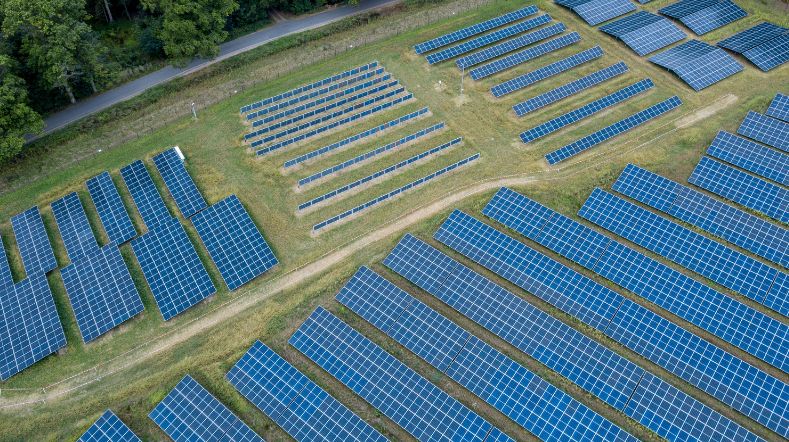
TNO has long-standing technology R&D expertise in industrial, low-cost and high-throughput manufacturing of photovoltaic solar cells and panels for terrestrial applications. In close cooperation with the Dutch manufacturing industry, TNO has developed advanced PV solutions that are flexible in design, form factor and suitable for deployment across a wide range of surfaces.
MCPV is a European solar manufacturing company specializing in the industrialization of advanced PV technologies. With hands-on experience in designing, equipping and running high-throughput solar cell factories, MCPV brings the process discipline and engineering depth needed to move innovations from lab to production line.
In this collaboration, MCPV acts as industrialization partner, bridging TNO's cell technology development and Airbus Netherlands' space integration expertise to explore how silicon solar cells can be manufactured at scale for space applications.
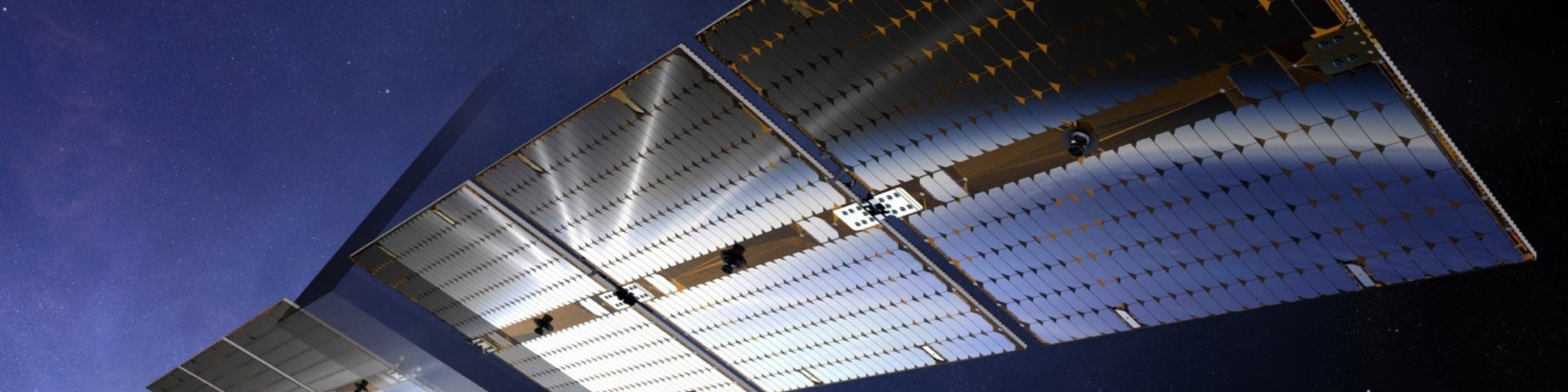
Airbus Netherlands is a leading global provider of flight-proven solar arrays for satellites, powering major international space programmes, such as the joint ESA-NASA Artemis missions. Its experience in designing, integrating and qualifying solar arrays for the demanding space environment complements TNO’s expertise in scalable PV manufacturing and innovation.
With terrestrial PV technologies having progressed rapidly over recent decades, particularly in terms of efficiency, manufacturing precision and cost reduction, the organisations see strong potential in translating mature Earth-based PV concepts to the space domain.

'Terrestrial photovoltaics have evolved enormously in terms of manufacturability, cost and design flexibility. The key question we are exploring is how these strengths can be translated to space applications, while meeting the strict reliability requirements of the space environment.'
Contributing to Europe’s space ambitions
The exploration of this collaboration aligns with broader European ambitions to develop independent satellite constellations and reduce reliance on critical materials with limited availability. Many current space solar arrays rely on gallium arsenide (GaAs) solar cells, which offer high performance but come with substantial cost and supply‑chain limitations.
An alternative approach under investigation involves high‑quality silicon solar cells, widely applied in terrestrial energy systems, provided they can demonstrate sufficient robustness under space conditions.
Focus on technology development and validation
Initial joint activities focus on the exchange of key technical know-how and the identification of terrestrial PV concepts that could be suitable for space applications. A central topic is TNO’s proprietary expertise in back-contact silicon solar cells, which enable highly precise pick-and-place manufacturing. This approach is known for its flexibility in product design and compatibility with automated industrial processes.
One of the first technical questions being explored is how silicon back-contact cells perform under space-specific conditions, such as:
- particle radiation,
- extreme thermal cycling, and
- mechanical loading
At this stage, the emphasis is on understanding intrinsic robustness, without yet modifying manufacturing processes specifically for space.
'Airbus Netherlands has adopted silicon solar cell technology as for large constellations these are more cost-effective and can be produced in the required volumes. In parallel, Airbus Netherlands is optimising its solar arrays to better accommodate silicon solar cells in terms of mass and stowed volume. We are actively fostering a European supply chain for silicon solar power modules with improved performance for our future constellation solar arrays.'
Looking ahead
By bringing together PV manufacturing expertise from terrestrial and space industries, TNO, MCPV, and Airbus Netherlands aim to explore a pathway that could reshape how solar energy is generated and deployed in space. While still in an exploratory phase, the collaboration highlights a broader trend: leveraging mature terrestrial technologies to accelerate innovation and reduce costs in the space sector.
'Europe has built world-class expertise in terrestrial PV manufacturing — and it is time to put that to work for space. MCPV brings the industrial know-how to scale silicon solar cell production with the precision, repeatability and cost discipline that future space programmes will demand. This collaboration with TNO and Airbus Netherlands is an exciting opportunity to bridge two worlds that have more in common than is often assumed.'
A shared innovation pathway
The ongoing exploration underlines how long-term research, industrial expertise and system integration can come together to address emerging challenges in the space sector. By assessing how mature terrestrial PV technologies could operate under space conditions, TNO and Airbus Netherlands aim to contribute to innovation that supports both performance and affordability in future satellite missions.
As Europe seeks to reinforce its strategic autonomy in space, the ability to build on proven terrestrial technologies becomes increasingly important. Exploring the applicability of advanced silicon-based photovoltaics for space missions offers a pathway to broaden technology options and strengthen supply-chain resilience. By assessing how mature terrestrial PV performs under space conditions, TNO aims to contribute to innovations that combine performance, affordability and scalability for future satellite missions.
Contact us
-

Harald Kerp
Functie:Senior Business Developer-
Standplaats:Den Haag - New Babylon
-
Email:Email Harald
-
LinkedIn:Harald on LinkedIn
-
Get inspired
TNO's laser technology
Solar-powered mobility
TNO develops world’s first perovskite solar roof tile
Real-world data confirms potential of vehicle-integrated solar panels
New EcoCertified Solar Parks: solar parks that deliver both energy and nature