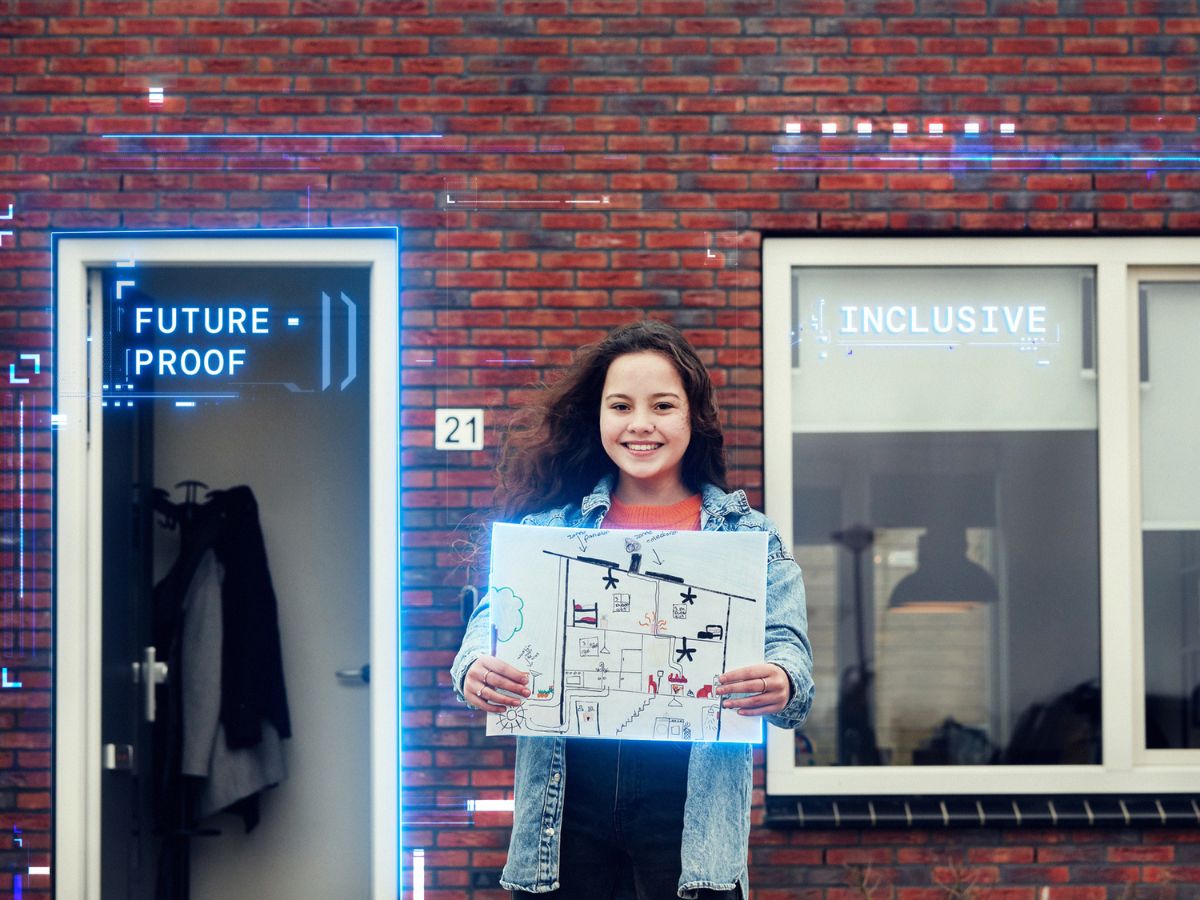
Energy poverty: from care to sustainable housing improvement
For municipalities, general practitioners, housing associations and other organisations, it is increasingly clear that health, housing quality and financial security are closely interconnected. In the Netherlands as well, low-income households often live in poorly insulated homes affected by draughts, damp or mould. Research shows that energy poverty is not only about affordability, but also about housing quality, health and access to support and home improvements.
This issue therefore spans multiple domains: healthcare, housing, energy and social policy. TNO is working on how these domains can be more effectively connected in practice, with the aim of developing a scalable approach for the Netherlands.
From insight to intervention: the role of housing quality in health and energy poverty
In addition to its existing programme and research on energy poverty, focusing on monitoring, target groups and policy, TNO also examines the relationship between housing quality, energy poverty and health, and how stakeholders can respond more effectively in practice.
Research indicates that low-income households living in poorly insulated homes tend to incur higher healthcare costs. At the same time, energy support and housing improvements are associated with improvements in energy costs, living comfort and health. While not all relationships are directly causal, they provide clear starting points for targeted interventions.
With the project Healthy Living on Prescription, TNO builds on earlier research into the health impacts of energy support and housing renovations for households experiencing energy poverty.
An integrated approach to health and housing quality
Through Healthy Living on Prescription, TNO explores how healthcare professionals, municipalities and partners in sustainability and energy efficiency can better identify and refer residents with health issues potentially linked to their home or energy bills.
This approach complements existing healthcare and energy poverty policies. It focuses on identifying problems in the living environment, enabling targeted referrals to in-home support, and strengthening collaboration between the healthcare, social and energy domains.
The approach is being explored in practice in several municipalities, including:
- Heerlen – integrated approach with a focus on scaling and long-term embedding
- Arnhem – targeted at vulnerable families and (unborn) child health
- Leiden – strengthening the action perspective for GPs through social practice support
- Amersfoort – practical, accessible approach within existing neighbourhood structures
- Almelo – pilot under development, linked to local collaboration
This approach can provide healthcare professionals with additional options for action and helps to better target support and home improvements towards households most in need.
Our work
TNO supports municipalities and organisations in developing and scaling integrated approaches at the intersection of health, housing and energy. Our experts and behavioural scientists design and facilitate collaboration between the healthcare, social and energy domains, and map the organisations involved and their roles within the value chain.
We also support the implementation and monitoring of pilots and translate insights into practical and scalable solutions for policy and practice. This includes explicit attention to key conditions such as roles and responsibilities, collaboration, privacy and data exchange. In this way, TNO contributes to approaches that are not only evidence-based, but also implementable and scalable in practice.
How does this work in practice?
In practice, this approach leads to coordinated collaboration around the resident, involving multiple organisations and stakeholders. Healthcare professionals identify health issues and assess whether these may be linked to housing conditions or energy costs. Where relevant, they can refer residents to implementing organisations.
These organisations assess the living situation, carry out home visits, and provide advice and small-scale measures. Where necessary, housing associations or landlords are involved to enable structural improvements.
This creates a continuous chain from identification to support and, where needed, home improvement, linking healthcare, the social domain and housing.
For municipalities and policymakers, this approach offers a way to better connect existing instruments for energy poverty, housing and health. By linking policy with implementation and healthcare, a direct pathway to support is created. It also enables assessment of which interventions are most effective, helping to reduce fragmentation and supporting the scaling of approaches in practice.
Healthcare professionals are often the first to identify health issues that may be related to the living environment, such as cold, damp or mould, typically resulting in medical treatment. This approach enables them to translate these signals into targeted support within the home, providing additional options for action and addressing underlying causes alongside medical care.
For professionals in healthcare, the social domain and implementation, this approach helps to better connect signals and organise collaboration. By linking identification, referral and in-home support, interventions become more aligned with residents’ living environments and more effective in practice.
Collaborate and innovate with us
Would you like to explore how health, housing and energy poverty can be better connected in your practice, policy or region? Please contact TNO.
Contact us
-

Koen Straver
Functie:Consultant, Social scientist-
Standplaats:Amsterdam - Radarweg
-
Email:Email Koen
-
Get inspired
Energy sharing

Collaborative EMS Programme explores pathway to a smart and people-centred energy system

Business sustainability

Community energy initiatives

Discover how behavioural change can help shape tomorrow’s energy system