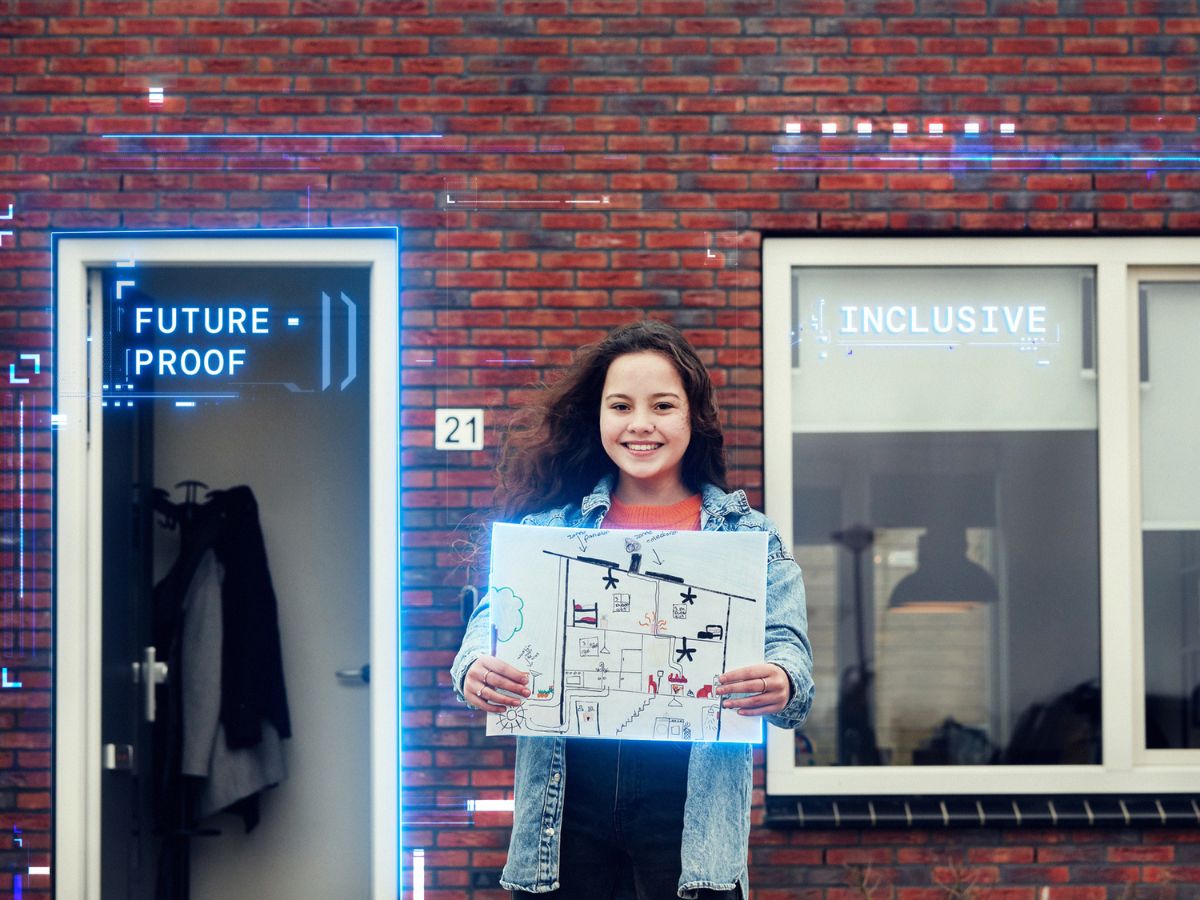
Community energy initiatives in the future energy system
Community energy initiatives are playing an increasingly important role in the energy transition. Citizens, often working together with businesses and local authorities, are generating, saving and sharing energy. Their motivations are both environmental and social: contributing to the energy transition, improving the local living environment and strengthening communities. New legislation is creating additional opportunities for activities such as energy sharing, flexibility services and collective heating networks. TNO investigates how community energy initiatives are evolving, the role they can play in the future energy system, and the conditions needed for successful implementation and scale-up.
What is a community energy initiative?
Community energy initiatives are local collaborations between citizens and small businesses that undertake activities related to energy generation, energy conservation and other parts of the energy system, sometimes in partnership with local authorities.
Under the Dutch Energy Act (Energiewet), community energy initiatives are recognised as formal participants in the energy system. They are characterised by:
- local ownership and open, voluntary membership
- delivering social, economic and environmental benefits rather than maximising profit, with equal decision-making rights for members
- activities such as energy saving, energy generation, energy sharing and energy storage
- a formal legal structure, such as a cooperative, foundation or association
Existing cooperatives, foundations and other initiatives that meet these requirements may qualify as community energy initiatives under the new legislation.
Heat communities
Heat communities fall under the Dutch Collective Heat Act (Wet Collectieve Warmte). In many cases, a heat community will also qualify as a community energy initiative. Decision-making authority lies with members, partners or shareholders located near the heat source, and the primary heat source must be renewable. Unlike electricity communities, a heat community may operate as a heat utility.
Energy hubs
Energy hubs are collaborations in which parties locally balance the supply and demand of renewable energy. Unlike community energy initiatives, they often involve larger companies. Energy hubs do not have a formal legal status and establish their own agreements on participation, risks and investments. Many choose a cooperative structure.
Current role and activities
Community energy initiatives contribute to the energy transition by generating renewable energy, reducing energy consumption and actively involving residents in the sustainability of their local environment. Activities range from solar and wind projects and collective purchasing schemes to energy storage, energy sharing and district heating networks.
Communities differ widely in their goals, activities, size and composition. Their motivations are often both environmental and social: contributing to the energy transition, improving the local environment and strengthening social cohesion. Technical interest and rising energy costs also play a role.
Their strength lies in their local roots. This enables them to engage residents and businesses in energy generation, consumption and storage, while contributing to knowledge sharing, innovation and local economic value. At the same time, community energy initiatives are not yet available everywhere, and further development and support remain necessary.
Future development
The Dutch Energy Act (2026) and the Collective Heat Act provide community energy initiatives with greater scope to undertake new activities, although many of these are still in an early stage of development.
Community energy initiatives are expected to evolve in different ways. Some will remain relatively small and local, while others may develop into professional market participants focused on sustainability, energy sharing and flexibility services.
By generating and using energy locally, for example through energy sharing, community energy initiatives can help relieve pressure on the electricity grid and contribute to a more resilient energy system. They can connect local energy demand, generation and storage while taking on new roles within energy markets.
Challenges
At the same time, significant challenges remain. Local energy use is often not yet economically attractive, balancing supply and demand requires a mix of assets such as solar, wind, heat and storage that may not be available locally, and space constraints make new generation projects increasingly difficult to develop. District heating networks can also be challenging to realise in practice.
Community energy initiatives can accelerate societal transitions, provided they receive adequate support, are able to professionalise and can collaborate effectively with governments, market parties and network operators.
Collaboration is essential
Community energy initiatives can only scale successfully through targeted collaboration between communities themselves and with governments, distribution system operators and market parties.
This creates a network of nested communities: local initiatives that cooperate within a broader network of communities, municipalities, network operators and service providers, jointly contributing to a resilient, affordable and sustainable energy system.
To exchange knowledge, achieve scale and better match local energy demand and generation. For example, a community operating a solar installation may benefit from collaborating with an electric vehicle charging facility. The Dutch umbrella organisation Energie Samen supports the professionalisation and joint development of community energy initiatives.
To access specialist expertise and IT solutions for administration, forecasting, risk management and technical integration.
Municipalities are exploring the roles different actors can play within the energy system. In several municipalities, umbrella organisations are emerging that act as independent intermediaries between citizen initiatives and local authorities.
Such as network operators and service providers, particularly for activities such as energy sharing and flexibility services.
Through national and European projects, TNO collaborates with citizens, research organisations, governments and market parties to develop a resilient, affordable, fair and sustainable energy system.
We develop methods and tools to:
- strengthen community building and local engagement
- support collaboration and professionalisation
- facilitate participatory policymaking
- identify barriers and drivers for community energy initiatives
- provide policymakers with practical guidance for implementation
In addition, we translate policy into concrete activities and services, including energy sharing, flexibility, aggregation and group contracts. We investigate the IT components, data flows and conditions required for reliable, affordable and scalable implementation.
Want to know more?
Are you working on policy, energy infrastructure or local energy initiatives? Or would you like to strengthen community energy initiatives with knowledge, data or technology?
Discover how community energy initiatives can contribute to a sustainable, affordable and future-proof energy system, and how your organisation can help make this happen. Contact our experts to explore collaboration opportunities.
Our research and expertise
TNO investigates how community energy initiatives can contribute effectively and sustainably to future energy systems and energy markets. We combine expertise across social, economic, technical, governance, legal and financial domains.
Our research focuses on:
- the role of community energy initiatives within the energy system
- energy generation, energy saving, energy sharing and flexibility
- organisational and collaboration models for implementation and scale-up
- financing challenges and value-based business models.
A selection of our projects and results
- U2Demo (2024–2028)
Development of activity methodologies and information exchange mechanisms, including IT components that support energy sharing in community energy initiatives. - Better Together (2024–2027)
Research programme focused on strengthening local transitions through equal collaboration between citizens and governments. - REFORMERS (2023–2028)
Transforming local energy systems into systems capable of meeting a community’s annual energy needs using local resources. - COMMUNITAS (2023–2026)
Supporting the empowerment and engagement of consumers and prosumers by placing them at the centre of energy markets. - HOLON (2022–2023)
Increasing autonomy for local energy systems. - WarmingUP (2020–2023)
Developing reliable, sustainable and affordable collective heating systems. - ATELIER (2019–2026)
Creating and replicating Positive Energy Districts (PEDs) in European cities.
- Van der Heijden & Verschuuren (2026) – Alternative project development models for district heating networks
- Jansen et al. (2025) – The potential role of community energy initiatives in the energy system
- Winters & Van der Veen (2025) – Energy sharing: A new activity for active customers and energy communities
- Van der Heijden & Vedder (2024) – The right energy in the right place
- Winters & Van der Veen (2023) – The role of community energy initiatives in the energy transition
- Cooperative Heat Financing Guide (2021)
- The Power of the Collective (2021)
- Moving Together Locally (2020)
- RVO (2024) – Roadmap for Collaboration in Energy Hubs: Baseline Assessment
- Knowledge Platform Energy Hubs (2025) – Seven Ways an Energy Hub Creates Value
- Listen to the Energy.nl Podcast, where we discuss community energy initiatives, energy sharing, energy storage and other developments shaping the future energy system.
Contact us
-

Annemarie Mink
Functie:Social Innovation Designer-
Standplaats:Amsterdam - Radarweg
-
Email:Email Annemarie
-
-

Julia Jansen
Functie:Researcher Social Innovation energy transition-
Standplaats:Amsterdam - Radarweg
-
Email:Email Julia
-
Get inspired
Five future scenarios to support choices in the heat transition
Energy sharing
Collaborative EMS Programme explores pathway to a smart and people-centred energy system

Business sustainability
Discover how behavioural change can help shape tomorrow’s energy system