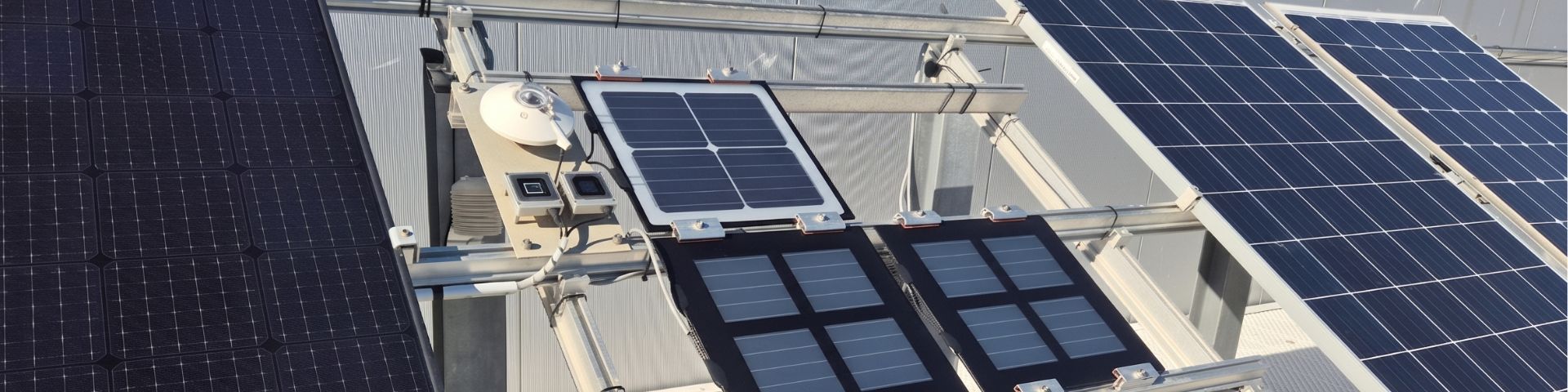
New bifacial solar technology enables higher electricity output per square metre
TNO has demonstrated for the first time that bifacial tandem solar technology can be produced at industrial scale, generating significantly more electricity from the same surface area. The breakthrough was achieved together with Dutch industrial companies Levitech, Tempress, Yparex, SMIT Thermal Solutions and the R&D center of Hanwha Q CELLS in Germany. This next-generation concept, featuring innovation at both cell and module level, can be manufactured using industrially compatible processes and delivers measurably higher energy output under realistic conditions.
The tandem solar module consists of monolithic perovskite/silicon solar cells stacked on top of each other. This architecture achieves higher efficiencies than current silicon-based solar modules, resulting in more power per square metre and lower cost per kWh.
Making better use of limited space for solar energy
The energy transition requires a rapid increase in renewable electricity production, while available space for solar installations is becoming increasingly scarce. This challenge is particularly visible in urbanised regions and on large commercial and industrial rooftops, where the available surface area is fixed.
Increasing the electricity yield per square metre is therefore a key priority. Bifacial solar panels, which capture light at both the front and the rear, already contribute to higher total output. Tandem devices go a step further by improving utilisation of the solar spectrum, enabling efficiencies that single-junction solar cells cannot reach. The current tandem architectures integrate perovskite technologies with existing commercial silicon technologies.
By enabling significantly higher electricity output within the same surface area, this technology helps make better use of existing infrastructure and reduces the cost per unit of energy. This is particularly relevant in regions where space is limited and grid pressure is increasing, as it allows for more efficient deployment of solar without requiring additional land or major system expansion.
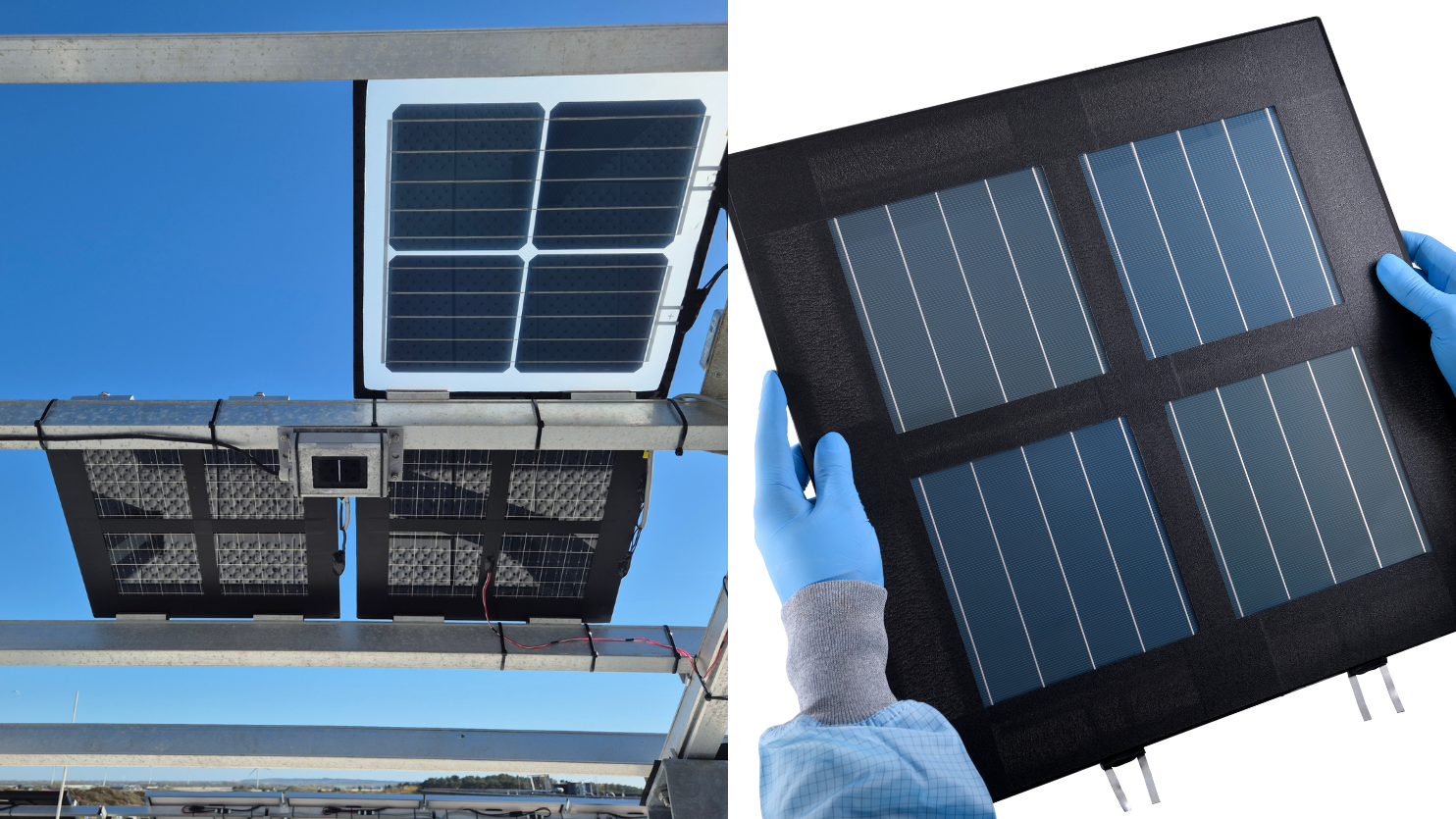
From promising research to industrial application: the best of both worlds
Within the Fit4Market project TNO and its partners focused specifically on combining the best of both approaches: bifacial light capture and tandem cell architecture and doing so at a scale that is relevant for industry.
This is a first of its kind: bifacial tandem technology demonstrated through innovations at both the cell and module level, using processes compatible with existing photovoltaic production lines. Rather than maximising laboratory efficiency, the emphasis was placed on scalability, integration with current technologies, and validation under practical conditions.
Higher overall electricity output confirmed
Testing demonstrates that the bifacial tandem approach delivers 15–30% higher power output compared to conventional bifacial silicon modules used as a reference. The first energy yield measurements from a rooftop installation confirm an approximately 16% increase in annual electricity generation.
A physical demonstrator has been installed and is currently undergoing outdoor validation, with a second generation of prototypes now on the roof providing ongoing data under real operating conditions.
These results confirm that the advantages of bifacial tandem technology are not limited to controlled laboratory settings but can be realised under realistic operating conditions.

'By focusing on industrial processes and bifacial design optimisation, we show that higher power density is achievable in practice. This is a key step towards making bifacial tandem solar technology relevant for large-scale deployment.'
Where can this technology be applied?
The technology addresses two distinct deployment logics: generating more energy within a fixed footprint, or generating the same amount of energy within a smaller footprint than conventional technology requires. This makes it particularly suited to:
Dedicated bifacial PV systems for locations such as commercial and industrial roofs, where available surface area is fixed and yield per square metre is the limiting factor. Not every roof can accommodate this technology; it is best suited to installations where maximising output per square metre is a clear priority.
Where higher energy density can reduce the total footprint of solar farms, easing pressure on land use.
For optimal performance, the technology is recommended for installations with an albedo of 10–20%. The bifacial design can be further customised to match specific site conditions and local reflectivity, offering flexibility across deployment environments.
Implications for the energy transition
Higher electricity output per square metre helps reduce pressure on land use, improves the utilisation of existing infrastructure, and strengthens the economic case for solar energy. This is particularly relevant for policymakers, grid operators, and asset owners seeking to accelerate renewable energy deployment without expanding land use.
By supporting the development of scalable, high-performance solar technologies, TNO contributes to a more efficient and resilient energy system in Europe.
Collaboration and next step
The Fit4Market project is coordinated by TNO and brings together industrial partners from the Netherlands and Germany across the photovoltaic value chain. The project is supported through the Dutch Topsector Energy programme.
The next phase will focus on further scaling, longer-term outdoor validation, and continued collaboration with industry to prepare the technology for broader application.
Contact us
-

Valerio Zardetto
Functie:Senior research scientist-
Standplaats:Eindhoven - High Tech Campus 21
-
Email:Email Valerio
-
Get inspired
TNO launches Perovion Technologies: first roll‑to‑roll factory for perovskite solar cells

New production concept enables large-scale custom application of solar film

TNO achieves breakthrough in silicon solar cell metallisation technology: fully copper-metallised silicon heterojunction solar cell
Shade screens with rollable solar foil combines energy generation with climate control in greenhouses
Webinar: Solar energy in Brabant - Building a sustainable future for Europe