PosHYdon: Green hydrogen from seawater thanks to unique trial plant
Partners
Nexstep, Neptune Energy Netherlands (Eni), Gasunie, Eneco, DEME Offshore, NOGAT, Noordgastransport, NEL Hydrogen, InVesta, TAQA, Hatenboer, Iv-Offshore & Energy en Emerson Automation Solutions
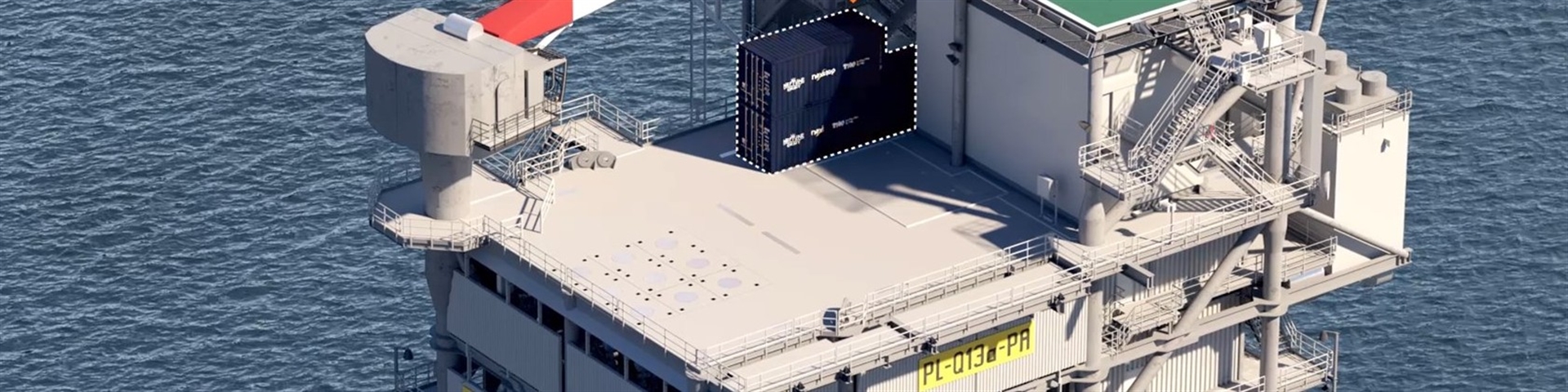
The first ever trial offshore hydrogen plant is being built in the North Sea. Off the Dutch coast, more than 10 kilometres from The Hague, the PosHYdon installation will produce green hydrogen from sustainable electricity generated by wind and solar. This is a first step towards large-scale offshore hydrogen production from wind power.
Latest update – July 2026
PosHYdon has reached an important milestone with the successful production of hydrogen on an operational North Sea platform. The pilot demonstrates how offshore wind energy can be converted into green hydrogen at sea using existing offshore infrastructure. The results provide valuable insights into the technical feasibility, operational performance and future role of offshore hydrogen production in the energy transition. Read the PosHYdon milestone announcement.
What does this milestone mean?
The successful production of hydrogen offshore marks an important step in understanding how hydrogen can contribute to large-scale renewable energy integration.
The PosHYdon pilot provides practical experience with:
- offshore hydrogen production from renewable electricity;
- integration with existing offshore infrastructure;
- operational and safety aspects of offshore hydrogen systems;
- future large-scale deployment of offshore hydrogen production.
The lessons learned contribute to the development of future offshore energy and hydrogen systems
Cheaper transport
Increasing numbers of wind farms are being built offshore, and ever further from the coast. But what is the best way to get the electricity to the mainland?
Through electrolysis of seawater, you can convert electricity into hydrogen and transport the gas using existing gas pipelines. Transporting such hydrogen molecules is considerably cheaper than using cables to bring electricity to land from offshore wind farms.
Hydrogen as renewable energy source
Hydrogen can replace natural gas in industrial processes, reducing CO2 emissions. Over time, hydrogen could also be used for transporting heavy loads by road, on water, and possibly also by air. And a handy feature is that this energy can be stored to avoid overloading the electricity grid at peak times.
New life for old pipelines
Offshore wind will have to become our most important source of renewable energy – even more crucial than land-based wind, solar, geothermal or biomass. The good thing is that there are many platforms in the North Sea that have reached the end of their service life. They need to be demolished, but there are still gas pipelines in place. These can still be used to transport hydrogen before they’re finally disposed of.
The electrolysis installation from land to sea
The research and pilot for large-scale production of hydrogen at sea took place at the Investa Expertise Center in Alkmaar. After extensive research and a successful result, it is time for the next phase. The electrolysis installation is now located on Eni's Q13a production platform, ready to research and ultimately realize large-scale hydrogen at sea.
This active production platform is the first on the Dutch North Sea to be fully electrified.
On this platform, PosHYdon integrates three offshore systems: offshore wind, offshore gas, and offshore hydrogen. TNO developed the concept as part of the North Sea Energy programme and it will carry out the trial programme.
Feasibility study for large-scale hydrogen
TNO is conducting a feasibility study to gain knowledge and unlock the potential of hydrogen on a large scale on the North Sea. Large-scale offshore hydrogen production could become a reality between 2030 and 2035, depending on investments.
The focus is on this offshore pilot test, which will provide valuable lessons for the consortium of 15 partners to improve future installations in terms of efficiency and cost-effectiveness.
The hydrogen plant that is currently being built should be operational in 2022 and will have a capacity of 1 megawatt. It will have a positive impact on the environment, because every sustainably produced kilo of hydrogen saves 10 kilos of CO2 compared to hydrogen produced from natural gas.
New insights thanks to PosHYdon
We can learn a lot from the PosHYdon project and the collaboration. One example is the follow-up steps needed to work towards the large-scale offshore production of green hydrogen.
Another is insight into the dynamic behaviour of a hydrogen production facility that will be linked to offshore wind farms. We’ll also gain an understanding of the costs of installing and maintaining offshore hydrogen production.
Economic benefits of offshore hydrogen
If this PosHYdon trial is successful, it will also have many economic benefits:
- The electricity has to be brought to land by Tennet, which can then invest less in expensive cables and other electricity infrastructure.
- Hydrogen can be transported partly through existing pipelines. This will give the owners of the existing platforms new business opportunities, now that offshore gas extraction is stopping in many places.
- Manufacturers of electrolysers, which split water into hydrogen and oxygen, are going to develop new devices for offshore use. Currently, electrolysers are only used on land.
TNO provides expertise
The successful production of hydrogen on an operational North Sea platform marks an important milestone for PosHYdon. The project demonstrates how offshore wind energy, hydrogen production and existing offshore infrastructure can be integrated in practice.
Within PosHYdon, TNO contributes expertise on offshore operations, process technology, safety, sensor technology, data communication and energy systems integration. The project provides valuable insights into the technical feasibility, operational performance and future deployment of offshore hydrogen production.
These insights help industry, infrastructure operators and policymakers assess how offshore hydrogen can contribute to a reliable, scalable and sustainable energy system:
- offshore operations
- process technology
- sensors and data communication for remote unmanned installations
- measurement technology
- safety
- energy systems integration.
Collaboration is key
In this project, we’re collaborating closely with the platform operators, manufacturers, and suppliers. Producing sustainable hydrogen is very different at sea from on land. Challenges are the large distances, salt water, strong winds, greater wear and tear, higher installation costs, and more costly maintenance.
The Netherlands Enterprise Agency (RVO) has awarded the PosHYdon project a Demonstration of Energy and Climate Innovation grant worth 3.6 million euros. With this grant, the consortium has started the current pilot phase. The remaining funding is provided by the 14 consortium partners.
Contact us
-

Rene Peters
Functie:Business Director Energy Infrastructure-
Standplaats:Rijswijk - Kesslerpark
-
Email:Email Rene
-
LinkedIn:Rene on LinkedIn
-
-

Marcel Weeda
Functie:Senior Consultant Energy Transition Studies-
Standplaats:Amsterdam - Radarweg
-
Email:Email Marcel
-
Get inspired
Hydrogen in the energy system: The future of sustainable energy in the Netherlands and Europe
NORCE and TNO are entering into a strategic partnership on hydrogen developments

Dutch consortium participates in EU research project on large-scale hydrogen storage in depleted gas fields
Underground hydrogen storage
Collaboration TNO and Elcogen for development Solid Oxide Electrification Technology in Europe