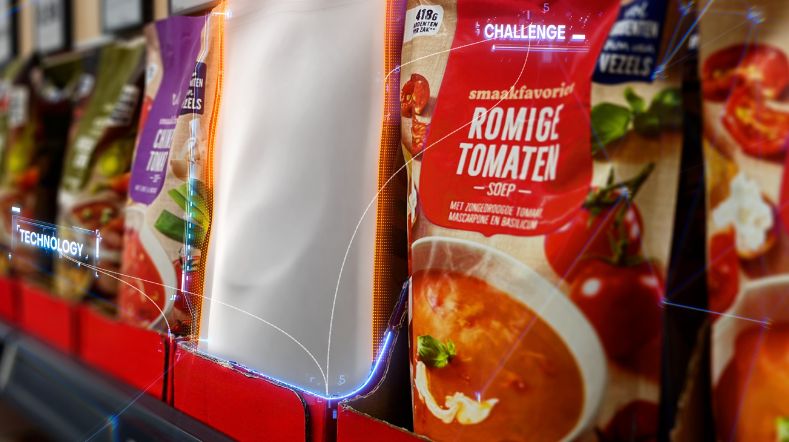
CIRFLEX: Closing the gap for flexible packaging
Status
Start: May 2024
Partners
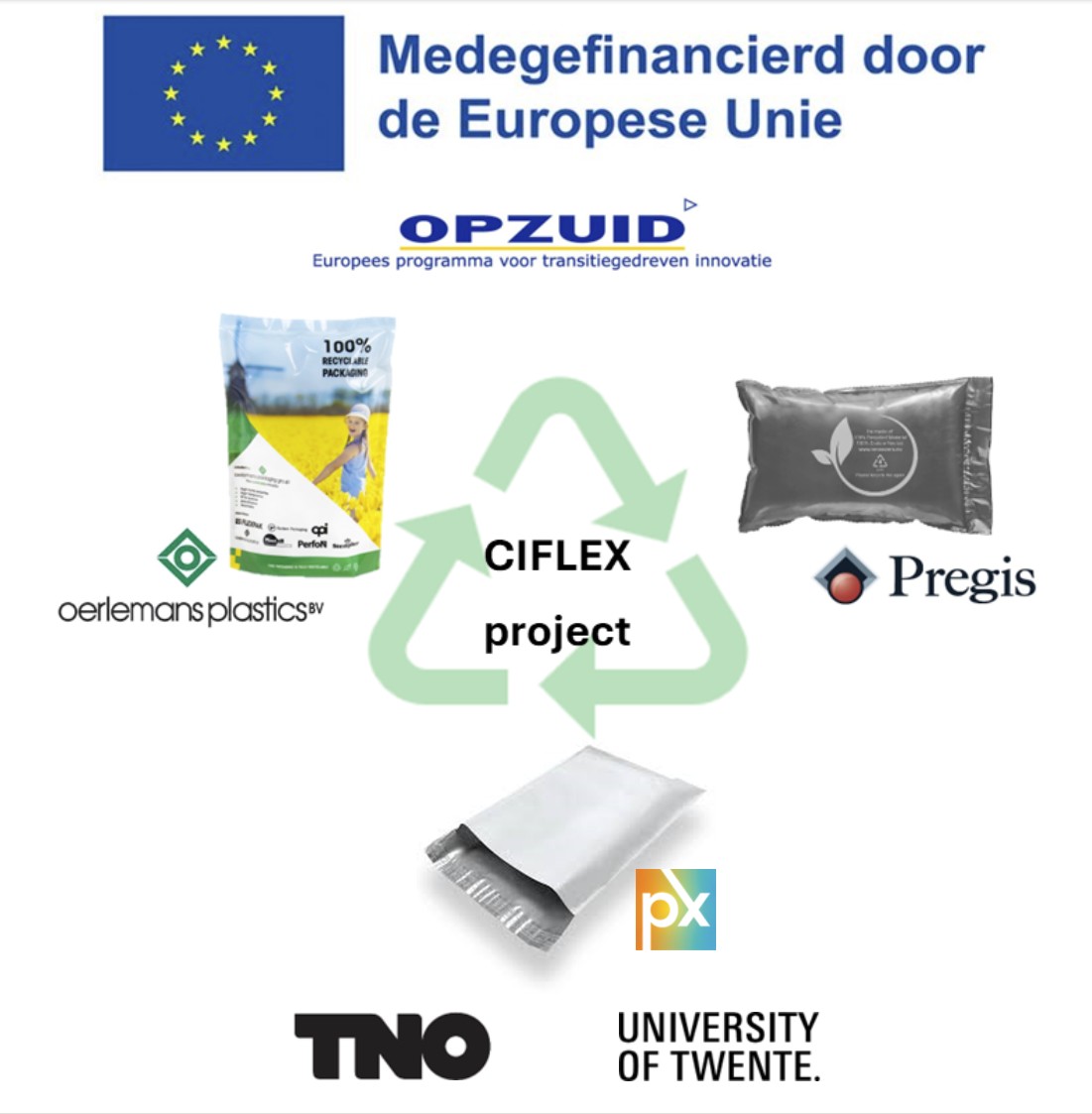
Wit International B.V., Pregis Nederland B.V., Universiteit Twente and Oerlemans Plastics B.V.
Flexible plastic packaging plays an essential role in protecting products, but it remains difficult to recycle at high quality and at scale. As a result, only a limited share is currently recycled back into comparable applications. At the same time, the EU’s Packaging and Packaging Waste Regulation (PPWR) sets ambitious circularity requirements, including higher recycled content and greater uptake of reuse. For flexible packaging, there is still a significant gap between today’s reality and what the regulation aims to achieve. In Europe, a substantial share of plastic packaging is not recycled, underlining the need for better design and higher-quality recyclates.
Prototypes, better recyclates, and design guidelines
CIFLEX develops flexible packaging prototypes designed to meet or exceed PPWR requirements. The work includes increasing the recycled content, improving design-for-recycling, and developing viable approaches for reuse applications such as e-commerce packaging.
The project focuses on improving the quality and the processability of recycled polyolefins by the strategic use of additives to achieve an optimal performance in the packaging containing recycled content. Additionally, a model to predict the sealing behavior of polyolefins packaging is developed using data from the sealing measurements of commercial packaging films.
The knowledge generated is consolidated into design guidelines (for design from recycling and design for reuse) to help the wider plastics packaging industry meet circularity targets with strong economic performance.
Reduce risk for industry
Pilot tests demonstrated the reusability of flexible e-commerce packaging over several reuse cycles without visible damage, helping to build confidence for real-world roll-out. In parallel, films and products with high levels of post-consumer recycled content were successfully produced and tested at industrial scale, an important step toward market-ready applications.
The industrial partners supported TNO-BMC in developing the predictive sealing model for polyolefins films (PE, PP, and blends, including virgin and recycled materials), by providing commercial packaging films for testing, which generated key input data alongside other data sources.
From project results to scaled implementation
After CIFLEX, the next step is scaling proven concepts into repeatable, industrial-grade solutions: validated recyclate supply chains, packaging formats that deliver performance with recycled content, and reuse models supported by reverse logistics.
This requires continued collaboration across the chain from packaging producers, recyclers, logistics providers to brand owners so that circular flexible packaging becomes the default rather than the exception.
TNO is looking to connect with organisations that want to pilot, validate, or scale circular flexible packaging solutions like recycled-content designs, design guidelines, and reuse models for e-commerce.
Contact us
-

Marieke Havermans
Functie:Senior Business Developer, Circular Plastic PackagingMarieke is a packaging technologist with a passion for sustainability. With 20 years' experience in the industry, she understands the impact and associated challenges of the Packaging & Packaging Waste Directive (PPWD) for the industry. Her believe is that a successful transition is only possible through collaboration across the value chain.
-
Standplaats:Geleen - Brightlands Materials Center
-
Email:Email Marieke
-
LinkedIn:Marieke on LinkedIn
-
Get inspired
Producing with sustainable materials
Fewer microplastics and higher yields in plastic recycling
New routes for sorting and composite separation
CRM materials and processes

Progress in circular packaging for soups and sauces