Producing with sustainable materials. From drawing board to recycling.
Materials used in your products must meet more requirements than ever before. Safe for people and the environment. Recyclable at the end of their life cycle. Made with as little fossil feedstock as possible. And, of course, they still have to do what they are meant to do. TNO combines impact assessments, expertise in chemical safety and in-depth materials knowledge. In this way, we work with manufacturers to develop materials that are safe, sustainable and circular from the drawing board onwards.
New regulations, growing urgency
The pressure to innovate is increasing. By 2030, the automotive sector must use 30% recyclate in plastic components. PPWR legislation requires all packaging to contain increasing amounts of recycled content. And stricter REACH requirements continue to limit the use of an ever-growing list of chemical substances.
But which rules apply to which products? And what are the suitable alternatives? For many manufacturers, this is a complex challenge. TNO not only helps you navigate this process, but also selects and develops the materials and solutions you need.
Three material alternatives that together make the difference
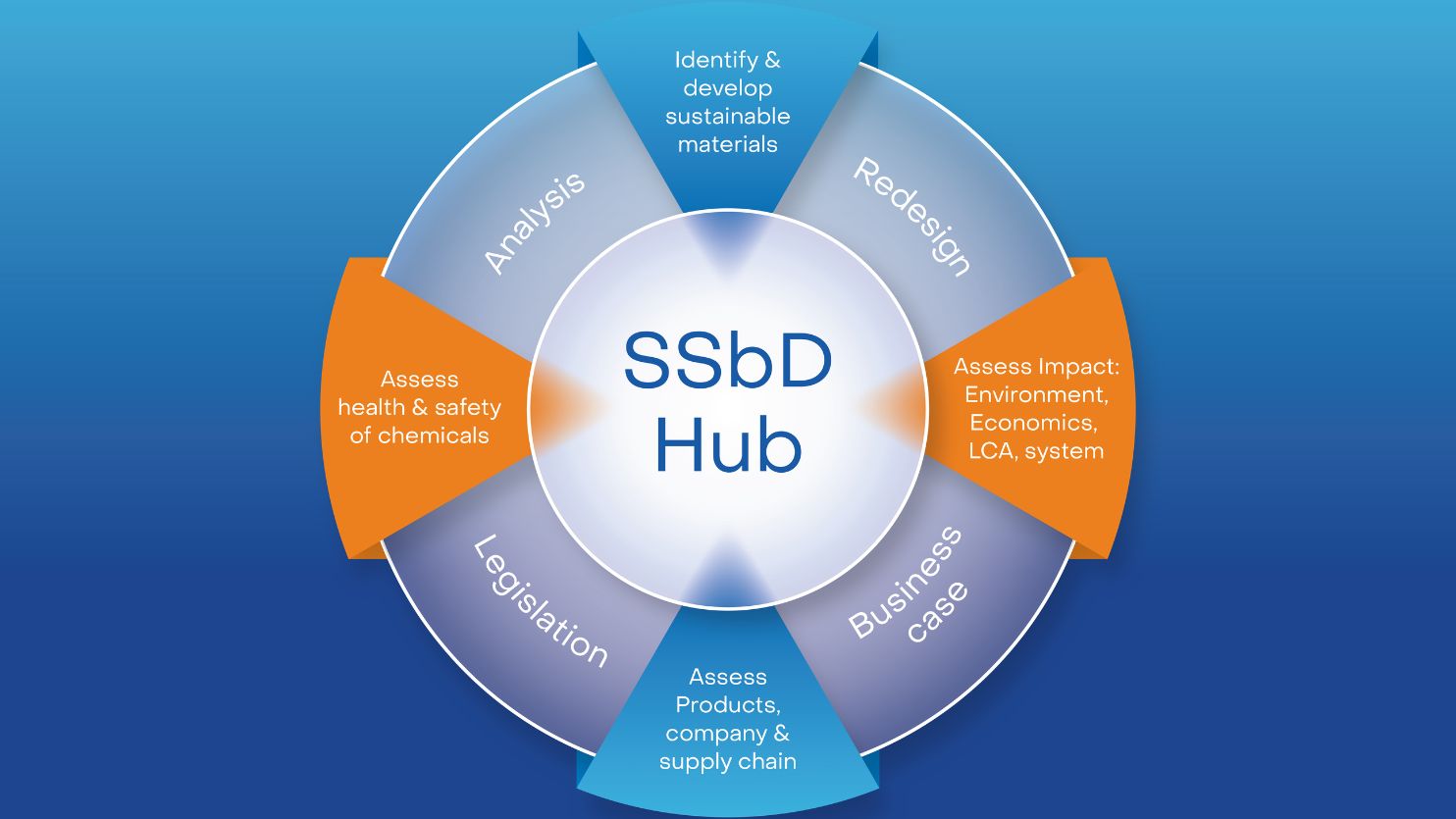
TNO works according to the Safe and Sustainable by Design (SSbD) principle: safety, sustainability and circularity are integrated from the very first design step, rather than assessed afterwards. We combine this with chemical safety assessments and life cycle analyses that already show, during the design phase, what a material switch or alternative means for environmental impact, costs and the value chain.
This integrated perspective makes the difference. The PFAS dossier has shown what happens when materials are only assessed for safety at a later stage. A material that appears sustainable but fails toxicological standards ultimately misses the mark.
Products currently made from multiple layers or different material types are difficult to recycle. TNO has recycling technologies that can recover high-quality raw materials from complex waste streams, ranging from mechanical recycling to advanced separation techniques.
TNO makes plastic waste suitable for high-value reuse in, among others, the automotive sector, enabling compliance with the mandatory 30% recyclate requirement. For example, we work on thermoplastic composites for door panels and interior components that must retain the same strength, quality and lifespan despite the use of recyclate.
The transition to mono-material solutions, products made from a single type of plastic, makes recycling easier. However, this places high demands on material properties. For the food industry, for instance, we are developing a soup pouch made from one type of plastic. This transition greatly simplifies recycling but is technically challenging: the packaging must continue to provide the same barrier properties.
During product use and recycling, material losses are unavoidable. This means material streams must be replenished with new feedstocks, which should be as sustainable as possible. TNO develops biobased routes for the nine most commonly used fossil-based plastics.
Sometimes this involves chemicals that fit directly into existing production processes. In other cases, it concerns entirely new polymers with unique properties. Which route is most suitable depends on your product, your sector and your timeline.
The first two alternatives only work if products are designed for recycling from the start. This requires different design choices: different materials and different joining techniques, ensuring that components can be easily disassembled at the end of their life.
In the pharmaceutical sector, for example, this means developing methods to decontaminate hospital plastics, allowing materials that are currently routinely incinerated to become suitable for high-quality recycling.
SSbD Competence Centre
In March 2026, the national expertise centre for Safe and Sustainable by Design was established, a collaboration between TNO, RIVM, VNCI and the Ministry of Infrastructure and Water Management. The centre provides sector-specific support to companies transitioning to SSbD through training courses, workshops and access to tools and data.
From legislation to business opportunity
Although the growing need for SSbD is strongly driven by new European regulations on safe chemicals and the mandatory use of sustainable materials, a broader business case is becoming increasingly clear. Companies that invest in SSbD today are building a robust materials strategy, reducing their dependence on fossil feedstocks, limiting health and environmental risks, and strengthening their position with customers and suppliers. We support organisations in developing these business cases, underpinned by facts, analyses and design choices that work.
Taking the next step together
The transition to SSbD only succeeds if all links in the value chain move together. TNO connects laboratories and R&D teams with brand owners, raw material suppliers, recyclers and regional policy-makers. By jointly examining design choices and value-chain effects, solutions emerge that are supported at company level, across the value chain and within industrial sectors. This form of collaboration accelerates progress and delivers innovation that truly makes an impact in practice.
Would you like to know more about the transition to safe and sustainable materials? By combining expertise in chemical safety, materials technology and value chain innovation, TNO helps organisations take the step towards products that are ready for the future.
Paper Safe and Sustainable by Design
Read everything about designing safe and sustainable materials in our paper 'The future of chemicals is Safe and Sustainable by Design'.
Contact us
-

Henk-Jan Udding
Functie:Circular by Design Materials Lead & Senior Business DeveloperYou can contact me for collaboration with TNO in the field of circular economy and products for consumers, construction, and industry. I connect governments and companies with our research teams and seek new projects for designing and developing circular materials and products made from sustainable resources.
-
Standplaats:Petten - Westerduinweg
-
Email:Email Henk-Jan
-
LinkedIn:Henk-Jan on LinkedIn
-
Get inspired
Brightlands Circular Space opens: TNO helps companies scale up plastic innovations faster
TNO smart windows applied in buildings and homes for the first time
Fewer microplastics and higher yields in plastic recycling
New routes for sorting and composite separation
CRM materials and processes