SeBaPaD: Secure Battery Passport Demonstrator
Status project
October 2024 – October 2025
In cooperation with
NXP Semiconductors, ELEO Technologies B.V., INND Batteries, Hyster-Yale, VDL
The use of batteries has increased significantly, becoming essential for devices like electronics, electric vehicles, and renewable energy systems. To promote sustainability, initiatives like the Battery Passport have emerged. TNO joins forces with NXP and industry in the SeBaPaD project with the aim of demonstrating the development and the results of a secure Battery Passport.
Battery Passport
The rise of battery use highlights the need to address battery sustainability, including ethical material sourcing, energy-efficient production, and proper disposal to minimise environmental harm. A circular economy approach, where batteries are reused, repurposed, or recycled, is gaining importance.
To promote sustainability, initiatives like the Battery Passport have emerged, providing detailed information about a battery’s lifecycle. Starting February 2027, batteries sold in the EU for light transport, industrial, and electric vehicles must have a Battery Passport, enhancing transparency in the battery value chain. TNO joins forces with NXP and industry in the SeBaPaD project with the aim of demonstrating the development and the results of a secure Battery Passport.
How do we achieve this?
Research institutes and industry have been working on developing the technology for market introduction. In the national project Green Transport Delta – Electrification, TNO and NXP worked together to develop and demonstrate a reference battery system capable of supporting a Battery Passport.
In that earlier work, TNO developed the information technology system for storage, data sharing, and access-rights management of battery data. ELEO provided the battery system and NXP supplied the Battery Management System hardware, which were integrated and used for proof-of-concept testing.
SeBaPaD takes the next step by focusing on the quality and reliability of the battery condition and performance information that needs to be reported in the Battery Passport. TNO implemented a set of State-of-X algorithms that determine battery condition and performance indicators and are designed to remain reliable as the battery ages.
A key aspect is that the algorithms track degradation over time and adapt their calculations accordingly, so that battery condition assessment remains consistent throughout the battery lifetime. Additionally, the algorithm framework, referred to as “TNO SoX Toolchain”, is designed according to the requirements of the Battery Passport data model.
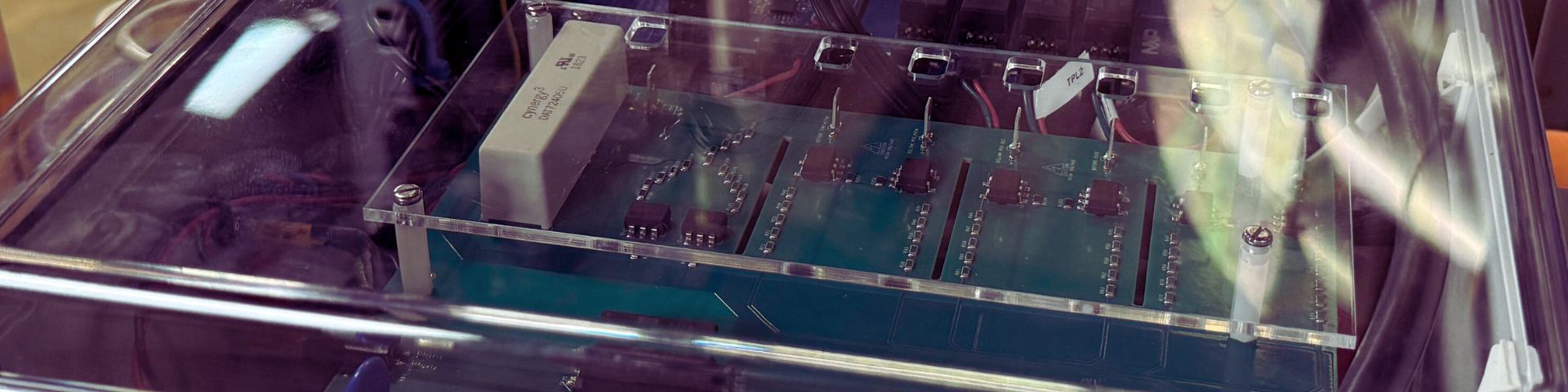
To support trust in the reported values, SeBaPaD also implements measures on both hardware and software level. The Battery Management System includes a secure element to support detection and registration of sensor and data manipulation and to enable secure transmission of battery data into the Battery Passport system. In addition, TNO implements model-based methods that help distinguish abnormal behavior from normal battery degradation over time.
Project results
The Secure Battery Passport Demonstrator project delivered a fully operational and validated Battery Passport demonstrator on module level with NMC chemistry. Key results include:
- Demonstration of an end-to-end Battery Passport system integrating hardware, software, and information technology components.
- Reliable determination of battery condition and performance throughout the battery lifetime.
- Integration of battery condition and performance algorithms, designed in accordance with the dynamic data requirements of the Battery Passport, into the application layer of a Battery Management System.
- Secure and tamper-resistant storage of Battery Passport data using high-security integrated circuits.
An industry end-user group was involved throughout the project to provide feedback on requirements, use cases, and practical applicability. This ensured that the demonstrator addresses real-world needs and constraints. The demonstrator was validated in TNO’s laboratory facilities through testing under varying conditions and test cases.
Impact
The project demonstrates that it is technically feasible to deliver secure, reliable, and interoperable Battery Passport information that remains trustworthy throughout the battery lifetime.
By enabling accurate insight into battery condition and performance, the demonstrator supports better decisions on battery reuse, repurposing, and recycling, contributing to the transition toward a circular battery economy. The results provide a validated technical foundation for future Battery Passport implementations and support industry preparation for upcoming regulatory requirements.
Next steps
Following completion of the initial demonstrator, TNO and NXP are continuing to expand and validate the system. Next steps include:
- Scaling the demonstrator from a 50-volt battery module to a 500-volt battery pack.
- Testing with additional battery chemistries, including lithium iron phosphate (LFP) batteries.
- Adding further safety, monitoring, and control layers required for higher-voltage systems.
Curious about SeBaPaD or TNO’s expertise on Battery Passport and algorithms? Contact one of our experts.
- The project is funded by Holland High Tech
- Programme: Battery Integration | 2024-2027
- Total budgeted project costs: €261.170,00
Contact us
-

Federico Ribatti
Functie:Project managerIn TNO, I coordinate research projects focused on several technologies applied to sustainable mobility and sustainable storage of energy, both in civil and military domain.
-
Standplaats:Helmond - Automotive Campus
-
Email:Email Federico
-
-

Avedis Dadikozyan
Functie:Medior Scientist IntegratorAs a Medior Scientist Integrator, my work focuses on powertrain electrification through modeling and optimization techniques, with applications in the automotive and maritime industries. Furthermore, my work includes development of battery modeling tools and diagnostic protocols, aimed at improving the efficiency and reliability of electric powertrains for sustainable transport solutions.
-
Standplaats:Helmond - Automotive Campus
-
Email:Email Avedis
-
-

Sjoerd Rongen
Functie:ConsultantSjoerd Rongen is a consultant in the Data Ecosystems department and specializes in applying data sharing techniques and semantic technology to realize digital product passports. Sjoerd is also coordinator of the research domain digital product passports in which he coordinates with different domains in expertise groups within TNO.
-
Standplaats:Eindhoven - High Tech Campus 25
-
Email:Email Sjoerd
-
Get inspired
Reliable monitoring of battery condition for transparent battery passports
The future of computing: navigating the next frontier
How far can you travel in an electric car?
National Growth Fund invests in Dutch battery consortium for heavy duty transport
TNO opens test cell for sustainable marine engines