Surveillance and Data-lab
In TNO's “Surveillance and Data” (S&D) Lab, camera recordings are used for scientific research for high-end security solutions.
What is the S&D lab?
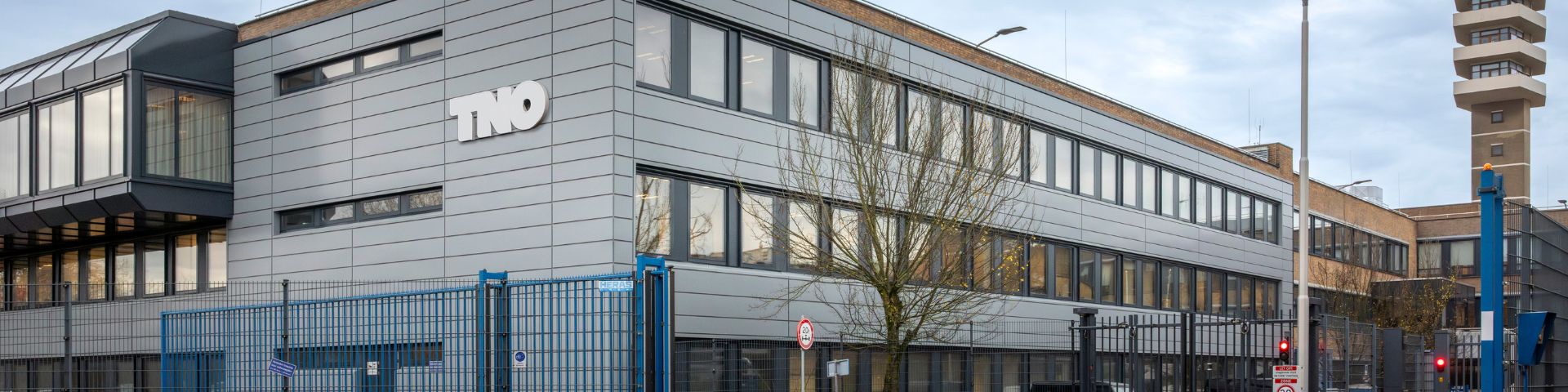
In the “Surveillance and Data” (S&D) Lab, cameras have been placed on the tower of TNO location Oude Waalsdorperweg for research related to high-end security solutions. These cameras allow, for example, the observation of the access to the TNO site and the parking lot.
Why the S&D lab?
Training data is needed for the development of artificial intelligence (AI) algorithms. Within the S&D Lab, frameworks and procedures are defined so that video data can be stored and preserved for research related to training, testing and demonstrating AI-based video analysis technology. A video dataset that meets national and European legal requirements (including GDPR) and the high ethical standards of TNO (including privacy) is unique and valuable for security and surveillance applications.
Types of research for which the images are used
The S&D lab enables research into the detection & tracking of people and vehicles, privacy-enhancing technologies, recognizing deviant behavior of people and anomalies.
The intended applications are relevant for police and defense (national and international), compound security, critical infrastructure protection, and security organizations.
The basis for the data processing is TNO's task in the public interest, which is to conduct scientific research as laid down in Articles 4 and 5 of the TNO Act. No special personal data is processed.
Three categories
In the S&D lab, video recordings are made of people who are recognizable to a greater or lesser extent in the image, whereby a distinction is made between three categories:
- The first category concerns video recordings of volunteers who participate in TNO research. The volunteers involved are identifiable. They sign an informed consent form to participate in the study.
- The second category concerns video recordings of persons who can be identified on the TNO site, such as visitors to the location.
- The third category concerns video recordings in which the persons are not directly identifiable in the picture due to the limitation of resolution. The persons can also be passers-by who are informed about the recordings with an information board on the outside of the TNO site.
Privacy protection
The following measures have been taken to protect the privacy of all categories of persons mentioned above:
- Video images in which category 1 research participants are recognizable in the picture are stored.
- Video images of visitors and passers-by (category 2 and 3) are anonymized. Raw video images on which people are recognizable are deleted within 3 days.
- Anonymization takes place in various ways, for example by adding black frames or blurring with software, by physically using face masks, or by limiting the resolution of the recordings. The software uses automatic detection of people / faces / vehicles / license plates, and then makes the faces and license plates unrecognizable. The development and application of (new) privacy-enhancing technologies is part of the research, which may have consequences for the implementation of the technique to remove or minimize personal data.
- All data must be deleted no later than 10 years after the end of the facility, except data selected for publications, presentations etc.
- For the use of visual material in external publications and presentations, the material must be completely anonymized. This is done automatically and is checked manually and corrected if necessary. External publications and presentations with images require permission from the Research Manager and the Local Security Officer.
Intelligent imaging
The Intelligent Imaging Group at TNO uses the S&D Lab for scientific research into new AI algorithms for high-end security solutions. With in-depth expertise in deep learning, they develop solutions both within and beyond the Defence domain.
GDPR rights
On the basis of privacy legislation (GDPR), you have rights such as the right of access, deletion or the right to object. You can always submit a request to this effect to TNO. However, this does not mean that your request can always be granted. For the procedure for submitting a request, reference is made to TNO's privacy statement.
If you have a question or complaint about the S&D Lab, please contact the Research Manager of the Expertise Group 'Intelligent Imaging' via divisional director Frans van Ette. You can also contact TNO's Data Protection Officer via [email protected].
Contact us
-
Frans van Ette
Functie:Director Autonomous Systems & Decision Support-
Standplaats:Den Haag - New Babylon
-
Email:Email Frans
-
Get inspired
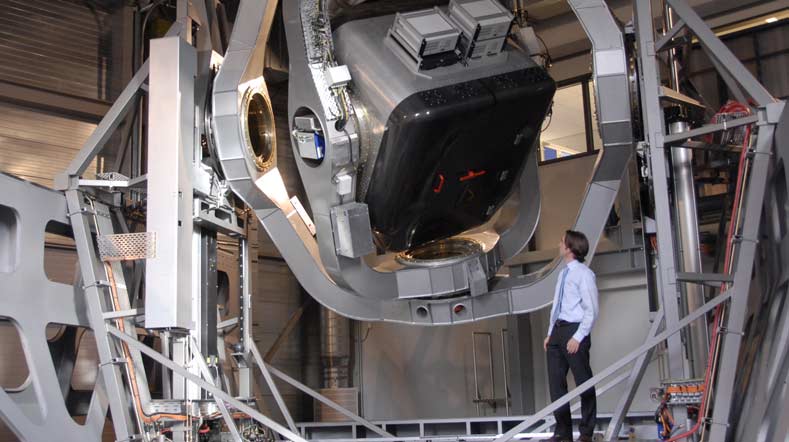
Desdemona: The ultimate motion simulator
Effective, efficient and flexible armed forces
Adaptive learning architectures