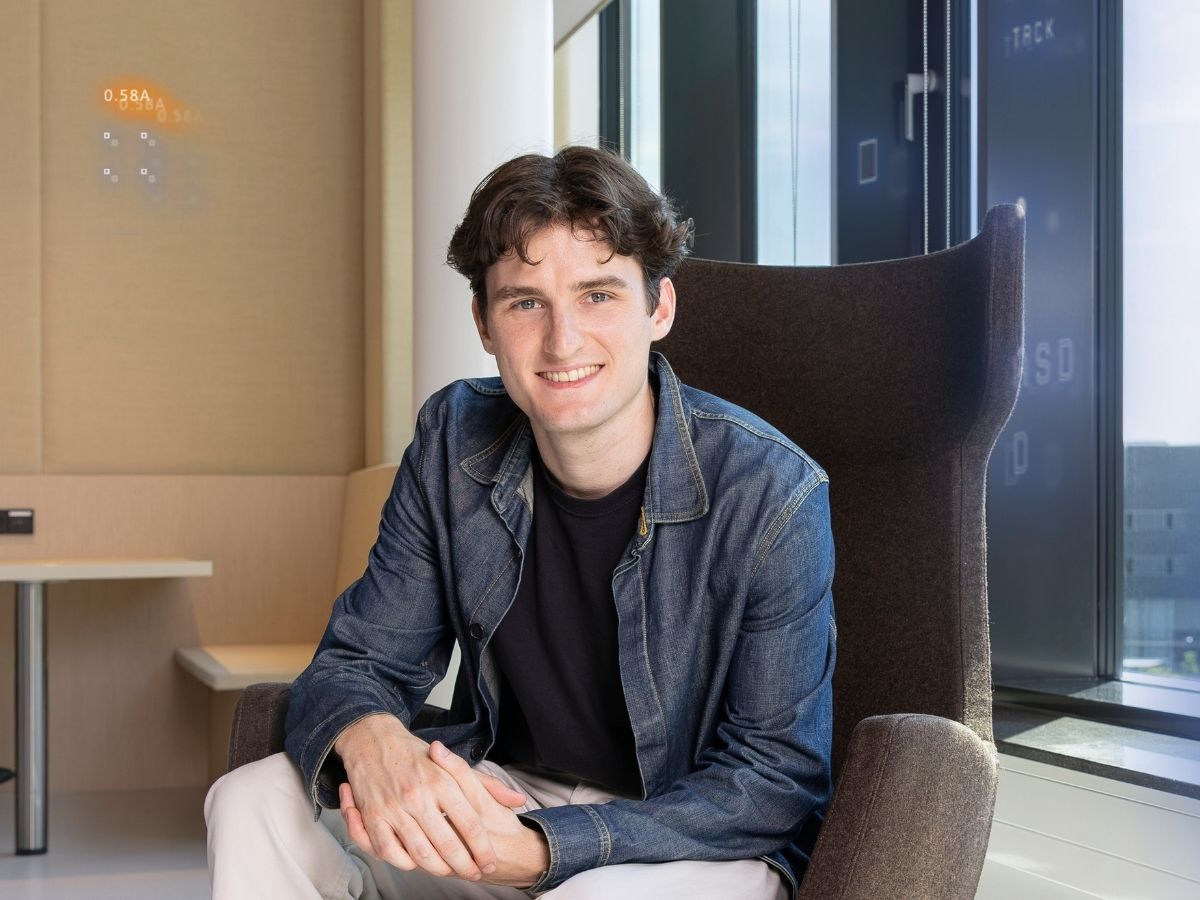
TNO Unboxed #6: the race against the quantum threat has already begun
Encryption is as old as organised power itself. From the simple Caesar cipher in ancient Rome to the complex codes of the twentieth century, those who possess information want to protect it. And those seeking power want to break it. That race has never stopped. But with the rise of quantum computers, the battle is reaching a fundamental turning point.
Much of the cryptography currently protecting our digital society will not withstand the computing power that quantum computers are expected to deliver. Post-quantum cryptography (PQC) is therefore not an academic exercise for the future, but a necessity that organisations need to address now.
From Caesar to Colossus
Cryptography began simply. Julius Caesar used a substitution cipher whereby each letter was replaced by another. For centuries, that was sufficient to keep messages secret. Until people began thinking more systematically about breaking codes.
During the Second World War, that race accelerated through technology. The famous Enigma code is widely known because Alan Turing played a crucial role in breaking it, but equally revolutionary was Colossus: one of the first electronic computers, used to crack German codes. It marked a historic moment when computational power enabled cryptanalysis to operate on an entirely new scale.
We are witnessing the same dynamic today. Only now, much more is at stake.
Cryptography is everywhere
Since the arrival of the internet, cryptography has become invisibly woven into everyday life. Every card payment, every WhatsApp message, every public transport check-in and every secure internet connection relies on cryptographic protocols.
'These underlying connections are precisely what matter most,' says TNO researcher Thomas, a specialist in post-quantum cryptography. 'We use cryptography constantly, often without realising it. And that is exactly where the vulnerability lies.'
The problem is that many of these protocols are based on mathematical problems that are practically impossible for classical computers to solve, but not for sufficiently powerful quantum computers.

'These underlying connections are precisely what matter most. We use cryptography constantly, often without realising it. And that is exactly where the vulnerability lies.'
Quantum computers: promise and threat
Quantum computers operate in a fundamentally different way from classical computers. Instead of bits, they use qubits, which can exist in multiple states simultaneously. This makes them exceptionally effective at solving certain mathematical problems, including the very problems on which much of today's cryptography depends.
'Once quantum computers become large and stable enough,' Thomas explains, 'they will be able to break a significant portion of our current public-key cryptography. Not just a little faster, but exponentially faster.'
This does not mean that all cryptography will immediately become unusable. But it does mean that critical building blocks of digital security will lose their protective function.
Harvest now, decrypt later
One of the biggest misconceptions is that organisations only need to act once quantum computers actually exist. In reality, the threat is already present.
Intelligence and law enforcement agencies, as well as state actors, are already storing encrypted data traffic today. Not because they can read it now, but because they expect to be able to do so later. This strategy is known as 'harvest now, decrypt later'.
'If data remains sensitive for a long period of time, such as state secrets, trade secrets or personal data, it is already vulnerable today,' says Thomas. 'You cannot wait until a quantum computer becomes operational.'
In addition, replacing cryptography is not a simple software update. Cryptographic functions are deeply embedded in systems, supply chains and protocols. Migration takes years.

'Once quantum computers become large and stable enough, they will be able to break a significant portion of our current public-key cryptography. Not just a little faster, but exponentially faster.'
Post-quantum cryptography already exists
Another misconception is that no protection is yet available. That is incorrect. In 2016, the US National Institute of Standards and Technology (NIST) launched an international process to develop new cryptographic standards capable of withstanding quantum attacks. The first standards were officially adopted in 2024.
These post-quantum algorithms are already being deployed. The messaging application Signal, for example, already uses post-quantum cryptography in its key exchange. Other sectors are also experimenting with and implementing the technology.
'So this is not something that only exists on paper,' says Thomas. 'The technology is here. The challenge now lies in large-scale and responsible implementation.'
What does this mean for organisations?
Virtually every organisation uses software that relies on cryptography, often without fully understanding where and how it is applied. The first step towards post-quantum resilience is therefore to conduct an inventory.
- Where is cryptography used within the organisation?
- Which data must remain protected over the long term?
- What would be the impact of adapting existing cryptography?
International guidelines use 2035 as a target date. By then, critical systems should have migrated to post-quantum cryptography. That may seem far away, but given the complexity of IT landscapes, it is both a realistic and ambitious deadline.
The role of TNO
Together with the Dutch General Intelligence and Security Service (AIVD) and the Centre for Mathematics and Computer Science (CWI), TNO developed the PQC Migration Handbook, a practical guide for organisations preparing for the quantum threat. The handbook provides both awareness and concrete steps, from risk assessment to technical decision-making.
TNO also supports sectors where performance and scalability play a decisive role. In the automotive sector, for example, self-driving vehicles must communicate with their surroundings at extremely high speed. Post-quantum cryptography can place greater demands on computing and communication resources. What does that mean for safety and reliability?
TNO is also working with organisations in the financial sector that are already planning ahead. Banks and payment systems rely on complex infrastructures in which cryptography is embedded in countless locations. Timely preparation is therefore essential.
Not a revolution, but an unavoidable transition
The emergence of quantum technology feels radical, but it follows a pattern we have seen before. The widespread adoption of the internet in the 1990s also required new forms of security, legislation and collaboration.
The difference is that this time we already know the threat in advance. Internationally, it is expected that a large proportion of digital infrastructure will have migrated to post-quantum cryptography by around 2035. At the same time, history shows that outdated security measures often remain in use for decades. That is exactly why coordination is needed.
Looking ahead responsibly
For Thomas, the challenge lies in connecting science and practice. 'I hope to keep one foot in the academic world while using the other to contribute to tangible societal impact. Post-quantum migration is one of those areas where the two worlds come together.'
The message is clear: the race has already begun. Those who wait until quantum computers arrive will be behind the curve. By investing now in knowledge, inventory and migration, organisations can build long-term digital resilience.
Would you like to learn more or contribute to solutions around post-quantum cryptography? TNO would be pleased to help.
Contact us
-

Tjarda Krabbendam-Hersman
Functie:Director Human & Organisational EffectivenessTjarda is Division Director of Human and Organisational Effectiveness at TNO Defense and Security. Her portfolios include resilience, readiness, and combat preparedness. She works with her colleagues on knowledge and innovation for military and societal preparedness. Since 2023, Tjarda has been part of the management team of TNO Defense and Security. Prior to that, she was Program Manager for National Security and Cyber Security.
-
Standplaats:Den Haag - Oude Waalsdorperweg
-
Email:Email Tjarda
-
Get inspired
Escalation in fireworks-related violence requires new security and response strategies
Space and missile propulsion

The Netherlands is falling behind on R&D, and in ten years we will pay the price
TNO supports colleagues who also make a difference as reservists

Time setter story: Lars Geluk on TNO Traineeship