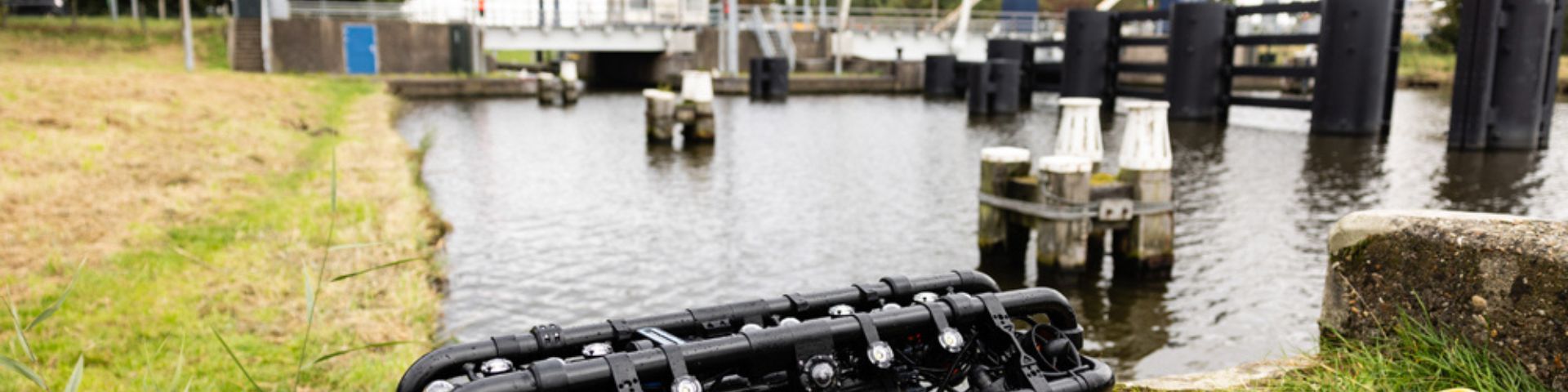
Safer underwater inspections: underwater drones providing insights into submerged infrastructure
What lies beneath the waterline of our locks and weirs? In many cases, we simply do not know. Thousands of submerged infrastructure assets will need to be inspected in the coming years, yet for many asset managers, the underwater environment remains largely invisible. For a long time, divers were the only option for assessing underwater conditions, a form of work that carries significant risks. That is why TNO and Rijkswaterstaat, together with market parties, are exploring how underwater drones can make these inspections safer.
High-risk work below the waterline
Diving operations at locks and weirs are inherently risky. Getting stuck, becoming trapped, or being drawn in by strong currents are all real dangers. In previous incidents, divers have even lost their lives.
“The risks associated with this type of work can never be fully eliminated,” says Marcel Vos, Advisor for Inspection Innovations at Rijkswaterstaat.
For this reason, Rijkswaterstaat now applies the principle: no diving, unless absolutely necessary. Wherever possible, safer alternatives are deployed to minimise the time divers spend in hazardous conditions.
Underwater drones as additional ‘eyes’
At the end of 2025, TNO and Rijkswaterstaat tested underwater drones at the sea lock in Farmsum. During a three-day trial, six companies deployed their systems under operational conditions. Visibility underwater ranged from 30 to 50 centimetres. While this may seem limited, it is representative of many Dutch inland waterways.
As Marcel explains: “In Zeeland, visibility is better, but in many inland waters, 50 centimetres is already quite favourable.”
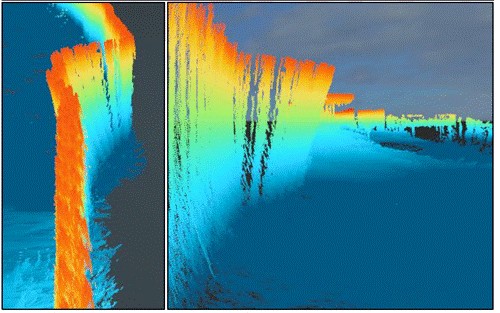
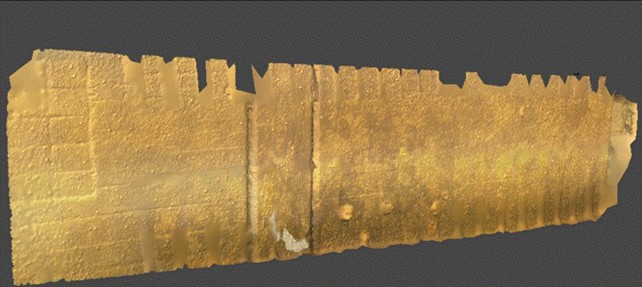
At such low visibility, conventional cameras are insufficient. This is why the drones are equipped with acoustic sensors. Using sonar, they map the shape and position of structures and detect larger anomalies. Whether more detailed damage, such as cracks, can also be reliably detected remains the subject of further research.
The drones have already been used for activities such as measuring sheet pile thickness and inspecting mooring dolphins, fender systems and lock structures.
Suitable even for tasks too dangerous for divers
Underwater drones can also be deployed for operations that would be too hazardous for divers. Marcel gives an example:
“At one lock, a car tire had become lodged beneath the lock gate. With a large gate moving back and forth, it is far too dangerous for a diver. Using a drone, they managed to thread a steel cable through the tire and pull it out from the shore, without anyone having to enter the water.”
Complementary rather than a replacement
Underwater drones do not replace divers, they complement them. Bas, Senior Advisor for Underwater Technology at TNO, explains: “Divers have certain advantages, and drones have others. A human can feel and listen. In complex environments, a diver is often indispensable.”
The real strength lies in combining both approaches. In a recent inspection, a drone first explored the area before divers entered the water, giving them a much clearer understanding of what to expect. “We are seeing this combination more and more often,” says Marcel. “It gives the supervisor above water a much better overall understanding of the situation.”
In addition, drones provide data that cannot be collected by divers. A diver needs their hands to move and can only carry limited equipment. A drone does not face these constraints and can perform more systematic measurements. This does, however, require a different way of working: “You also need to learn how to interpret the data. What am I seeing, and what can I do with it?”
A major challenge below the waterline
This technology arrives at a crucial moment. Rijkswaterstaat manages approximately 6,500 infrastructure assets, ranging from bridges and tunnels to locks and weirs. A significant proportion are partially or fully submerged. Provinces, water boards and municipalities manage many more, often smaller, assets.
Replacing all submerged infrastructure would cost nearly half the total value of all civil infrastructure in the Netherlands.
Annual expenditure on replacement and renovation is expected to rise from approximately €1.1 billion to €2.4 billion. Timely inspections and targeted maintenance are therefore essential. High-quality underwater data is playing an increasingly important role.
As Ad van ’t Zelfde, Project Manager at TNO, explains: “If you can inspect more effectively, you can also predict more accurately. Ultimately, that leads to more reliable service life predictions.”

“If you can inspect more effectively, you can also predict more accurately. Ultimately, that leads to more reliable service life predictions.”
Combining TNO expertise
The trials in Farmsum are the result of collaboration between TNO experts in drone technology, sensor technology and civil engineering. “The combination of our colleagues’ sensor expertise with our knowledge of submerged infrastructure provides insights that you simply cannot achieve in isolation,” says Ad.
Bas adds: “We have extensive knowledge of sensors and platforms, but you also need deep expertise in infrastructure to translate that data into maintenance and asset management decisions.” The close collaboration with Rijkswaterstaat ensures practical implementation: concrete inspection challenges, test locations and a shared ambition to work more safely.
Also relevant for provinces, water boards and municipalities
The technology marks the beginning of a broader development. Protocols and standards for drone-based underwater inspections are not yet established, but the first steps have been taken. As the market grows, development is expected to accelerate.
Improved measurements lead to better predictions and longer service life of infrastructure assets.
The challenge extends beyond Rijkswaterstaat. Provinces, water boards and municipalities face similar issues. TNO invests approximately €10 million annually in infrastructure innovations and works with public and private partners to enable safer and smarter underwater inspections.
Interested in how underwater drones can contribute to smarter and safer inspections? Get in touch with TNO to explore the possibilities for your organisation.
Header image: Rinske Fokkema
Contact us
-

Ad van 't Zelfde
Functie:Senior projectmanager-
Standplaats:Delft - Molengraaffsingel
-
Email:Email Ad
-
Get inspired
Steel bridges
Modular culvert: faster construction, smarter replacement and fully circular
Old locks tell new stories
Make informed decisions on maintenance and renovation with InfraScan

Building Materials and Structures