Accelerating biomarker innovation is critical for the future of healthcare
Growing demand for healthcare, increasingly complex conditions, and persistent workforce shortages are creating an urgent need for solutions that improve both the quality and affordability of care. Functional and digital biomarkers are playing an ever-greater role in addressing this challenge, as they enable reliable, continuous health monitoring. Driven by this urgency, TNO works as an independent, multidisciplinary innovation partner on the development, validation, and application of biomarkers, always in close collaboration with patients and healthcare professionals.
TNO acts as both innovator and connector, says Principal Scientist Health & Lifestyle Suzan Wopereis. 'We develop new technologies, which we test and apply in clinical practice. At the same time, as a connector, we bring the right parties to the table so that we can collectively shape the healthcare of the future.'
This independent position between science and practice is what makes TNO a uniquely bridging organisation, according to Wopereis. 'Together with our partners, we determine under which conditions innovations can be incorporated into care standards, how validation and implementation can best be organised, and how we can learn from each other's experiences to scale innovations responsibly.'
Accelerating digitalisation
TNO sees significant potential in digitalisation to keep healthcare accessible. Yet the digital transformation of healthcare is progressing slowly. Wopereis: 'The healthcare of tomorrow is needed today. We need to make the shift from disease and treatment towards health, prevention, early detection, self-management, and care closer to home.'
Acceleration is only possible when parties tackle barriers together, she says. 'Innovation is still too often blocked in the gap between prototype and clinical validation, and again when scaling towards broad implementation. That is precisely why genuine collaboration is needed, with clinicians, patients, companies, and researchers working side by side. Only then can we embed digital healthcare sustainably in practice.'
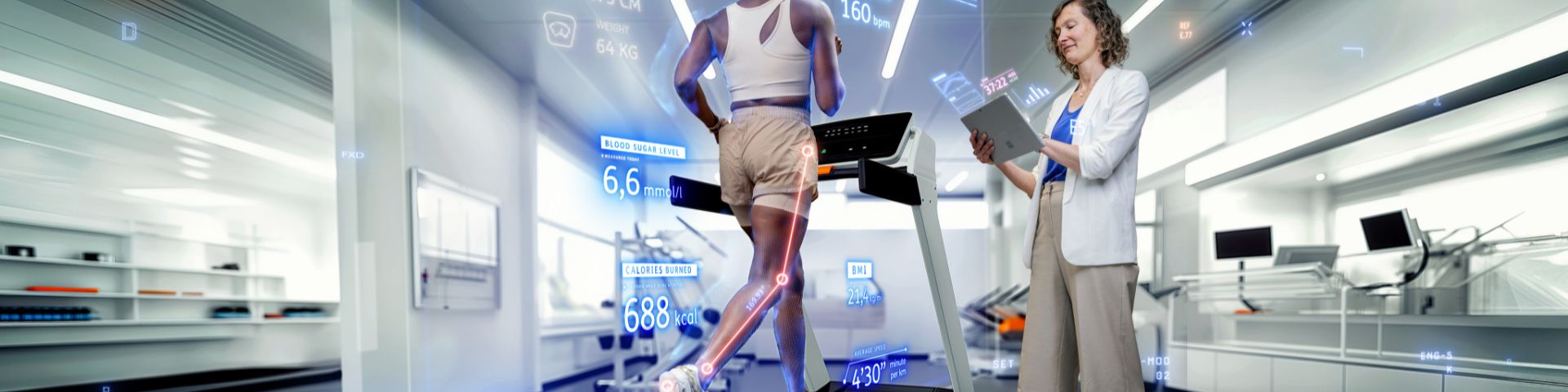
Central to future healthcare are biomarkers: objective measurements in the body that provide information about current or future health status. 'With robust biomarkers, you can predict early on whether someone is at risk of developing a particular condition,' explains Wopereis. 'That creates the opportunity for preventive intervention.' Furthermore, biomarkers can support people in monitoring and improving their own health in a way that suits their individual circumstances.
Earlier detection, earlier intervention
In general, people only visit their GP when symptoms appear, after which a diagnosis may or may not follow. That is usually too late, according to Senior Scientist Applied Systems Biology Lars Verschuren.
By that point, the clinical manifestation of disease is already present. 'We try to map the disease mechanism, aiming to detect the earliest onset of disease using biomarkers, what we call functional biomarkers. These are capable of detecting the beginnings of disease before symptoms are present,' says Verschuren.
At TNO, scientists work across the various stages of biomarker development from identifying novel biomarkers to validating and actually predicting health outcomes. In collaboration with several university medical centres, a model for liver fibrosis was developed, from which a panel of three biomarkers emerged.
Verschuren: 'These proteins, measured in the blood, predict the progression of liver fibrosis. As a result, patients no longer need to undergo an invasive liver biopsy.' This approach is not limited to liver fibrosis but can be applied to multiple chronic conditions. TNO is therefore extending this innovative methodology to other disease areas, including pulmonary fibrosis, a progressive form of lung damage, and endometriosis, a condition that is frequently underdiagnosed and often identified only at a late stage.
TNO recently entered into a strategic partnership through a technology participation with Aiosyn: a start-up focused on AI-driven precision pathology that accelerates and improves cancer diagnostics. Aiosyn uses precision pathology to visualise the cellular components of disease processes, while TNO develops the corresponding blood-based molecular biomarkers. Drawing on this combined expertise, TNO is developing a practical, deployable solution that makes diagnostic information available earlier and more rapidly in the clinical setting.
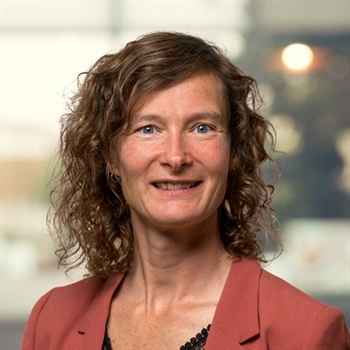
‘The healthcare of the future must land today. Not yet another pilot, but proven solutions that fit within the care pathway.’
Digital biomarkers
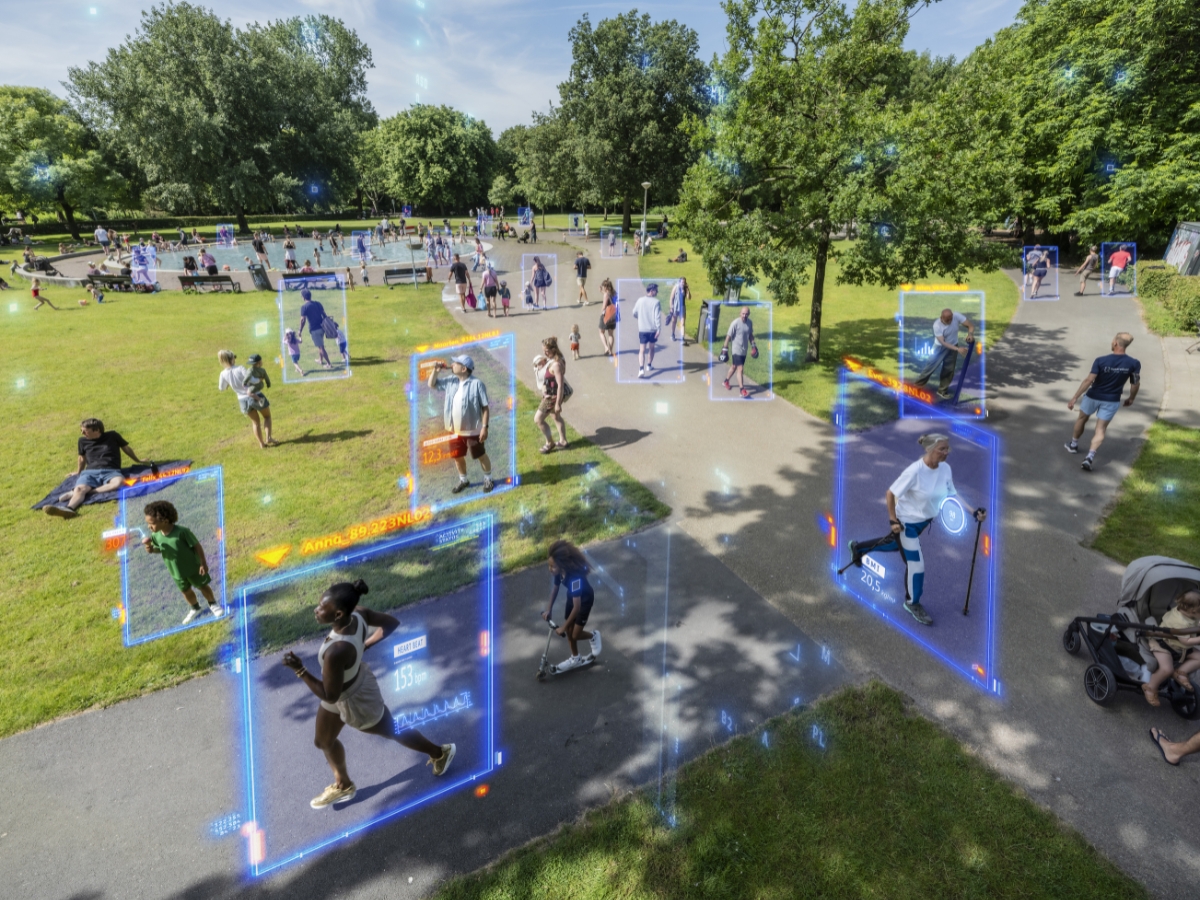
Digital biomarkers are objective, measurable health indicators derived from data generated by wearables, sensors, and smartphones. Where properly validated and clinically interpretable, this type of biomarker can also be deployed for early disease detection and for monitoring people's health status.
'What is particularly interesting about digital biomarkers is that, unlike functional biomarkers, they provide continuous information about health,' says Scientific Lead of the Digital Biomarker Lab Willem van den Brink. 'In many cases, a data point is collected at least every few minutes.'
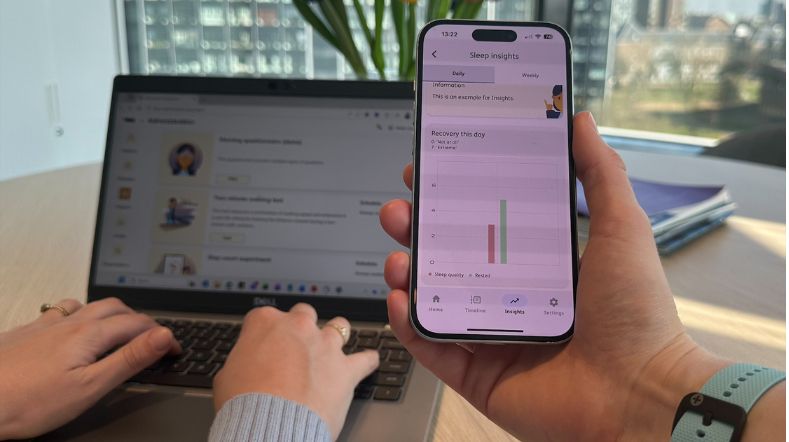
Monitoring via digital biomarkers is not new. The real challenge lies in translating these data into better care. More than five billion people worldwide own a smartphone, and over 500 million people a smartwatch. 'With a smartwatch, you can continuously monitor heart rate, sleep, and physical activity,' says Van den Brink. 'But how do we ensure that sleep data, for example, is actually put to work in the interest of someone's health?'
AI-driven analysis can translate these data into meaningful insights, enabling more personalised treatment, better monitoring in the home environment, and earlier clinical intervention. Van den Brink: 'The question is therefore not whether we can measure, but how we turn measurements into reliable, validated signals that genuinely improve care. That is precisely what TNO enables through the TNO Digital Biomarker Lab.'
TNO spin-off AIKON Health, for example, has developed a smart patch that continuously monitors cardiac function. Van den Brink: 'In our lab, we have developed algorithms that interpret the data collected. Think of a digital biomarker for monitoring heart failure, based on the wearable data from this patch.'
Patterns such as declining daily activity, rising resting heart rate, reduced heart rate variability, and altered breathing patterns are early indicators of deterioration. Currently, this deterioration is measured through self-reporting or periodic clinical review. Digital biomarkers based on these patterns enable continuous monitoring, making it possible to detect deterioration earlier and to better track the effect of medication in everyday life.
Insight on two fronts
Functional and digital biomarkers complement each other well within future-proof healthcare. 'They are complementary,' says Van den Brink. 'Ultimately, functional and digital biomarkers each have their own characteristics, but the goal of both is the same: to predict changes in disease processes or response to therapy. Digital biomarkers have the key advantage of providing continuous insight but often offer less information about underlying mechanisms. That is precisely where functional biomarkers fill the gap.'
Van den Brink expects the two types of biomarkers to converge increasingly. 'New sensor technology is already making it possible to continuously monitor functional biomarkers such as hormones, immune markers, and cortisol, something that is already happening with continuous glucose monitoring for diabetes.'
Challenges in biomarker deployment
Alongside all these opportunities, significant challenges remain, emphasises Wopereis. 'For healthcare that is shifting towards health promotion and early detection, and that increasingly takes place in people's own environment, we need low-threshold, easy-to-use, and stable biomarkers that function reliably outside the clinical setting.' Developing such biomarkers is complex, in part because they must remain reliable in the context of daily life. Biomarkers used outside hospital settings need to be robust and account for variation in lifestyle, living environment, and behaviour.
'In addition, most existing biomarkers have been developed for specialist settings,' says Wopereis. 'They are often invasive, costly, or too complex for widespread use in primary care or prevention.' TNO plays an important role in accelerating progress: 'We can develop biomarkers, test and validate them independently, and work with academic and clinical partners to assess biomarkers in real-world and home settings. In this way, we are bringing the practical application of innovative biomarkers closer to reality.'
The future is now
As an independent innovation partner in healthcare, TNO contributes to the transformation of care: from fundamental research through to societal impact. Wopereis concludes: 'The healthcare of the future must land today. Not yet another pilot, but proven solutions that fit within the care pathway.'
TNO is accelerating that journey, from research and algorithm development to clinical trials and implementation, in close collaboration with healthcare organisations and technology partners. For developers, the message is clear: don't just build something that measures. Build something that is clinically sound, explainable, and scalable in practice.
Contact us
-

Suzan Wopereis
Functie:Principal ScientistMy main research focus is studying on the understanding of what biological mechanisms drive health, how you can measure health and deviations from health and importantly on how to intervene on an individual level with lifestyle on health (personalised health).
-
Standplaats:Leiden - Sylviusweg
-
Email:Email Suzan
-
-

Lars Verschuren
Functie:Senior Scientist Applied Systems BiologyMy work focuses on the development of mechanism‑driven biomarkers for early disease detection and clinical decision‑making. I primarily focus on fibrotic and metabolic diseases, where I integrate multi‑omics, systems biology, and clinical data to develop biomarkers that are directly applicable in research and healthcare.
-
Standplaats:Leiden - Sylviusweg
-
Email:Email Lars
-
-

Willem van den Brink
Functie:Scientific lead Digital Biomarker LabContact me for collaborations in digital biomarkers, wearable health technology, and data-driven prevention. My team focuses on developing reliable and meaningful digital biomarkers that support the transformation toward preventive and personalized healthcare.
-
Standplaats:Leiden - Sylviusweg
-
Email:Email Willem
-
Get inspired
Can your own smartwatch predict an IBD flare? A bring-your-own-device study from IBDigital
TNO as an orchestrator of lifestyle in healthcare
TNO launches VIMtima: a new Organ‑on‑Chip model to improve vaginal health research

Fully digital personalised nutritional advice delivers measurable health benefits

From innovation to clinical impact: TNO and Orikami accelerate the path from digital biomarker development to healthcare implementation