
Reframing Africa: huge opportunity for business, innovation and impact for Europe-Africa collaboration
Africa is often discussed through a narrow lens: crises, constraints, or charity. That lens is outdated. Africa is a continent of 54 countries, diverse political and economic contexts, and an extraordinary demographic and entrepreneurial momentum. It is also a continent whose choices and capabilities will shape global markets, climate resilience, supply chains, health security, and digital futures. For Europe and the Netherlands, the question is no longer whether Africa matters, but how we engage, strategically, respectfully, and to mutual benefit.
For TNO, this reality fundamentally shapes how we work in and with Africa. We argue for a move from donor–recipient thinking toward reciprocal collaboration grounded in shared interests, co-creation, and long-term investment in ecosystems. The purpose is practical: to unlock business opportunities, strengthen Europe’s competitiveness and strategic autonomy, and accelerate societal impact in both Africa and Europe. When collaboration is built on reciprocity, the collaboration is more sustainable.
Read more
This Insight builds on the analysis and experience captured in the whitepaper Reframing Africa: a new paradigm for business, innovation and impact in Europe-Africa collaboration, which explores Africa’s potential, persistent misconceptions and concrete pathways for future collaboration.
Why Africa needs to be reframed
The way Africa is framed still heavily influences how collaboration takes shape. Persistent narratives focusing on scarcity, risk and dependency tend to lead to short‑term projects, externally defined agendas and unequal partnerships. While these approaches may address immediate needs, they rarely lead to sustainable innovation or long‑term impact.
- First, the global population will grow from around 8 billion today to an estimated 9.7 billion by 2050, and Africa will account for roughly 2 billion people—over one-fifth of humanity. The continent already has the world’s youngest population, with a rapidly expanding workforce and millions of young people entering labour markets every year.
- Second, Africa holds approximately 30% of global mineral reserves, including resources that are essential for the green and digital transitions.
- Third, Africa’s economic growth is projected to accelerate in the coming years, driven by recovery in larger economies and by growth sectors such as agriculture, technology, and services.
These trends are not abstract. They translate into concrete opportunities: new consumer markets, regional industrialisation, energy and digital infrastructure build-out, climate adaptation services, and resilient supply chains. At the same time, they highlight shared challenges: jobs, productivity, food security, health systems, climate resilience, and governance capacities. None of these challenges can be addressed by one side alone. Europe’s labor shortages, supply chain dependencies, and climate and health risks intersect directly with Africa’s development pathways.
Collaboration must be built on a shared value : Europe and Africa can jointly develop solutions that are commercially viable and socially beneficial, while strengthening capabilities and resilience on both continents. This requires a reframing of the way we collaborate. It means starting from local priorities, investing in capabilities, sharing risk and reward, and recognizing that innovation travels in multiple directions.
TNO in Africa: innovating in context
TNO has been active in Africa since 2007 and we developed a portfolio of long‑term collaborations across multiple countries and sectors. What distinguishes this work is its strong similarity to how TNO operates in the Netherlands: as an applied research organisation working at the intersection of knowledge, policy, business and society.
Innovation is always developed in context. Technologies, business models and governance structures are co‑created with local partners, building on existing ecosystems rather than replacing them. Equal attention is given to technical feasibility, economic viability, institutional embedding and local ownership.
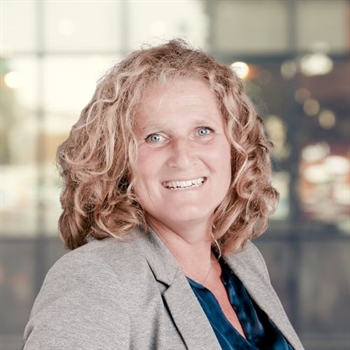
‘We innovate in Africa in the same way we do at home: by combining new technologies, social innovation and new business models, and by working with partners who ultimately take ownership themselves.’
From pilots to ecosystems
Across Africa, TNO focuses on a limited number of mission‑driven innovation trajectories designed to grow from individual projects into self‑sustaining ecosystems. One example is Flying Food, a program aimed at accelerating the protein transition through the production of crickets for human consumption. In countries such as Kenya, Uganda and Nigeria, TNO works with farmers, entrepreneurs and regulators to develop an entire value chain, from production and processing to certification and market uptake.
This work is relevant far beyond food security alone. Protein transitions are taking place worldwide, and the pressures faced in many African regions—such as water scarcity, land constraints and climate impacts, make efficient, low‑impact food systems particularly urgent. By developing solutions locally, innovation remains affordable, resilient and economically meaningful for those involved, while also generating knowledge that is relevant internationally.
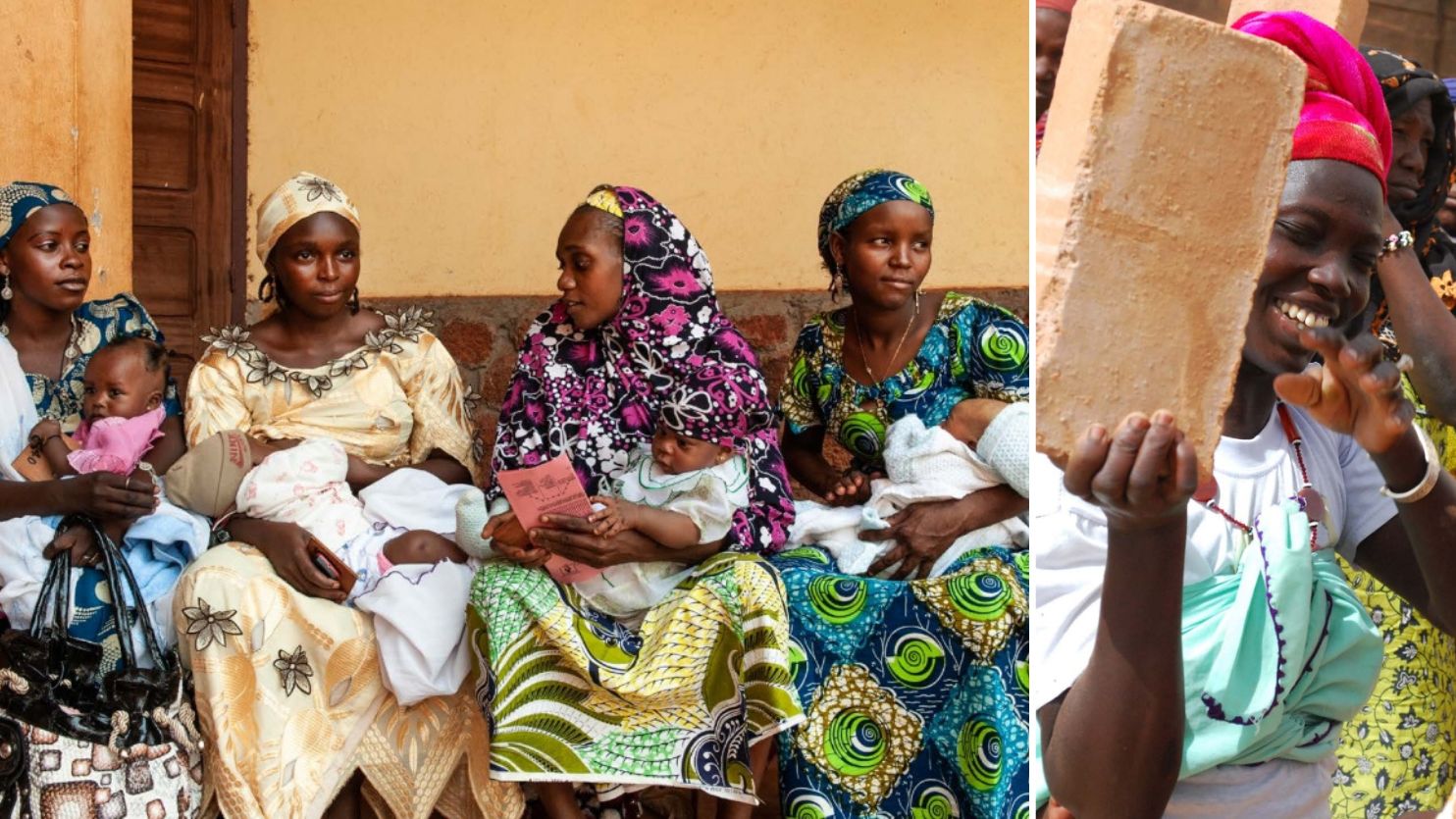
A similar ecosystem‑oriented approach guides TNO’s work in the health domain. In collaboration with ministries of health, research and technology organizations, universities and international organizations, we co-create and contextualize innovations developed in the Netherlands, such as methods for monitoring early childhood development, are adapted and embedded within African healthcare systems. These solutions are increasingly recognised at international level and are becoming part of global standards, illustrating how innovation flows in multiple directions.
In the built environment, TNO supports the development of low‑cost, low‑carbon housing using locally available materials and construction methods. By validating technologies and designing scaling strategies together with local actors, the focus extends beyond individual buildings to strengthening local construction sectors and knowledge capacity.
Climate and health: using data to build resilience
Another example of how TNO collaborates with African partners on long‑term innovation can be found in its work at the intersection of climate and health in Kenya. Climate change is already having a disproportionate impact across the continent, through rising temperatures, changing rainfall patterns, and increasing air pollution. At the same time, many countries still lack the integrated data and analytical capacity needed to translate these developments into timely health interventions and informed policy decisions.
In Kenya, TNO works with national and local governments, knowledge institutes and societal partners to connect meteorological data, air‑quality measurements and health information. By combining existing datasets with TNO’s modelling expertise, concrete risks become visible, such as heat stress for outdoor workers or the public‑health effects of deteriorating air quality. These insights are translated into practical guidance, including early warning systems, public health advice and input for policy decisions related to working conditions, urban planning and climate adaptation.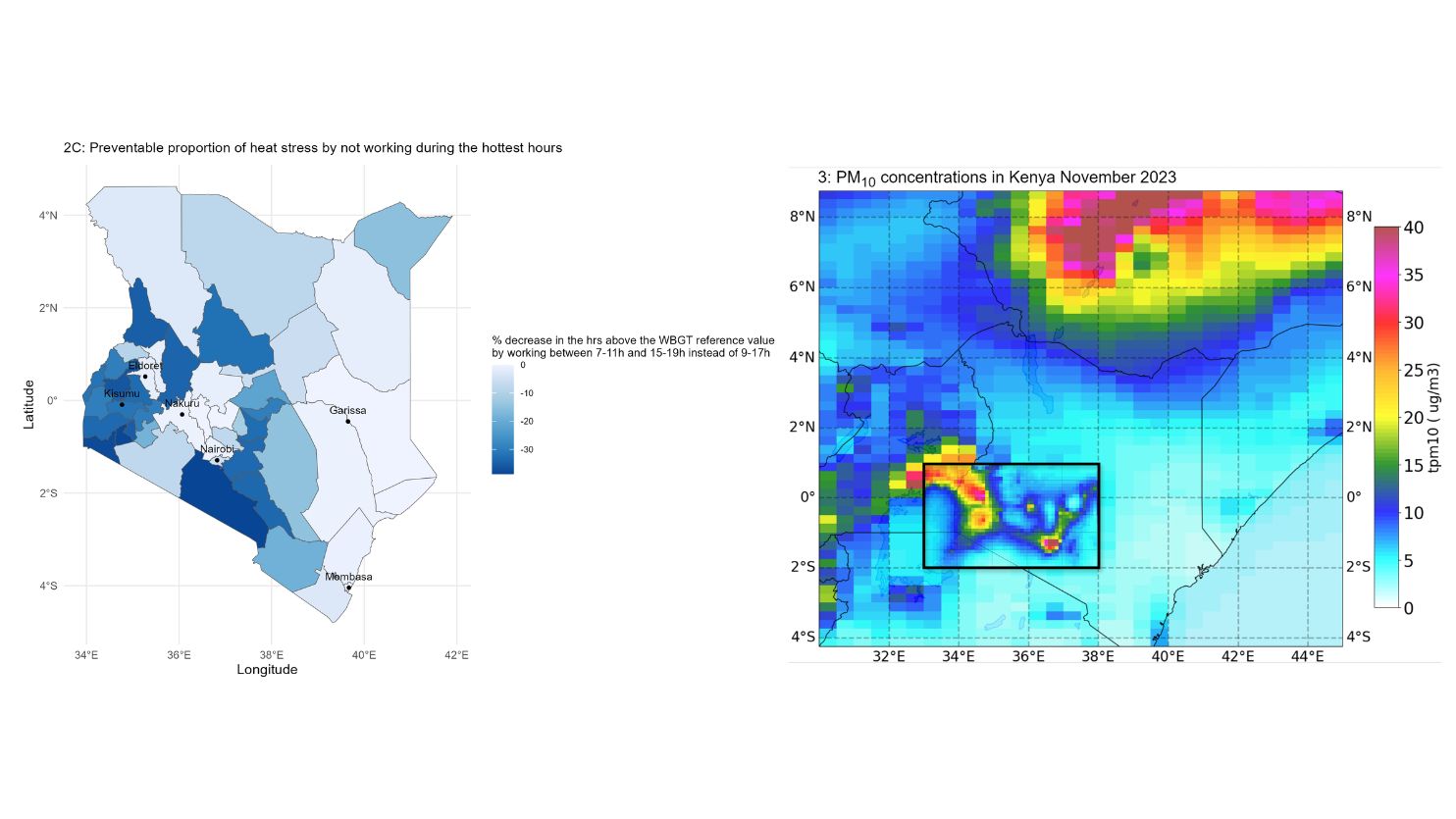 A defining characteristic of this collaboration is its emphasis on local ownership and capacity building. Rather than introducing an external system, the project strengthens existing data infrastructures and supports local professionals in using and maintaining the models themselves. Data governance remains local, methodologies are jointly validated, and responsibility for long‑term operation is embedded within the Kenyan ecosystem.
At the same time, the learning is reciprocal. The challenges addressed in Kenya—heat stress, air pollution and climate‑related health risks—are becoming increasingly relevant in Europe as well. Insights gained in low‑resource, rapidly changing contexts therefore also inform European approaches to climate adaptation and public health.
Value for all
What connects all these initiatives is a shared view on partnership. For TNO, working in Africa is neither about transferring ready‑made solutions nor about delivering short‑term results. It is about co‑creation, recognizing that innovation is context‑dependent and that knowledge exists on all sides of the partnership. And valorizing knowledge on both continents, Africa and Europe.
Reciprocity plays a central role. Collaboration requires asking what each partner brings to the table, what each partner gains, and how ownership is shared. This also challenges European organisations to critically reflect on their own ways of working. African innovation ecosystems often operate with fewer resources but show high levels of agility, strong links to end‑users and a relationship‑driven approach. These are lessons that extend well beyond Africa and influence how TNO itself continues to develop as an innovation organisation.
Listen to the podcast
‘Innovation does not stop at borders, and solutions do not originate in one place only. Africa has at least as much to teach us as we have to offer.’ - Mathilde Miedema - Africast podcast
For businesses, the opportunity is to engage in fast-growing markets while building future-proof supply chains and developing products and services that respond to global needs. African markets increasingly reward solutions that are affordable, resilient, resource-efficient, and designed for scale, qualities that are becoming equally essential in Europe.
For governments, the opportunity is to align foreign policy, trade, and innovation strategies with a long-term vision for shared prosperity and global stability. For innovation institutes and universities, the opportunity is to develop joint research agendas, strengthen applied research capacity, and accelerate the translation of knowledge into real-world impact.
Across all actors, three enabling commitments matter:
- Invest in intercultural competence and relationship-building; trust is infrastructure;
- Adopt governance models that embed equality and reciprocity in decision-making and accountability;
- Measure success through shared outcomes that reflect both economic opportunity and societal impact.
Why this matters for Europe and the Netherlands
Africa’s changing role in the world is not a distant development. Europe’s future is increasingly intertwined with African innovation capacity, markets and ecosystems. Strategic autonomy, economic resilience, sustainable growth and system‑level transitions all depend on effective international collaboration.
By working with African partners as equals, TNO contributes to solutions that create impact across borders. These collaborations strengthen innovation systems, support inclusive economic development and open up new perspectives for addressing complex global challenges. Reframing Africa, in this sense, is not merely about perception, but about enabling the partnerships needed for a shared future.
Contact us
-
Mathilde Miedema
Functie:Programme DirectorWith TNO Innovation for Development (I4D), Mathilde Miedema launches innovative solutions for societal problems in low and middle-income countries. In this way, TNO helps to create greater equality in the world.
-
Standplaats:Leiden - Sylviusweg
-
Email:Email Mathilde
-
Get inspired
Sarcopenia and frailty

RNA editing makes a protective gene variant available to patients who lack it naturally

The Netherlands is falling behind on R&D, and in ten years we will pay the price
How TNO creates openness around mental health

Can your own smartwatch predict an IBD flare? A bring-your-own-device study from IBDigital