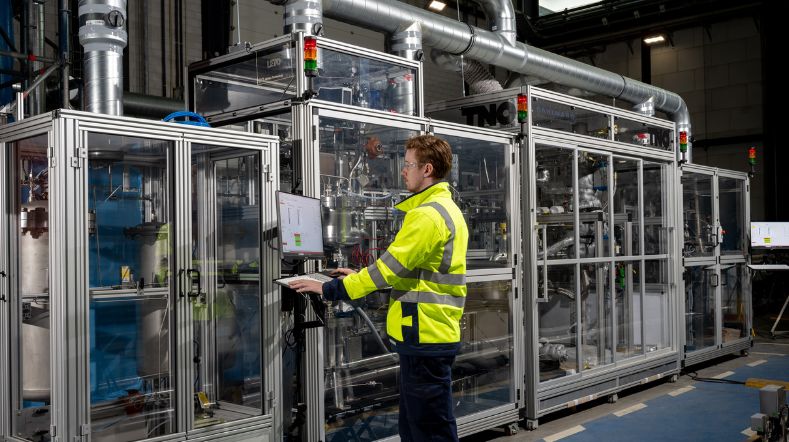
CircuFilm: From old plastic back to supermarket ready food packaging
Status
Finished
Resultaten
Household film back into food packaging – Dissolution delivers 0% contamination
At present, film from household plastic waste, such as soup pouches and meat packaging, mostly ends up in incineration or is downcycled. Using dissolution, a physical recycling technology, TNO demonstrates that this complex waste stream can be converted into pure polyethylene and polypropylene. This opens up a completely new route, from old film waste to new food packaging.
A mixed stream no one knows what to do with
From 2030, the European Packaging and Packaging Waste Regulation (PPWR) will require plastic packaging to contain a minimum share of recycled content. This is around 10% for contact‑sensitive applications and up to 35% for non‑contact‑sensitive ones. For food packaging, this is a major challenge, as material purity requirements are extremely strict. At the same time, the stream with the largest volume, flexible films from household waste, is currently hardly recyclable into high‑quality material.
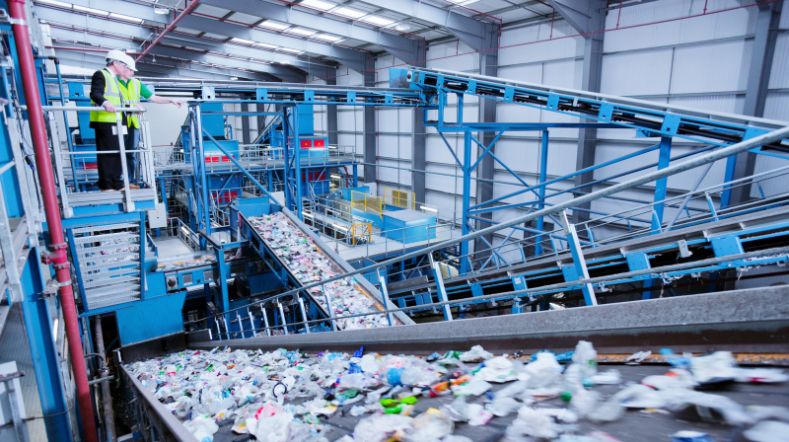
Soup pouches, meat packaging, sandwich bags and shrink wrap around a cucumber are all flexible multilayer films that, after use, end up in residual waste or the plastic collection bag. Sorting facilities group them into a waste stream known in the recycling world as DKR‑310. It is a mix of polyethylene, polypropylene and other plastics such as PET and polyamide. It is also contaminated with food residues, paper labels, inks and adhesive layers.
‘With other waste streams, such as rigid plastics, you can sort out polypropylene and reuse it as a new raw material,’ says Niek Knoben, Researcher Circular Packaging at TNO. ‘But with films, that’s not possible. The different plastics are glued together in thin layers, with adhesives and barrier materials in between. You can’t easily separate those.’
The only commonly used processing route is melting. However, everything melts together. ‘You end up with a mixture of polymers that don’t combine well,’ says Niek. ‘You can’t make a high‑quality product from that.’
As a result, the vast majority of this stream is downcycled or incinerated. That is a waste, because the raw material is there. The question is how to extract it.
Four technologies, the same input
In its search for ways to do more with the DKR‑310 waste stream, TNO tested four cleaning technologies in the CircuFilm project. As an independent knowledge partner, TNO compared these technologies objectively. Each technology was applied to exactly the same waste stream and assessed using the same analytical methods.
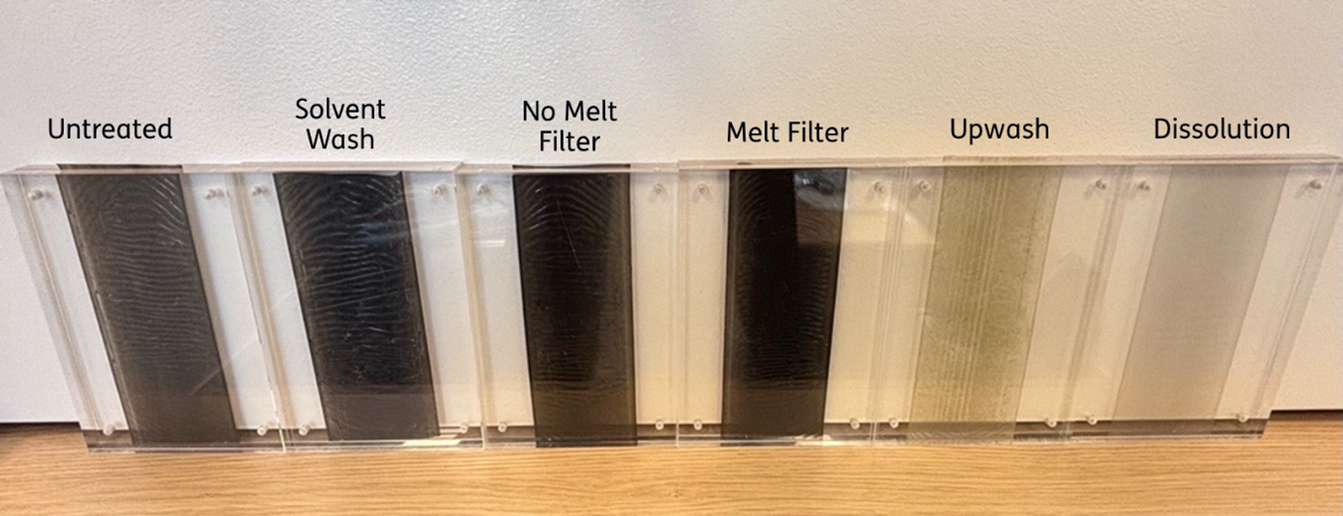
The technologies were solvent washing, melt filtration, hydrothermal upwash and dissolution. For dissolution, this was a first. The technology had never before been applied to such a complex, mixed household waste stream.
Technologies such as solvent washing and melt filtration improve the material, but they cannot remove contamination sufficiently. They remove surface contamination or larger particles, but the composition of the plastic itself does not change. What goes in largely comes back out.
‘These techniques are not bad in themselves,’ says Lucie Prins, Senior Scientist Circular Plastics at TNO. ‘But they are better suited to clean waste streams. For this complex mix, they simply don’t work well enough, because they produce a material that can only be used in a very limited way.’
Dissolving instead of melting
Dissolution works in a fundamentally different way. It is not a form of mechanical recycling, nor a chemical route in which polymers are broken down. It is physical recycling. The polymer remains intact, but is purified to a high degree.
Where conventional recycling melts plastic at around 200 degrees Celsius, causing most polymers to become liquid together, dissolution selectively dissolves a specific polymer at a much lower temperature, around 100 degrees Celsius.
‘When you remelt plastic, everything that can melt at that temperature becomes soft. That’s not selective,’ Lucie explains. ‘With dissolution, you choose a solvent that dissolves only your target polymer. Everything else remains behind. This includes other plastics, metal particles and pigments, which can then be filtered out.’
Pure white powder as the result
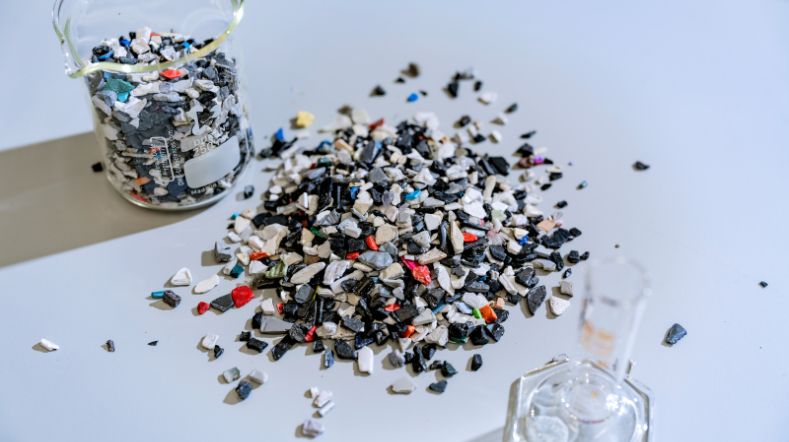
What remains is a pure polymer solution. This then goes through additional separation steps, such as sorption, to remove dissolved colourants as well. The polymer is subsequently recovered as a powder. The result in the CircuFilm project was pure white material with zero per cent contamination. By comparison, all other techniques left between 1.7 and 3.1 per cent residual contamination.
‘If you have a green piece of plastic, the colourant is really embedded in the material,’ says Niek. ‘You can’t remove it by melting. With dissolution, you can, because the colourant can be taken out of the solution.’
A pathway to food packaging
The fact that dissolution produces a highly pure recyclate is not new. TNO has been working on the TNO Möbius dissolution technology for about seven years. What is new is that this is the first time dissolution has been applied to a realistic mixed household waste stream. Other parties working on similar technologies usually opt for cleaner, pre‑sorted streams.
‘Often, this is also about money,’ says Lucie. ‘The more difficult the waste stream, the more expensive it is to process. We deliberately chose this difficult stream, because that’s where the greatest societal gain lies.’
That gain goes beyond cleaner recyclate. In additional research, TNO showed that the dissolution process meets the challenge tests used for European certification by EFSA for food packaging. This opens up a route from old film waste to new food packaging. It is a circular step that is not achievable with existing recycling technologies.
Testing at larger scale
Does this result mean that we can now reuse plastic film on a large scale? Not yet. The technology has been proven at laboratory scale, specifically with 100 grams within CircuFilm. TNO can work at kilogram scale, but further upscaling requires a demonstration plant.
‘To really show what the technology can do, we need to scale up to a demo installation of around 100 kilograms per day,’ says Lucie. ‘That allows you to produce enough material to make films and to properly document the quality.’
For food‑grade applications, there is an additional step. European certification via EFSA requires production at that scale for two years, demonstrating that the material meets all requirements. ‘But that step starts with upscaling,’ says Lucie. ‘And for that, we need a partner willing to invest. First, we need tests with larger volumes to show other parties that this is a realistic route.’
Who will take up the challenge?
TNO is looking for a partner. This could be a compounder, a technology investor or a party from the packaging value chain who is willing to finance the next step. The demonstration plant could be operational within two to three years. ‘If someone takes this on now,’ says Lucie, ‘there is a real chance that by the end of that trajectory we will have food‑grade packaging made from recycled film waste.’
Are you facing an investment decision in recycling technology, or do you want to use recyclate in films or packaging? Contact us.
Contact us
-
Wojtek Kwos
Functie:Business Developer Circular PlasticsReach out to me with any questions related to circular plastics, particularly in the areas of modelling, pre-treatment, and advanced recycling methods.
-
Standplaats:Rijswijk - Kesslerpark
-
Email:Email Wojtek
-
LinkedIn:Wojtek on LinkedIn
-
-

Marieke Havermans
Functie:Senior Business Developer, Circular Plastic PackagingMarieke is a packaging technologist with a passion for sustainability. With 20 years' experience in the industry, she understands the impact and associated challenges of the Packaging & Packaging Waste Directive (PPWD) for the industry. Her believe is that a successful transition is only possible through collaboration across the value chain.
-
Standplaats:Geleen - Brightlands Materials Center
-
Email:Email Marieke
-
LinkedIn:Marieke on LinkedIn
-
Get inspired
Turning textile waste into new chemical building blocks
An objective standard to assess recycled plastic quality
Fewer microplastics and higher yields in plastic recycling
New routes for sorting and composite separation
From lab to market: TNO steps up sustainable plastic recycling with dissolution