An objective standard to assess recycled plastic quality
The transition towards a circular plastics economy faces a fundamental challenge: a lack of objective quality standards for recycled materials. To address this gap, TNO and the University of Maastricht have developed the RecyQMeter, a pioneering tool to transparently compare recycled plastic streams and to support better decisions for both polymer recyclers and users.
From subjective statements to a reliable benchmark
Determining the quality of recycled plastic and matching it to suitable applications has always been difficult. Quality statements are subjective and a recyclate that is high-quality for an application in automotive, may have poor quality in packaging.
RecyQMeter is a tool designed to solve this problem. It offers a reliable, standardised way to assess the quality of recycled plastics objectively and transparently and link them to suitable applications.
What the RecyQMeter does
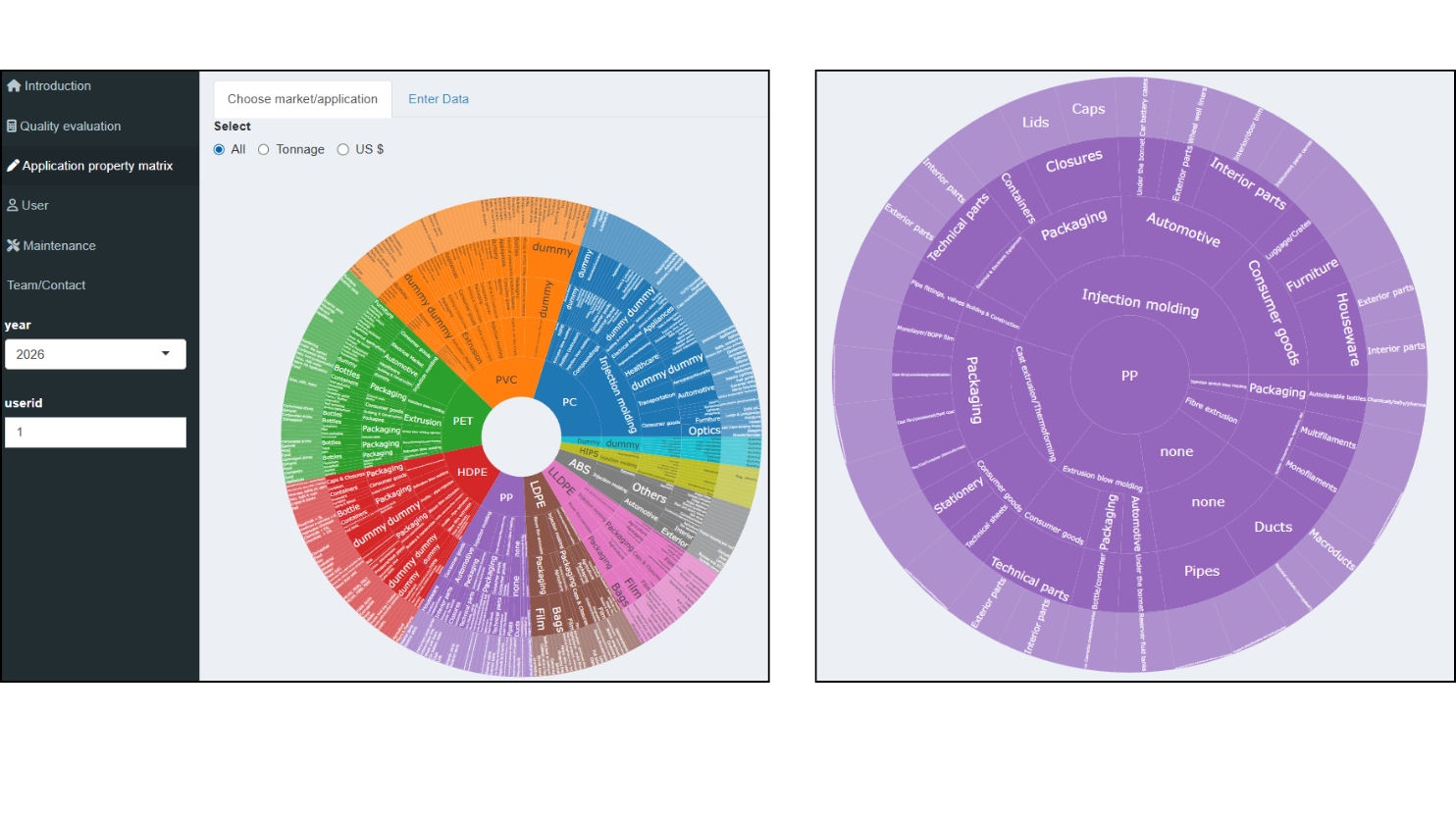
The tool translates complex quality metrics - such as mechanical or optical properties - into a single, actionable indicator. Recyclers input the properties they have measured in the lab. The tool then compares these properties against a database of requirements for over 200 different applications, ranging from car battery cases to caps (figure 1). Based on this comparison, the tool generates a quality score between 0 and 1. A score closer to 1 indicates a higher quality, relative to the virgin material required for that particular application.
A marketplace for recyclates
Milad Golkaram, TNO’s leading scientist on this project, describes the tool as a transparent marketplace for recyclates. 'Recyclers share what kind of material they have, and end users put in the requirements they need. In this way, the tool helps recyclers find the right application for their recyclates. Furthermore, it allows them to fine-tune their material based on the requirements of the end-users.'
Benefits across the value chain
The RecyQMeter delivers measurable benefits throughout the plastics value chain:
- Better market positioning of recyclates
The RecyQMeter assists recyclers in refining their materials and identifying markets where their recyclates offer genuine value and competitive advantage. - LCA integration
The tool calculates a 'substitution ratio', which indicates how much virgin material can be replaced based on the quality of the recyclate. LCA practitioners can use this single number directly in their environmental impact models. - Accelerated circularity
The tool increases market efficiency and enables material optimisation. It also supports faster and more reliable business decisions, which inherently accelerates the acceptance and use of recycled plastics.
Collaborative innovation
The RecyQMeter is built upon a successful partnership between TNO and the University of Maastricht. The tool’s underlying mathematics merge two complementary models. TNO’s QMRP-model (Quantifying plastic quality for a circular economy) includes elaborate aspects of quality.
The RQ-model (Recyclate quality model) developed by the University of Maastricht is highly accurate for mechanical properties. This partnership ensures the tool captures nuanced quality dimensions while maintaining predictive precision. The collaboration continues as we refine capabilities to serve evolving industry needs.
Precision compounding with RecyQMeter 2.0
The future RecyQMeter 2.0 aims to use machine learning to predict quality based on material composition, reducing the need for constant lab measurements. The predictive model enables compounders and converters to fine-tune additives and feedstock formulations with exactitude, ensuring materials meet precise specifications. This eliminates waste from over-specification or quality shortfalls, optimising both performance and economics.
Spotlight innovations
The RecyQMeter is already applied across complex supply chains.
Optimising ABS plastic recycling for high-performance applications with industry leaders including Lego, Volvo, and Bic. The initiative has already yielded three peer-reviewed publications and approaches completion in its final year.
Leveraging RecyQMeter's predictive capabilities in collaboration with Maastricht University via Chemistry NL to enhance recycled plastic sorting accuracy and efficiency.
By developing a shared language for recycled materials, Reïnkarneer helps turn recyclates into a trusted and scalable alternative to virgin resources.
Need for industry participation
The RecyQMeter's potential is substantial, but Milad realises it depends on industry participation. The central challenge lies in encouraging both recyclers and end-users to contribute data and share quality challenges. This is essential to refine the tool's accuracy and expand its versatility. Milad and his team have an ambitious goal: 'When the entire industry uses the RecyQMeter, ‘everybody speaks the same language’ for assessing recycled plastic quality.'
Join in to set the standard
We invite recyclers, compounders, converters and OEMs to partner with TNO in refining and standardising the RecyQMeter. Together, we can establish objective quality requirements for a circular plastics economy.
Contact us to learn more and to get access to the tool.
Scientific paper
Read the scientific paper 'RecyQMeter: Application-specific quality of recycled plastics' for more information.
Contact us
-
Peter Versloot
Functie:Senior Business Developer Circulaire PlasticsPeter Versloot brings technology and markets together to create sustainable solutions. As a Business Developer at TNO, he focuses on the plastics sector, with expertise in Microplastics and Circular Plastics Modelling.
-
Standplaats:Eindhoven - High Tech Campus 25
-
Email:Email Peter
-
LinkedIn:Peter on LinkedIn
-
-

Milad Golkaram
Functie:Scientist Circular Economy‘I work as an assistant professor at Maastricht University one day a week. I’d love for the young generation to follow their passion and, if they don’t have one, to try to find one. You can achieve a great deal if you keep doing what you really love.’
-
Standplaats:Utrecht - Princetonlaan
-
Email:Email Milad
-
Get inspired
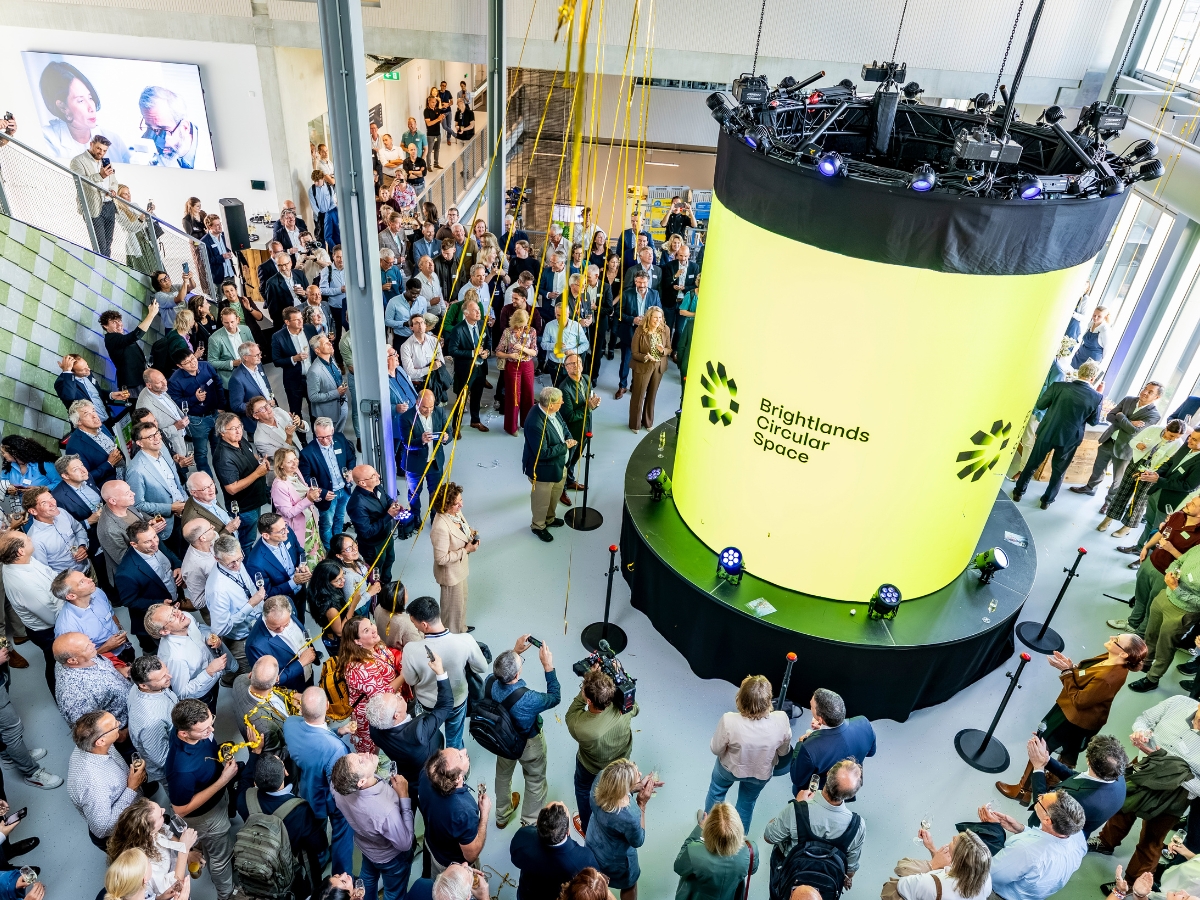
Brightlands Circular Space opens: TNO helps companies scale up plastic innovations faster
Product group analysis

SkiesFifty and TNO collaborate to strengthen independent insight in Sustainable Aviation Fuel investments
Turning textile waste into new chemical building blocks
Fewer microplastics and higher yields in plastic recycling