
AirCAT: Realising high-speed, secure air-to-space communication links
Partners
Airbus DS NL, Celestia-STS, FSO, LioniX, NLR, VTEC Lasers & Sensors
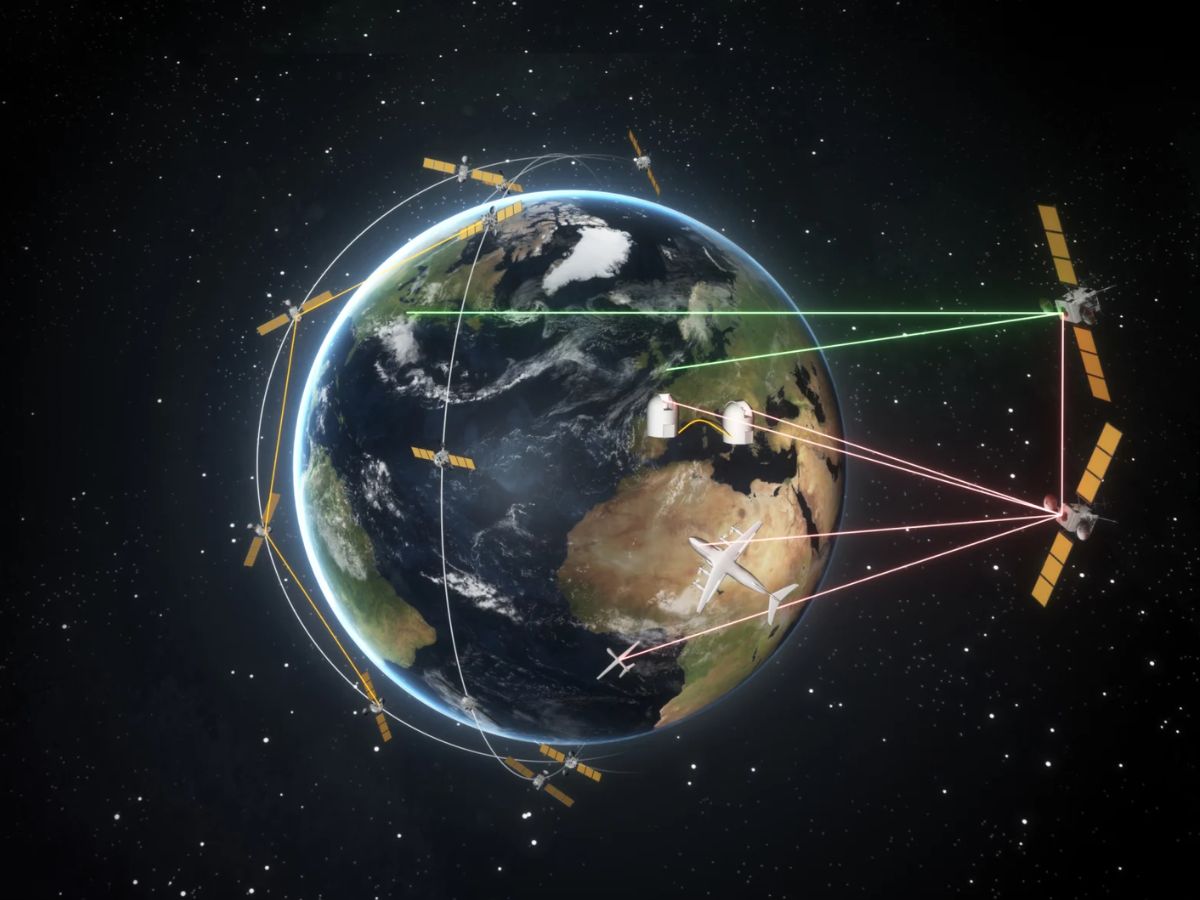
In the UltraAIR project, TNO and Airbus demonstrated a successful optical data link between an aircraft and a geostationary satellite with a connection rate of 2.6 Gbps. Now, TNO leads a consortium of key partners to bring the technology several steps closer to industrial readiness.

‘Secure, resilient airborne connectivity is becoming a strategic requirement for both civil and defence aviation. With AirCAT, we are strengthening Europe’s ability to deploy optical communication technologies where performance and security truly matter.’
Optimising for impact
The success of UltraAIR proved that aircraft-to-satellite optical data links are technologically feasible. These secure, ultra-high-speed data links are difficult to jam or intercept, and can be used to secure military and drone communication. They can also enable secure, high bandwidth in-flight internet on civilian aircraft. Yet several steps are required to ensure the technology can be effectively implemented in the variety of military and civilian applications that can benefit from it.
Three pillars, one mission
In AirCAT, TNO is leading a consortium of partners dedicated to making significant progress toward scalability and industry application. In three distinct project pillars, the teams will work in parallel to accelerate development. These include:
TNO and partners will develop a demonstrator optimized for size, weight and power consumption, ensure it complies with the latest SDA/ESTOL standards, increase the operational link range and address cost and integration challenges. Most importantly, they will enable links with Low Earth Orbit (LEO) satellite constellations. The ambition is to connect with terminals in ESA’s HydRON network.
At the same time, consortium partners will collect and organise the key use cases and requirements from military and civilian users. This will provide relevant specifications to accelerate the development of future end-product aircraft-to-satellite optical terminals.
The project team will develop the technologies needed to build the future terminals, de-risking key building blocks, and providing a technological head start on the airborne networks of the future.
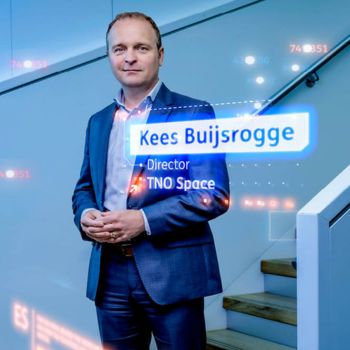
‘AirCAT demonstrates how TNO brings together the right partners to address critical industry challenges and enable companies to successfully bring breakthrough technologies to market.’
Industry first
AirCAT is intended to de-risk the technological development of these critical air-to-space optical data links. It is a key example of how TNO works as a bridge between what is technologically feasible, and what is effectively applicable in the industry. By taking this step, AirCAT will be the first project to bring this remarkable technology within reach for the military and civilian developers who can most benefit from it.
Instead of optimising the system to its technological limits, the consortium will focus on actual user needs, platform integration, affordability and other key industrial challenges. This will ensure that the development of future optical data networks for specific applications can be more streamlined, more robust, and more rapid. As many of the technologies needed will be developed during AirCAT, industry players will have a head start on development.
Funding for growth
The AirCAT consortium is being supported by the National Growth Fund NXTGEN Hightech and the European Space Agency (ESA) ScyLight programme (activity code: 6C.085).
TNO will manage and coordinate the AirCAT project. We will also be responsible for the terminal’s system engineering, control design and other aspects of the Flight Demonstration project pillar. Partners in the consortium are:
- Airbus: leading the Product Definition pillar, detailing use cases and defining user requirements.
- Celestia STS: designing an SDA/ESTOL-compliant modem specifically for airborne application and preparing their modem platform for higher data rates.
- FSO Instruments: responsible for developing the optical head for Flight Demonstration and supporting Airbus in the Product Definition pillar.
- LioniX: developing inertial navigation system (INS) based on photonic integrated circuits (PICs).
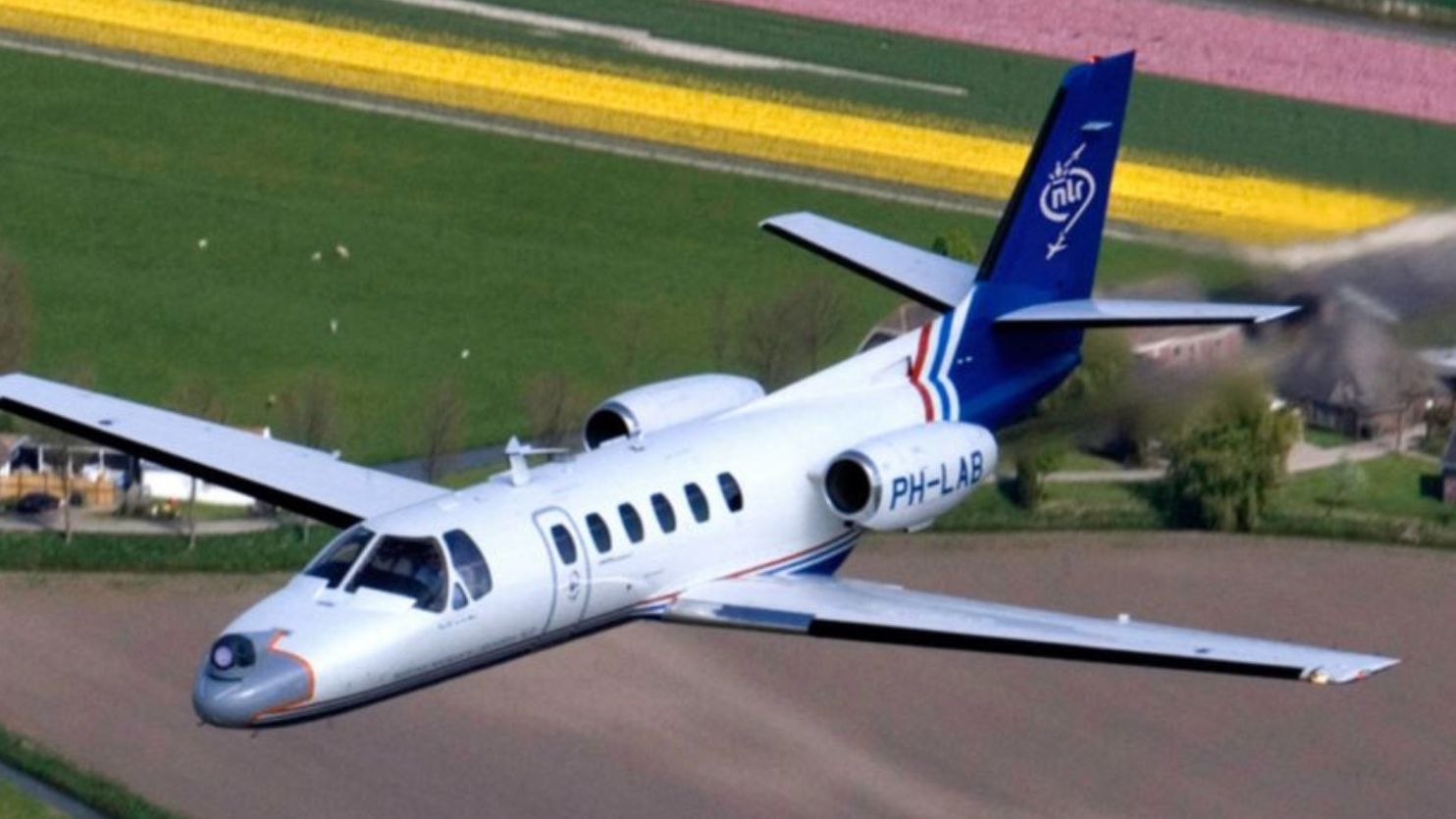
- NLR: providing the demonstration aircraft, coordinating the flight test campaign and supporting the Product Definition and Technology Development pillars with their expertise on aircraft operation and certification.
- VTEC: building a highly efficient, combined tracking and communication receiver.
Learn more
AirCAT is not only developing a demonstrator that will be a technological breakthrough in mobile optical communication. It also has great impact on Europe’s future secure connectivity infrastructure. By enabling reliable, ultra-fast optical links between ground stations, mobile platforms, and end users - even across atmospheric boundaries - the project contributes directly to Europe’s long-term ambition for sovereign, resilient communication networks.
At the same time, AirCAT positions TNO and its European partners at the forefront of innovation in this domain. Successful completion of the project will strengthen Europe’s strategic autonomy, while placing consortium partners in key control points of next-generation communication technologies.
Want to know more about this ultra-fast, highly secure, in-demand technology? Contact TNO today.
Contact us
-

Ewa Lukkezen
Functie:Business Developer, Space & Scientific InstrumentationContact me to partner with TNO and uncover new opportunities in Satellite Communication (SatCom) in the optical and radio frequency (RF) domains. I work with industry partners to develop innovative SatCom solutions and build technologies of tomorrow.
My work focuses on optical SatCom, radar/RF technology for SatCom, deep-space communication, Quantum Key Distribution (QKD) and 5G/6G technology for SatCom.
-
Standplaats:Delft - Stieltjesweg
-
Email:Email Ewa
-
LinkedIn:Ewa on LinkedIn
-
Get inspired
ESA selects TNO to explore laser satellite technology for the Low-LEO layer of Europe’s IRIS² network
Airbus and TNO demonstrate secure laser link between aircraft and satellite

Quantum internet and quantum networks series 1.0

First Dutch hybrid quantum channel for secure communication successfully established

Contributing to Europe’s sovereignty and security