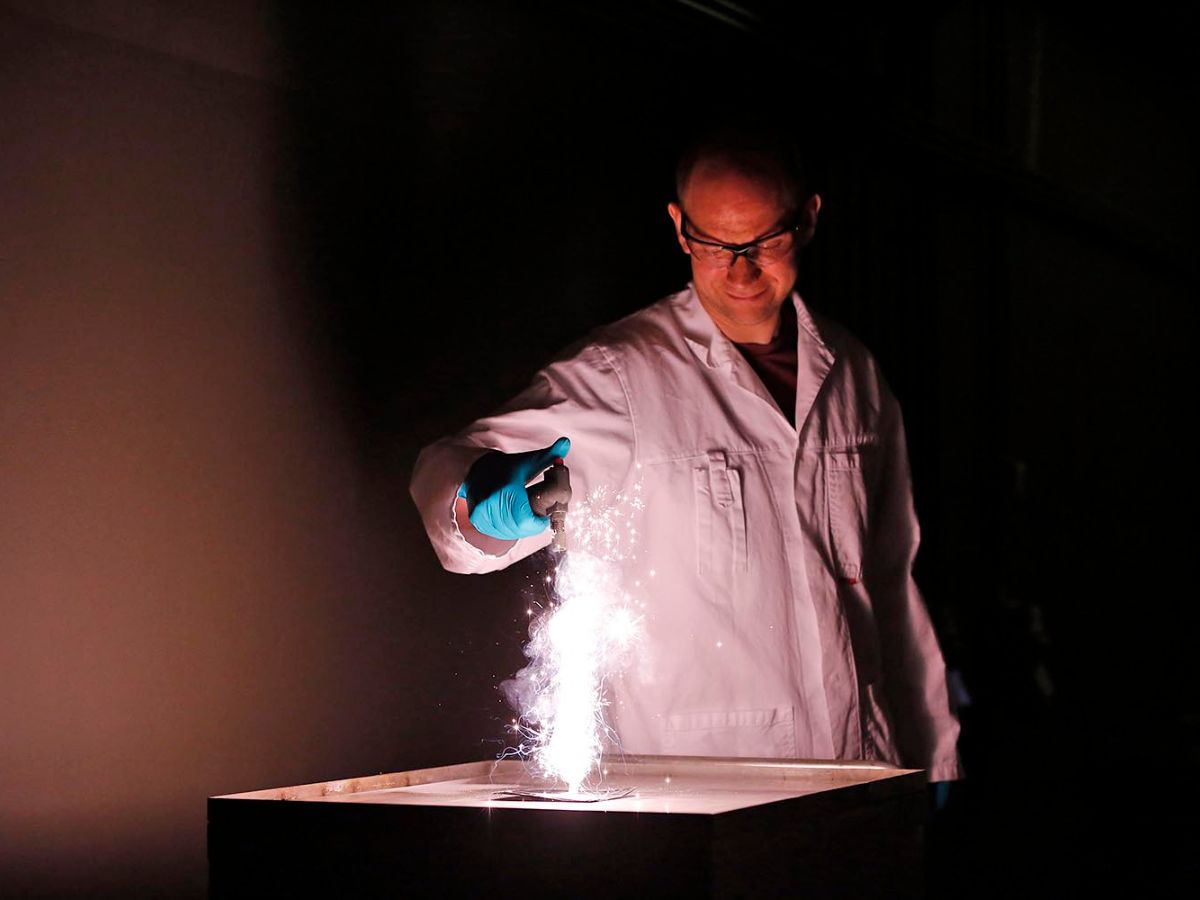
UK MasterChef winner Tim Anderson experiments with 3D printed pasta
The winner of MasterChef UK series 7, Tim Anderson, experiments with 3D printed pasta from BluRhapsody, a collaboration between Italian pasta makers Barilla and TNO. The results were satisfactory. Kjeld van Bommel, senior consultant 3D Food and Pharma Printing at TNO, explains how the triple collaboration took shape.
Kjeld initiated the group’s 3D printed food programme. “Printing pasta started off as a crazy Friday afternoon experiment. We threw some chocolate powder in the printing machine and out came the pasta! The team then approached several manufacturers and Barilla was enthusiastic to experiment with 3D food printing.”
Printing pasta started off as a crazy Friday afternoon experiment. We threw some chocolate powder in the printing machine and out came the pasta!
Impossible pasta shapes
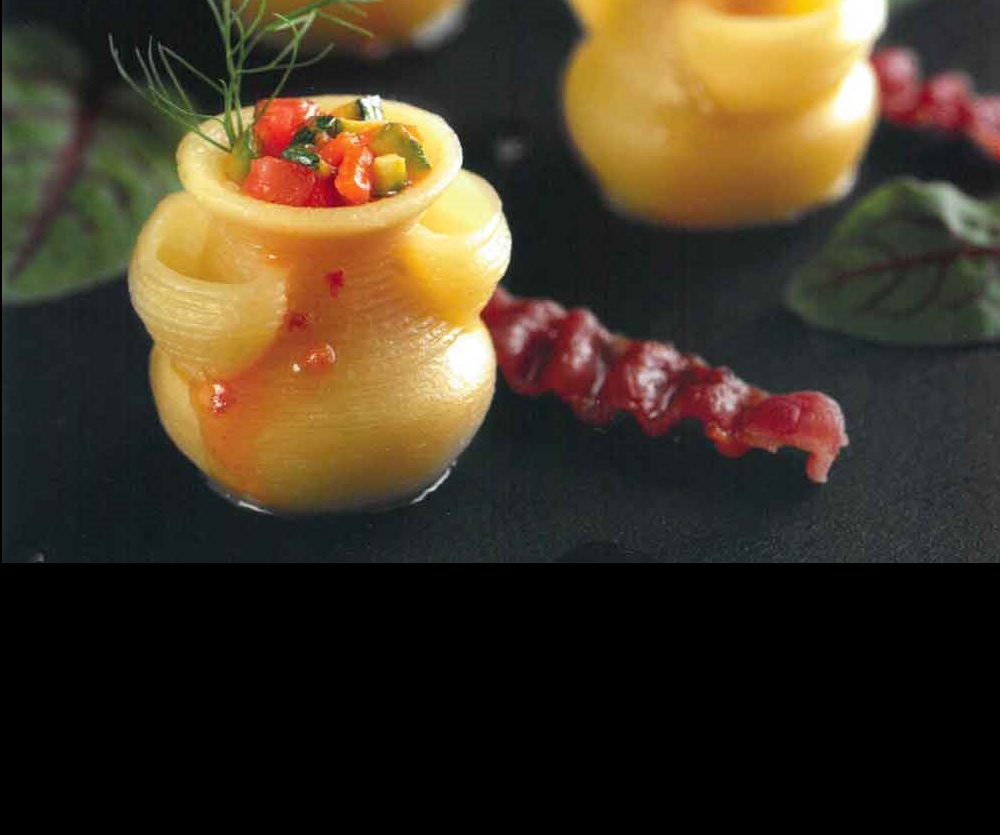
Barilla was interested in impossible pasta shapes. 3D printing appeared to be the solution. And the results were remarkable. Some of the shapes that came out were lobster tails, little urns and butterflies. Others were more abstract and difficult to subscribe. All this 3D printing resulted in the biggest publicity ever for Barilla.
Cook with 3D printed pasta
Not only Barilla was enthusiastic about the 3D printed pasta shapes. MasterChef UK winner Tim Anderson decided to cook with them. Kjeld arranged some samples for him to work on at home. Tim tried to make a dish with the Vortipa (sort of pinecone of stars), lobster tails made with carrots and sea urchins with supermarket-brand crab paste. Some shapes worked out perfectly and others needed a bit more experimenting. As Tim explains on his blog: “3D printed food doesn’t have to change the world to justify itself. Food should nourish people, and ideally, the methods we use to produce and consume should also nourish the earth. But of course, another absolutely essential function of food is to bring people joy – and there is a lot of joy to be found in trippy pasta shapes.”
Do you want to see and read how Tim made his dishes? Read his blog article.
TNO and 3D Food Printing
The food industry is showing a dramatic shift from ‘good for all’ food products to ‘good for you’ personalisation. At the same time, resource scarcity and climate change demand an exploration of new processing routes using alternative, plant-based proteins. Food producers need solutions to address these challenges and help maintain their competitive edge. TNO and DFPI (Digital Food Processing Initiative) are at the forefront of exploring how 3D Food Printing may be the answer.
Contact us
-
Kjeld van Bommel
Function not known-
Standplaats:Eindhoven - High Tech Campus 25
-
Email:Email Kjeld
-
-
Pieter Debrauwer
Functie:Research manager Equipment for additive manufacturingPieter Debrauwer obtained his M.Sc degree in Aerospace Engineering in 2007 at TU Delft after which he started at TNO. He started in the field of fluid dynamics on lab on a chip application and 3D printing. Later moving to program management before becoming the research manager responsible for the department Equipment for additive manufacturing.
-
Standplaats:Eindhoven - High Tech Campus 25
-
Email:Email Pieter
-
Get inspired
Sarcopenia and frailty
Beyond mobility: the real challenge is making the system smarter
RNA editing makes a protective gene variant available to patients who lack it naturally

Europe's chemical industry can become more sustainable without losing its foundations
Escalation in fireworks-related violence requires new security and response strategies